They Think You’re Stupid. That’s the Takeaway.
Let’s not mince words. What we saw on SmackDown wasn’t a ‘go-home’ show. It wasn’t a final, tantalizing taste of what’s to come at Survivor Series. No, what we witnessed was the intellectual and creative bankruptcy of a billion-dollar company laid bare for all to see. They served up a premium, pay-per-view-level main event on free television less than 24 hours before asking you to shell out your hard-earned cash for the *actual* event. Why? Do they think the audience has the memory of a goldfish? Are they so blinded by the immediate gratification of a Friday night ratings point that they’re willing to cannibalize their own premium product? The answer is a resounding, soul-crushing yes.
This isn’t business savvy. It’s a fire sale. It’s the corporate equivalent of pulling the copper wiring out of the walls to sell for scrap, all while the building itself is collapsing. For years, the unwritten contract between WWE and its fans was simple: the weekly shows build the story, and the Pay-Per-View delivers the climax you pay to see. They shattered that. They took one of the core concepts of their own marquee event—a **Survivor Series elimination tag team match**—and threw it away as a disposable gimmick to pop a rating. What message does that send about Saturday’s WarGames? It screams that the matches themselves don’t matter as much as the metrics reported to network executives on Monday morning. The art is dead. Only the algorithm remains.
The Ghoulish Affair of Uncle Howdy
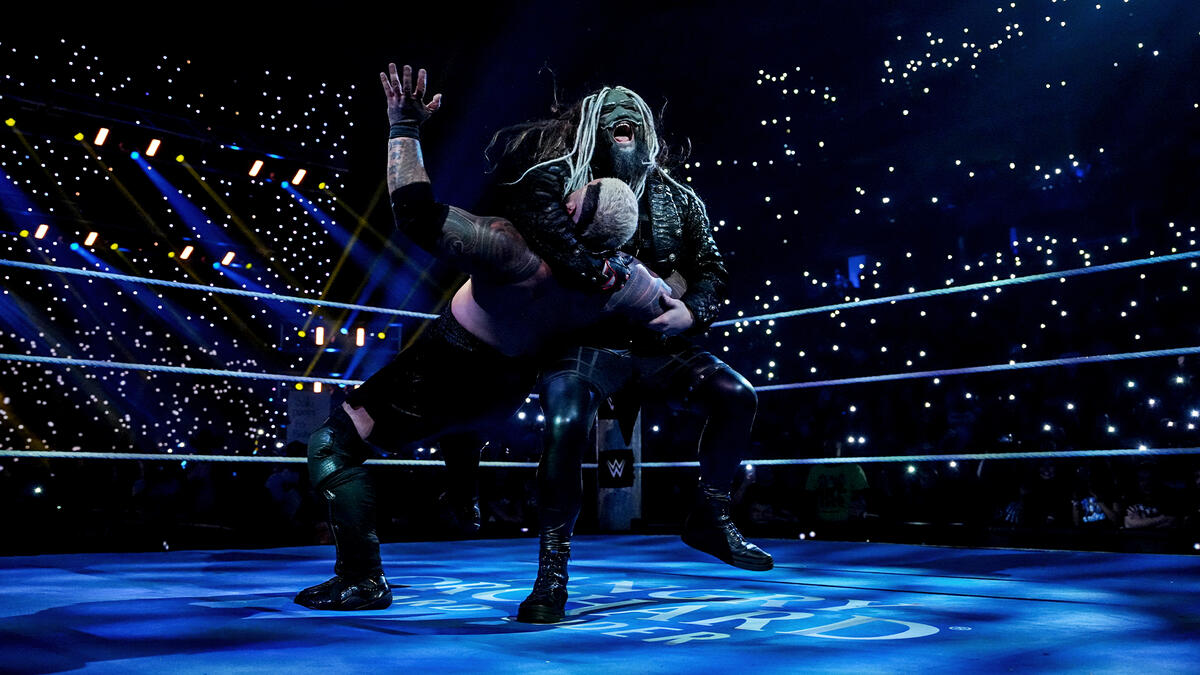
And then there’s the other, more ghoulish matter. The resurrection of the Wyatt gimmickry. Let me be perfectly clear: this isn’t a tribute. Tributes honor the spirit and legacy of the departed. This feels different. This feels like corporate grave-robbing, a cynical attempt to monetize nostalgia and emotion tied to a man who is no longer here to guide his own creation. Bray Wyatt’s genius was in his performance, his mind, his uniquely terrifying and compelling delivery. He was a generational talent who fought tooth and nail against a corporate machine that rarely understood him, forcing them to bend to his will through sheer force of his own creativity. Now that he’s gone, they’ve taken his bag of tricks, handed them to someone else, and are playing his music as if nothing has changed. It’s grotesque.
The attack on Solo Sikoa with a Sister Abigail wasn’t a shocking plot twist; it was a predictable, emotionally manipulative play pulled straight from a marketing department’s playbook. They know the name ‘Sister Abigail’ gets a reaction. They know the iconography of the Wyatt family is deeply embedded in the modern wrestling fan’s psyche. So they exploit it. They dangle the ghost of Bray Wyatt in front of the audience, hoping we’ll be too caught up in the sentiment to notice the hollow shell at its core. But what is Uncle Howdy without the mind of Windham Rotunda? It’s a cover band playing the artist’s greatest hits. It has the same notes, but none of the soul. It’s a karaoke version of a masterpiece, and it’s an insult to the original.
Do you really believe this storyline is headed somewhere profound? Have they given you any reason to trust their long-term booking? Think about The Fiend. They built an unstoppable monster, a truly unique force in modern wrestling, only to have him lose cleanly to a 50-year-old Goldberg to set up a WrestleMania match nobody wanted. They have a track record of taking brilliant, esoteric concepts and sanding them down until they’re just another marketable commodity. This will be no different. This is phase two of the monetization of a dead man’s legacy, and it’s happening right before our eyes.
The Devaluation of Everything
This single episode of SmackDown is a perfect microcosm of WWE’s entire philosophy under the new corporate regime. Everything must serve the immediate need. TV rights deals are the lifeblood, so the weekly shows are now more important than the so-called ‘Premium Live Events.’ The PLEs aren’t the destination anymore; they’re just another stop on the content conveyor belt. Why would anyone, outside of the most hardcore fans, feel compelled to order Survivor Series when they just saw the appetizer, main course, and dessert served for free on Friday night? It makes no logical sense from a storytelling perspective, but it makes perfect sense from the perspective of a soulless corporation obsessed with quarterly reports.
They are training their audience to believe that nothing is special. If a Survivor Series match can happen on any given Friday, then the event itself loses its unique identity. If WarGames is just a gimmick they can throw out whenever they feel like it, then the mystique is gone. Remember when Hell in a Cell meant the definitive end to a blood feud? Now it’s just a themed PPV that happens every October. They do this over and over. They dilute every concept that ever had meaning until it’s just another brand name to slap on a poster. This isn’t wrestling. This is content production. And you, the fan, are just a consumer to be managed.
Consider the implications. The wrestlers in that SmackDown match were put through a grueling, high-stakes bout with nothing truly on the line except a temporary ratings bump. They risked injury, expended enormous energy, and gave a PPV-quality performance for what? To convince a few more households not to change the channel? It’s a profound disrespect to the athletes. They are no longer performers telling a story; they are assets being deployed to maximize shareholder value. The passion is just part of the packaging. The sacrifice is just a line item on a budget.
So as you watch Survivor Series, remember what you saw on Friday. Remember that the company presenting this spectacle sees it not as a grand finale, but as just another piece of inventory. Remember that they believe your loyalty is unconditional and your memory is short. They gave away the farm to boost one night’s numbers, and in doing so, they showed you exactly what they think of their own biggest shows, their own history, and most importantly, you. They think you’re a mark. The only question is, are they right?