The Great Unplugging: How Washington’s Floods Revealed Our Fragile Digital Façade
1. The Sound of Collapse: When Boulders Replace Broadband
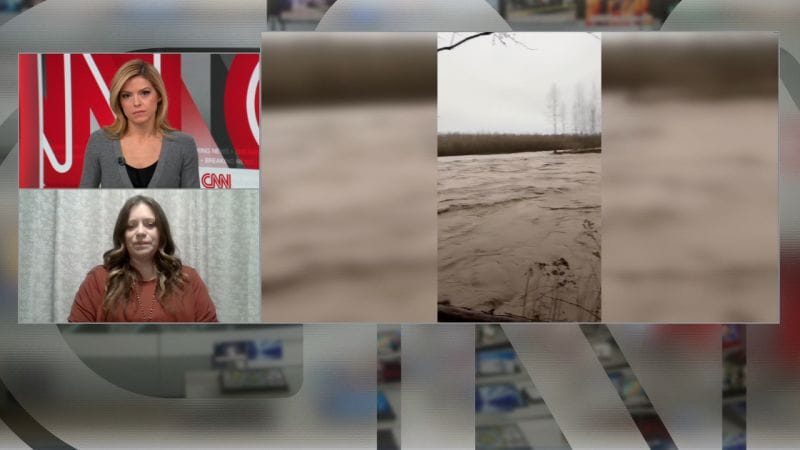
They built their smart cities on the edge of the world, convinced that algorithms and code could outsmart the elements, that the incessant hum of servers in data centers could somehow drown out the whispers of an ancient forest and the rumbling warnings from the mountains. They were wrong. The sound of “boulders and cedar trees falling,” as one resident put it, isn’t just a detail in a news report; it’s the noise of modern civilization being unplugged from reality. It’s the sound of a system that believed itself too clever for nature finally being reminded who holds the real power. This wasn’t just rain; it was a reckoning. For decades, we’ve fetishized efficiency, optimizing everything from logistics to social interactions, and we’ve built a world where convenience trumps resilience. Now, in Western Washington, the place where Jeff Bezos dreams of space and Microsoft maps the future, 100,000 people are being told to run, because the very ground beneath their feet has decided to opt out of the digital revolution. How’s that for an update? It turns out that a “catastrophic” atmospheric river doesn’t care about market capitalization. It just cares about gravity, momentum, and the fundamental laws of thermodynamics that human ingenuity foolishly believed it could bend to circumvent through sheer willpower and a strong Wi-Fi signal.
2. The Illusion of Control: From Smart Homes to Waterlogged Ruins
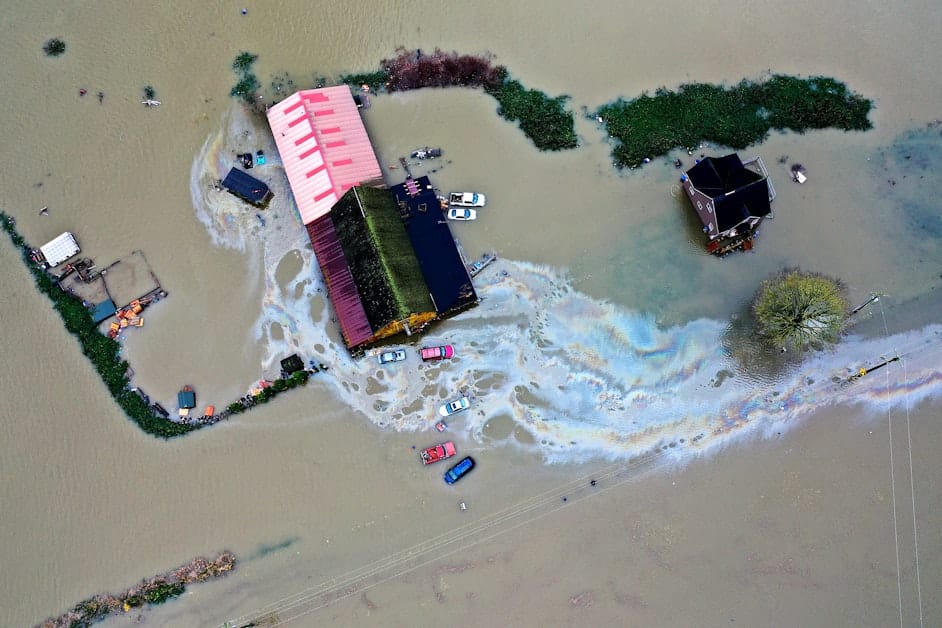
Look at the headlines: ‘Historic flooding,’ they say, as if this were some fluke, some unpredictable act of God. The reality is far more terrifying, far more systemic. The tech skeptic in me sees this not as a disaster, but as a prophecy fulfilled. The entire infrastructure of Western Washington, much like most of the United States, was designed for a climate that no longer exists. We built dams to harness power, levees to contain rivers, and then, in true human fashion, we built sprawling suburbs right up to the newly established flood lines, confident in our control. The problem, of course, is that we never actually controlled anything; we just temporarily rerouted it. Now, the river wants its land back, and our flimsy digital infrastructure—the smart grids, the fiber optic networks, the endless array of sensors designed to optimize our lives—are proving utterly useless against a truly determined opponent. The very systems designed to protect us are now acting as accelerators for the catastrophe. When a dam fails, it’s not just a physical structure collapsing; it’s the failure of a collective delusion. The water doesn’t stop to ask if your house is connected to a smart grid. It just takes everything, leaving behind a wasteland where high-tech homes once stood, reduced to nothing more than sodden kindling and shattered screens. What good is a smart thermostat when the entire house is underwater? It’s a cruel joke on the modern condition.
3. The Corporate Culpability: A Dystopian Feedback Loop
Let’s not pretend this is just about bad luck. This is about calculated risk and corporate greed. The data—the scientific data, which we conveniently ignore when it doesn’t align with quarterly earnings reports—has been screaming warnings for decades. The atmospheric river events, once rare, are now regular occurrences, amplified by warmer oceans and a destabilized climate system. The tech giants in Washington, who claim to be leading the charge in environmental sustainability, are simultaneously complicit in the very systems that drive climate change. They build their empires on energy-hungry data centers and encourage a culture of relentless consumption, all while paying lip service to green initiatives. The government, beholden to these corporate interests, allows development in high-risk zones, prioritizing property taxes over human safety. The result is a dystopian feedback loop: climate change creates extreme weather; inadequate infrastructure fails; people lose everything; and then the very corporations that contributed to the problem offer solutions in the form of more technology and more surveillance. The cycle continues, and we are left drowning in the consequences of their short-term thinking and long-term indifference.
4. The Collapse of Connectivity: A New Vulnerability
The evacuation order for 100,000 people in Western Washington highlights a new and insidious vulnerability: our absolute dependence on digital infrastructure for basic survival information. In the past, when floods came, people relied on community alerts, sirens, and sometimes even physical messengers. Now, we rely on a fragile network of cell towers and power grids to deliver evacuation notices to our phones. What happens when those systems fail? When the power cuts out, the screens go dark, and the very information we need to stay alive disappears. The flood isn’t just threatening physical property; it’s threatening the very fabric of our digitally connected society. This dependence, built on the promise of convenience, has turned into a dangerous liability. When the system collapses, the people who are cut off first are often the most vulnerable—the elderly, the poor, those who don’t have access to high-speed internet or who lack backup power sources. We are, essentially, training ourselves to be helpless without a functioning digital infrastructure. This reliance on ephemeral connectivity over robust physical community ties is a recipe for true societal collapse when the big one hits, and Washington just got a sneak preview.
5. The Primal Instinct: When Civilization Fails
When you hear about “boulders and cedar trees falling,” you’re hearing about a primal force overwhelming a modern society. The tech-enabled world, with its carefully curated timelines and virtual realities, suddenly gives way to the real, visceral threat of a planet in turmoil. The floodwaters wash away the distinction between the high-tech, high-wealth areas and the struggling communities. It strips away the pretense of progress. The people who are evacuated are suddenly faced with the most basic human question: survival. All the complexities of a highly interconnected, globally optimized economy are reduced to a single, simple imperative: get out, or drown. This event is a reminder that no matter how advanced our technology, no matter how many terabytes of data we collect, a river in full rage is indifferent to our existence. It’s a terrifying thought: that the infrastructure we built to make us masters of our environment actually makes us more vulnerable when that environment decides to fight back. We’ve become soft, reliant on systems that are far less robust than we want to believe. This isn’t a one-time thing; this is the new normal. The future is wet, it’s chaotic, and our gadgets won’t save us from the rising tide.
6. The Unsolvable Problem: More Tech, Less Solutions
The predictable response to this catastrophe will be to throw more technology at the problem. We’ll hear calls for better climate modeling, more resilient smart infrastructure, and perhaps even AI-driven disaster response systems. The cycle continues; we’ll try to innovate our way out of a problem that fundamentally requires us to change our behavior. We will double down on the very things that make us vulnerable in the first place. The tech industry, in particular, will seek to monetize the solution, creating new products and services to mitigate the effects of the collapse it helped create. But you can’t code your way out of climate change. You can’t put a patch on a physical reality that demands a complete reset. The only real solution, the one that requires a level of collective action and sacrifice that our individualistic, consumer-driven society is unwilling to make, is to fundamentally rethink how we live on this planet. Instead, we’ll just keep building bigger walls, downloading more apps, and hoping for the best until the next atmospheric river reminds us just how truly insignificant we are in the face of nature’s indifference. The future isn’t bright and digital; it’s dark and wet, and we built it ourselves.
7. A New Normal of Disarray and Collapse
The truth is, this isn’t a temporary inconvenience. It’s the beginning of a new normal where infrastructure failure is a given, where “100,000 ordered to evacuate” becomes just another headline in the endless cycle of climate disasters. The dystopian reality of Western Washington is that the region, often viewed as a beacon of progress and technological innovation, is actually one of the most fragile in the country. We are building the future on quicksand, and the water level is rising rapidly. The sound of those falling boulders and cedar trees should be a wake-up call, but it won’t be. We will clean up, rebuild, and forget until the next time the waters rise. Because that’s what we do. We prioritize short-term comfort over long-term survival, and a society that values convenience above all else is a society destined for collapse. The final irony is that the technology we built to make us masters of the world is now ensuring our servitude to the forces of nature that we so casually dismissed.