
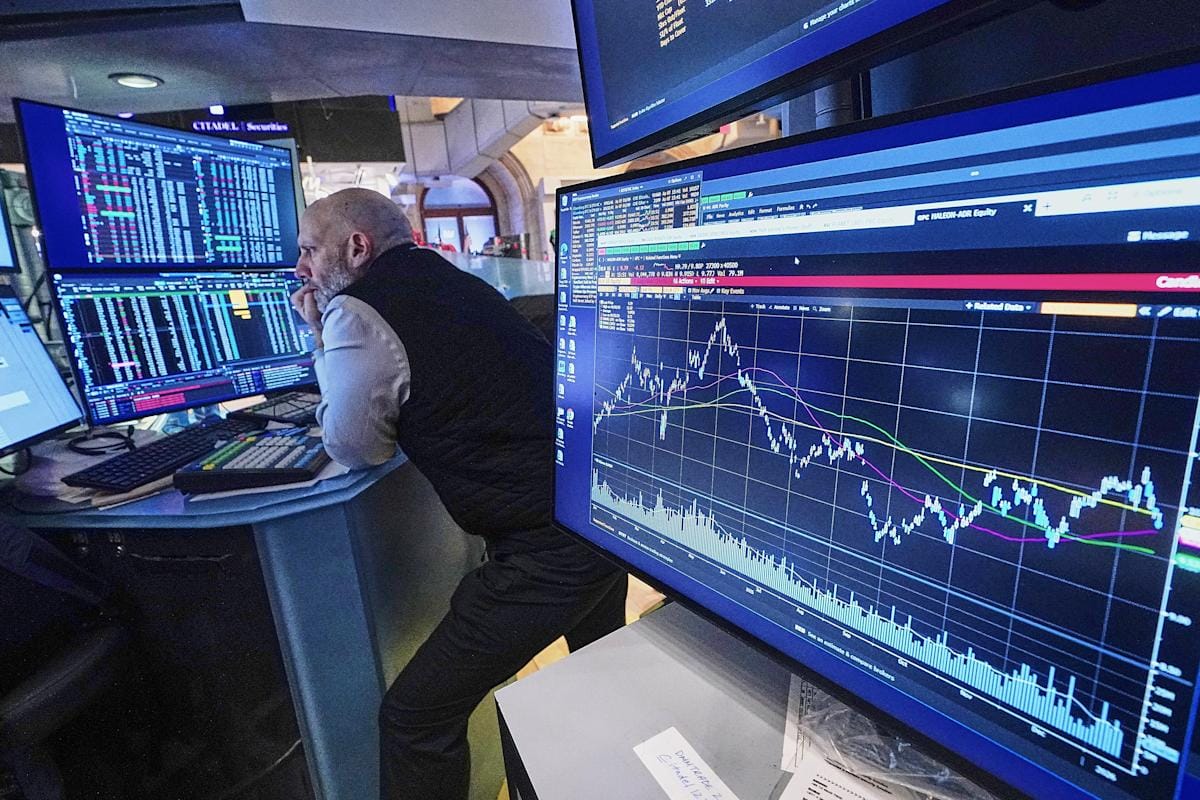
Market Indices Retain Downward Momentum
Wall Street concluded Wednesday’s session in negative territory, as a significant retreat in the technology sector and underwhelming reports from major financial institutions dampened investor enthusiasm. The Nasdaq Composite led the decline, reflecting a broader trend of profit-taking among high-flying growth stocks that have dominated the market narrative throughout the year.
The Dow Jones Industrial Average, the S&P 500, and the tech-heavy Nasdaq all closed lower, signaling a pause in the recent rally. Market analysts suggest that the pullback is a natural reaction to overextended valuations, particularly within the ‘Magnificent Seven’ tech giants. As the earnings season gains momentum, the scrutiny on corporate guidance has intensified, leaving little room for error for companies trading at high multiples.
Financial Sector Under Pressure Following Results
Major banking institutions were at the center of the day’s volatility. Bank of America, Wells Fargo, and Citigroup all saw their share prices slide following their respective quarterly disclosures. While some metrics showed resilience, concerns regarding net interest income and rising provisions for credit losses appeared to weigh heavily on investor sentiment.
“The banking sector acts as the primary circulatory system for the global economy. When we see friction in their earnings reports, it often signals a tightening environment that investors are quick to price in,” noted one senior market strategist.
Bank of America’s report highlighted the challenges of a fluctuating interest rate environment. Despite maintaining a strong balance sheet, the outlook for future lending margins remains a point of contention among analysts. Similarly, Citigroup continues to navigate a complex restructuring process, and while progress is being made, the market remains cautious about the speed of its turnaround in a high-interest-rate climate.
Technology Leads the Retreat
The technology sector, which has been the primary engine of market growth for the past eighteen months, faced a sharp correction on Wednesday. Intel and AppLovin were among the notable movers, with investors reassessing their positions in the semiconductor and software-as-a-service spaces. The decline in tech was not isolated to a single sub-sector, as software, hardware, and cloud providers all faced selling pressure.
Intel continues to struggle with the dual challenges of manufacturing transitions and fierce competition in the AI chip market. While the company has laid out an ambitious roadmap, the execution risks are clearly reflected in its current stock price volatility. AppLovin, on the other hand, saw a pullback after a period of significant outperformance, illustrating the market’s current tendency to lock in gains at the first sign of macroeconomic uncertainty.
Electric Vehicle Market Volatility
The electric vehicle (EV) sector also remained in the spotlight, with Tesla and Rivian experiencing downward pressure. Tesla, often seen as the bellwether for the industry, continues to face questions regarding its margin compression amid ongoing price wars in the global automotive market. As traditional automakers ramp up their EV offerings, Tesla’s market share dominance is being tested more than ever before.
Rivian’s Ongoing Struggles
Rivian Automotive continues to face the daunting task of scaling production while managing its cash burn. While the company has secured significant partnerships and has a loyal customer base for its R1T and R1S models, the path to profitability remains arduous. Investors are closely monitoring its capital expenditure and its ability to navigate supply chain bottlenecks that have plagued the industry since the pandemic.
The broader automotive sector is currently navigating a transitional phase where the cost of innovation must be balanced against the reality of consumer demand and infrastructure limitations. For companies like Rivian, the window for achieving sustainable scale is narrow, and every quarterly report is viewed as a high-stakes test of their long-term viability.
Broader Economic Context and Interest Rate Expectations
The market’s performance on Wednesday cannot be viewed in isolation from the Federal Reserve’s current policy stance. Investors are hypersensitive to any data that might influence the central bank’s path regarding interest rates. While inflation has shown signs of cooling, the ‘higher for longer’ narrative continues to haunt equity markets, particularly those sectors sensitive to borrowing costs.
Inflation and Consumer Sentiment
Consumer spending remains a critical pillar of the US economy, yet there are signs that the high-rate environment is beginning to take a toll. Delinquency rates on credit cards and auto loans have been creeping higher, a trend that was echoed in the cautious commentary from the big banks earlier today. If the consumer begins to retrench, the likelihood of a soft landing for the economy becomes increasingly precarious.
The upcoming economic data releases, including retail sales and manufacturing indices, will be pivotal in determining whether the current market retreat is a temporary consolidation or the beginning of a more sustained correction. For now, the prevailing sentiment is one of caution, as the euphoria of early-year gains is replaced by a more sober assessment of corporate earnings and economic fundamentals.
Global Market Implications
The ripple effects of Wall Street’s decline were felt across global markets. European indices followed the US lead, with tech and financial stocks underperforming in London, Frankfurt, and Paris. In Asia, markets remained mixed as investors weighed the US sell-off against regional economic developments. The interconnectedness of global finance means that a shift in sentiment in New York frequently dictates the tone for trading sessions across the globe.
Looking Ahead: The Earnings Horizon
As the earnings season continues, the focus will shift to other sectors, including healthcare and consumer staples. These defensive sectors may see inflows if the volatility in tech and financials persists. However, for a broad-based market recovery, the technology sector will likely need to find a floor and stabilize.
Investors are advised to remain focused on long-term fundamentals rather than short-term price fluctuations. While the headlines today are dominated by the retreat, the underlying strength of the US economy remains a point of debate among economists. Diversification and a disciplined approach to risk management remain the best strategies for navigating the current market environment.
Conclusion of the Trading Day
Wednesday’s market action serves as a reminder of the inherent risks in equity markets. The combination of high expectations and shifting macroeconomic realities created a perfect storm for the Dow, S&P 500, and Nasdaq. Whether this trend continues into the end of the week will depend largely on the next batch of earnings reports and any unexpected shifts in the geopolitical or economic landscape.

Photo by qimono on Pixabay.