
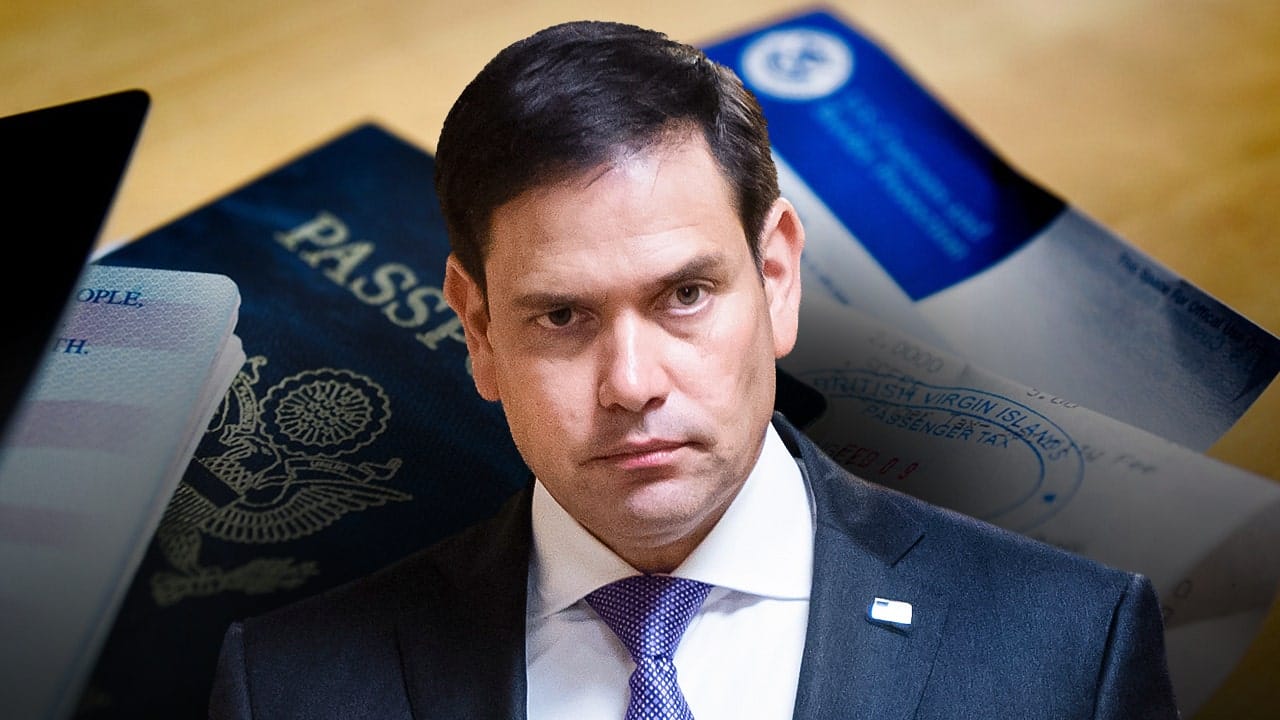
US Freezes Visa Processing for 75 Nations Over ‘Public Charge’ Concerns
For individuals like Amina, a mother in Somalia hoping to reunite with her children in Minneapolis, or Mikhail, a software engineer in Moscow seeking to emigrate for a new job in Silicon Valley, the American dream often feels like a fragile, distant hope, tethered to a piece of paper: the immigrant visa.
Their multi-year journeys through the U.S. immigration system are defined by meticulous paperwork, extensive interviews, and often excruciating waiting periods. Now, for hundreds of thousands of applicants in 75 countries, that journey has come to an abrupt halt.
The State Department’s New Directive
In a move that sends shockwaves through the global immigration landscape, the State Department has announced a major pause in immigrant visa processing for 75 nations, according to a recent memo obtained by Fox News. The directive specifically targets applicants deemed likely to become a “public charge,” effectively prioritizing applicants who are financially independent and less likely to rely on government assistance.
The policy’s stated purpose is to implement a stricter interpretation of a long-standing U.S. immigration statute. By pausing processing for countries where applicants are often deemed high risk for becoming public charges, the U.S. government seeks to reduce the financial burden on American taxpayers. The list of countries impacted includes high-profile nations like Somalia, Russia, and Iran, suggesting a combination of geopolitical and socioeconomic targeting.
For applicants caught in the middle, the decision represents far more than just bureaucratic red tape. It’s a complete redefinition of the criteria for entry, potentially closing the door on individuals and families who lack significant personal wealth or assets. The move effectively halts family reunification and skilled immigration for those in the 75 affected nations, creating immense uncertainty and potentially exacerbating humanitarian crises.
Understanding the ‘Public Charge’ Rule: A Historical Perspective
While the term “public charge” has recently gained prominence in policy debates, its roots run deep in U.S. immigration history, dating back to the late 19th century. The Immigration Act of 1882 first introduced the concept, barring entry to individuals deemed unable to support themselves. The rule was originally intended to prevent immigrants from burdening local almshouses and social welfare systems, particularly during periods of economic hardship and high immigration volume.
For over a century, the public charge rule was applied relatively narrowly. U.S. immigration law traditionally focused on whether an individual was likely to become dependent on cash assistance or long-term institutional care immediately upon entry. This interpretation provided flexibility for immigrants to transition into American society, often relying on family support or a short period of adjustment before finding employment.
The interpretation of the rule began to tighten in the late 1990s, with legislation like the Personal Responsibility and Work Opportunity Reconciliation Act of 1996, which placed greater emphasis on immigrant self-sufficiency and included a requirement for sponsors to sign affidavits of support. This shift laid the groundwork for the more expansive interpretation seen today, which evaluates potential reliance on a wide range of public benefits, including non-cash assistance like food stamps, Medicaid, and housing assistance.
The New Interpretation: A Stricter Standard
The recent pause in processing, driven by the new State Department memo, reflects a significantly stricter application of the rule. Under this interpretation, a visa applicant’s potential future use of government services—even non-cash benefits—can be grounds for rejection. The policy effectively requires applicants to prove they are financially robust and unlikely to utilize any public safety net resources for an extended period. This represents a substantial shift from previous standards, which primarily focused on whether an individual would immediately become a financial ward of the state.
The new criteria demand a comprehensive assessment of an applicant’s financial situation, including: their age, health, family status, assets and resources, financial status, education, and skills. For many applicants from developing nations, or those fleeing conflict zones like Somalia, a lack of significant assets or a reliance on humanitarian aid in their home country can now be used to demonstrate a high likelihood of becoming a public charge. This creates a challenging paradox for refugees and asylum seekers, who, by definition, often arrive in a state of financial need due to circumstances beyond their control.
The public charge rule has historically been a tool for selective immigration. The current interpretation weaponizes it against applicants from specific regions and socioeconomic backgrounds, effectively creating a wealth test for entry into the United States.
Geopolitical and Humanitarian Implications
The list of 75 countries, while not fully disclosed in the initial reports, includes nations with diverse relationships with the U.S. The inclusion of Somalia, a nation facing protracted conflict and humanitarian crises, raises significant concerns among refugee advocacy groups. The U.S. has historically been a key destination for Somali refugees, and a pause on immigrant visas, even for those with established family ties in America, could prolong suffering and increase pressure on other Western nations.
The inclusion of Russia and Iran adds a layer of geopolitical complexity. For individuals from these nations, who may be seeking refuge from political persecution or seeking opportunities away from authoritarian regimes, the public charge rule becomes an additional barrier. Critics suggest that applying the public charge standard in these contexts serves as a form of geopolitical restriction, limiting immigration from countries with strained U.S. relations, potentially under the guise of fiscal responsibility.
Furthermore, the policy creates a significant logistical backlog for U.S. embassies and consulates worldwide. The 75 countries on the list represent a substantial portion of global immigrant visa applications. A processing freeze for these nations will inevitably extend wait times for all other countries, creating a domino effect that impacts the entire immigration system.
The Human Toll of Uncertainty
For individuals like Amina in Somalia, waiting years to join her children, the policy change can be devastating. The application process for family reunification, which already takes several years, now faces an indeterminate delay. The State Department memo, while justified on economic grounds, fails to account for the human element of family separation and the emotional cost imposed by bureaucratic uncertainty.
The pause also impacts skilled workers. While the public charge rule is often associated with low-income applicants, it can also affect highly educated professionals who may not have significant personal assets at the beginning of their careers. The policy creates a chilling effect on international talent, potentially driving skilled workers to other countries with more welcoming immigration policies.
The policy has already drawn sharp criticism from human rights and immigration advocates. They argue that the stricter interpretation effectively turns the U.S. immigration system into a wealth-based lottery, undermining the principle of family reunification and creating systemic discrimination against immigrants from developing nations. The policy essentially punishes those who come from backgrounds of limited resources, regardless of their skills or potential contributions to American society.
Looking Ahead: A New Era of Immigration Restriction
The State Department’s decision signals a broader shift towards restrictionist immigration policies that prioritize self-sufficiency over family reunification and humanitarian considerations. While proponents argue that the policy protects U.S. resources and ensures that immigrants contribute positively to the economy, critics warn that it fundamentally alters America’s identity as a nation founded on the principle of providing a new start for those seeking a better life, regardless of their initial financial circumstances.
As the processing freeze takes effect, the international community watches closely. The policy’s implementation will be closely scrutinized for its impact on U.S. foreign relations and its adherence to international human rights norms. For the 75 nations affected, the path to the United States has become significantly longer and more uncertain, forcing individuals and families to reconsider their options and potentially seek opportunities elsewhere.

Photo by WKIDESIGN on Pixabay.