The Black Sea’s New Reality: Why Ukraine’s Submarine Strike Changes Everything
The Asymmetrical War Escalates
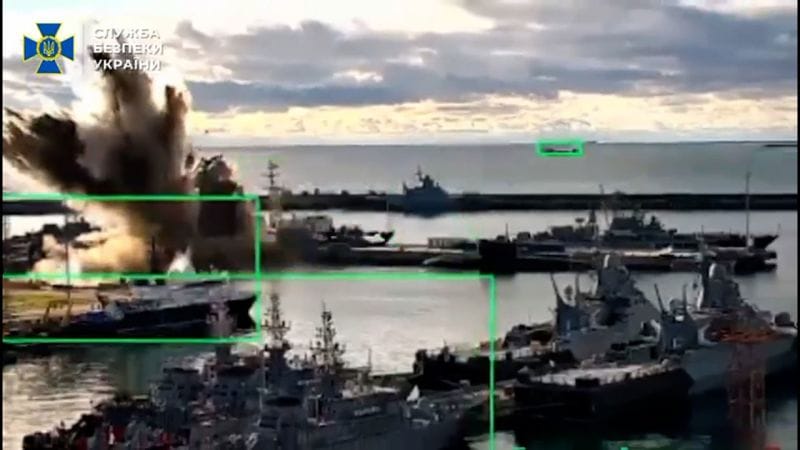
And so, we arrive at another turning point in the Black Sea theater of operations, where a single, relatively low-cost piece of autonomous technology manages to completely upend decades of established naval doctrine. The news that Ukraine’s SBU (Security Service of Ukraine) has successfully deployed an underwater drone—specifically a Sea Baby UUV (unmanned underwater vehicle)—to strike and allegedly disable a Russian Kilo-class submarine in Novorossiysk is more than just a headline grab. It’s a seismic event that should have naval strategists from Washington to Beijing scrambling to reassess their entire operational framework. Because what Ukraine just did was fundamentally challenge the long-held assumption that a submarine, arguably the most stealthy and survivable platform in modern warfare, is safe even when docked in a heavily defended home port.
But let’s not get lost in the immediate details of a single hit on a single vessel. The true significance lies in the implications for asymmetrical warfare and the complete erosion of Russia’s ability to operate freely in what it once considered its own backyard. For months, Ukraine has been chipping away at the Russian Black Sea Fleet, first by sinking the flagship Moskva with a couple of Neptune missiles, then by deploying surface drones (USVs) to hit patrol boats and landing ships. Now, they’ve gone subsurface, hitting a target that, by its very nature, is designed to avoid detection. This isn’t just an evolution of tactics; it’s a revolution in naval strategy. And the Kilo-class submarine, a vessel built specifically to operate stealthily in shallow waters, ironically found itself helpless against a cheaper, smaller, and less sophisticated adversary right where it should have been most secure.
The Novorossiysk Paradox: No Safe Harbor
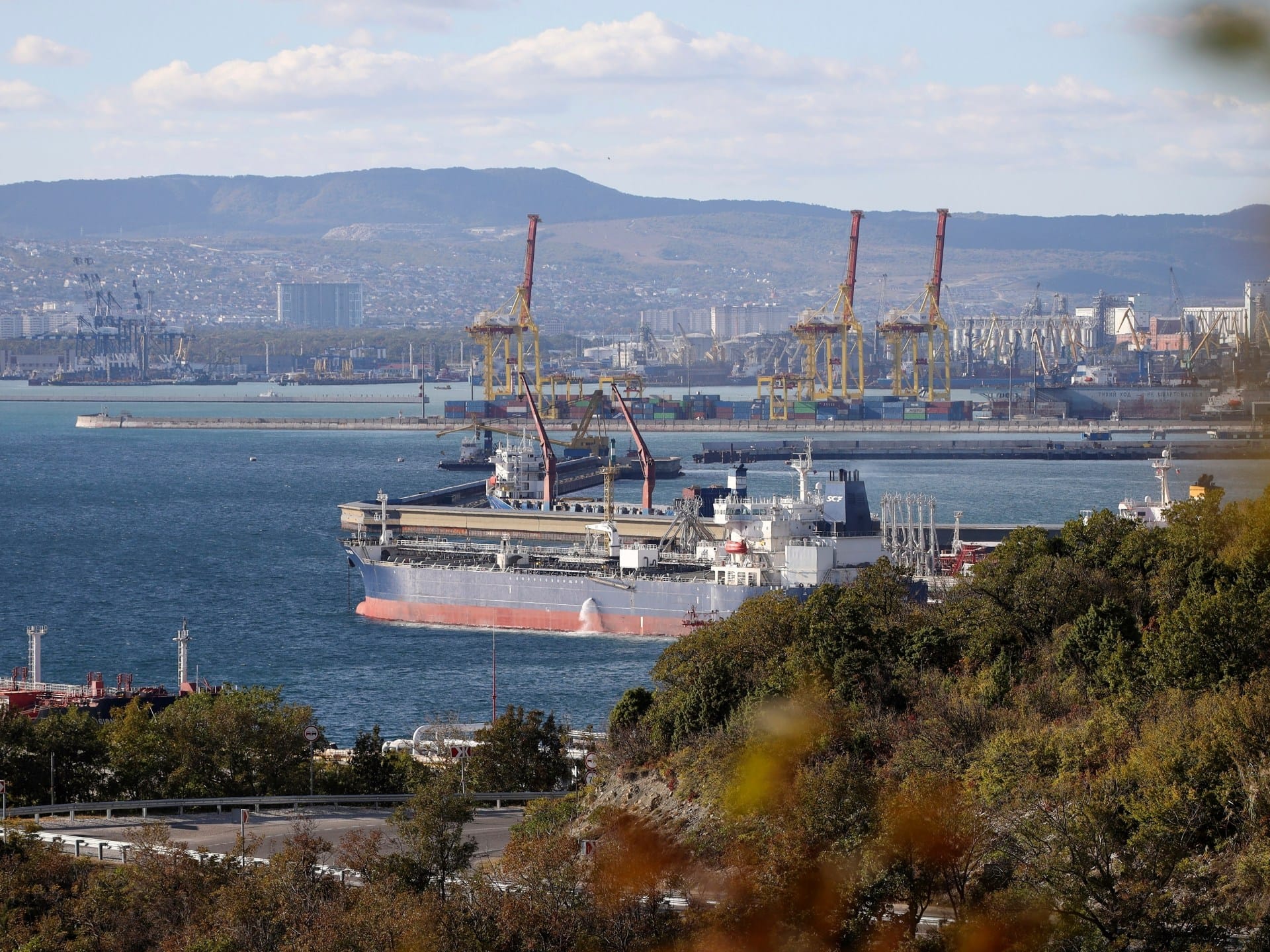
The choice of Novorossiysk as the target is crucial. Since the beginning of the full-scale invasion, and especially after the Moskva sank, Russia has been forced to relocate many of its high-value assets further east, away from Crimea and the Ukrainian coast. Novorossiysk, a major commercial port, became the de facto headquarters for the Black Sea Fleet, presumed to be beyond the range of most Ukrainian weapons and certainly out of reach of basic surface drones. The city is heavily fortified, with extensive air defenses and anti-sabotage measures in place. Yet, Ukraine found a way in, demonstrating a capability to strike deep within Russian-held territory and proving that geographical distance offers no protection against determined innovation.
Because the strategic calculus has always prioritized deterrence through high-cost, high-tech platforms. A Kilo-class submarine costs hundreds of millions of dollars. A Sea Baby drone, by contrast, likely costs a fraction of that, possibly tens or hundreds of thousands of dollars. This represents an almost absurd cost-exchange ratio in favor of the attacker. Russia is being forced into a situation where it must commit immense resources to defend every single asset, every single time, or risk losing them to an adversary that can essentially generate threats faster and cheaper than they can be countered. The cost of replacing one Kilo submarine far exceeds the entire budget Ukraine has spent on developing its drone fleet, and that’s a brutal reality check for Moscow.
And it also forces Russia to confront a tactical nightmare. How do you defend a sprawling port complex against underwater drones? Unlike air defense systems that can detect incoming missiles or aircraft, underwater defense is exponentially more complex. It requires specialized sonar arrays, anti-sabotage divers, and constant surveillance. To defend against a single UUV, you effectively need to create a secure bubble around the entire harbor, which is a resource-intensive task that stretches even large navies thin. Russia’s Black Sea Fleet, already stretched by losses, now faces a new operational requirement that demands resources they simply do not have in abundance.
Historical Echoes: From Torpedo Boats to Drones
But this isn’t the first time technology has rendered established naval power vulnerable. We saw a similar dynamic play out with the advent of the torpedo boat in the late 19th and early 20th centuries. Battleships, the massive symbols of national power at the time, were suddenly vulnerable to these small, fast, and inexpensive vessels armed with newfangled self-propelled torpedoes. Navies were forced to adapt, developing new secondary armaments and new tactics to counter the threat. This led to a significant shift in naval design and strategy, ultimately contributing to the obsolescence of the pure-bred battleship in favor of new platforms like the aircraft carrier. The current drone revolution is essentially the modern-day equivalent of that transition.
And then there’s the psychological warfare aspect. A submarine’s primary weapon is stealth. The knowledge that it can be tracked and hit while supposedly secure in port shatters that aura of invincibility. It sends a chilling message to every Russian sailor in the Black Sea fleet: nowhere is truly safe. This creates a psychological burden that degrades operational readiness, morale, and willingness to engage in high-risk missions. The fear of being targeted by an unseen adversary, whether on the surface or below it, can paralyze a force far more effectively than a direct, conventional engagement.
The Future of Naval Warfare: Global Implications
So, where does this leave us? The Ukrainian drone strike on a Russian submarine serves as a stark warning to other major naval powers, particularly the United States and China. Both nations heavily rely on large, expensive, and complex naval platforms—aircraft carriers, destroyers, and nuclear submarines—as the foundation of their power projection strategies. The idea that a relatively cheap, autonomous system can effectively challenge these multi-billion dollar assets is a deeply unsettling proposition for established militaries.
Because a key vulnerability of modern naval doctrine is the reliance on complex, fragile supply chains and high-cost platforms that are difficult to replace. The conflict in Ukraine demonstrates that the future of warfare is not necessarily defined by who has the most advanced and expensive hardware, but by who can innovate faster and more effectively in the asymmetrical space. The low barrier to entry for drone technology means that non-state actors or smaller nations can now pose a credible threat to previously unassailable powers.
And we can expect Russia to respond in kind. They will undoubtedly increase their anti-drone measures, possibly deploying their own UUVs or enhancing port defenses with new technologies. But this is a defensive reaction to an offensive innovation. Ukraine, by pioneering this new front, has seized the strategic initiative in the Black Sea, forcing Russia to constantly play catch-up. This isn’t just about a single submarine; it’s about shifting the balance of power in an entire maritime domain of warfare.
The Unavoidable Conclusion
Because ultimately, the most critical lesson here is about adaptation. The old rules are dead. The Black Sea is turning into a graveyard for Russian naval aspirations, and Ukraine is writing the epitaph not with conventional missiles, but with swarms of cheap, innovative drones. The strike on the submarine in Novorossiysk is a definitive statement that there are no sanctuaries left in this conflict, and it solidifies Ukraine’s status as a leader in autonomous warfare. The world is watching, and every navy chief is now wondering: if they can do it to a submarine in a Russian port, what’s stopping a similar attack on a US aircraft carrier or a Chinese destroyer incursion fleet?
And that, really, is the biggest takeaway of all. The game changed. The rules changed. And the high ground just got a whole lot lower for the big boys of the old naval world.