
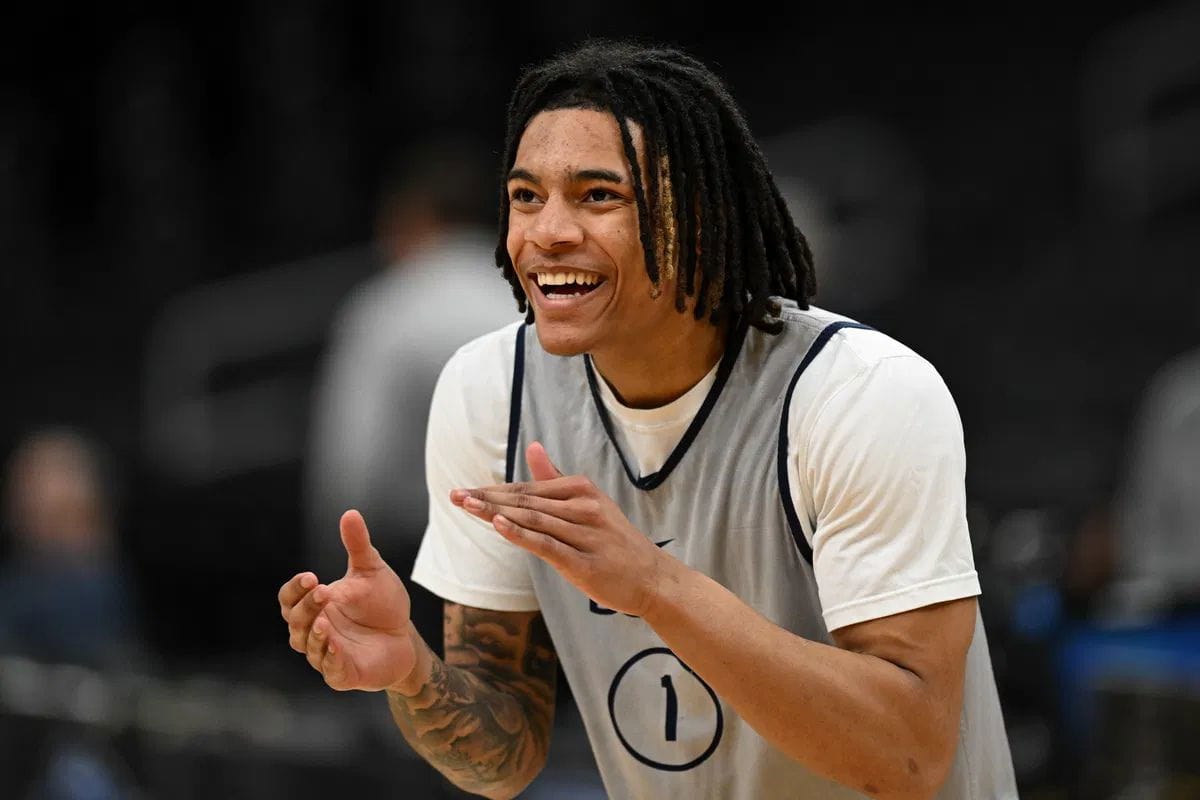
The Solo Ball Hype: A Cynical Investigation into UConn’s Money Machine
The ‘Fab Five.’ The name itself sounds like a cheap marketing slogan, doesn’t it? Like something cooked up in a boardroom rather than earned on the court. It’s the kind of high-gloss branding that perfectly encapsulates modern college basketball, where every player’s future isn’t just about athletic potential but about their marketability in the cutthroat Name, Image, and Likeness (NIL) landscape. When UConn landed Solo Ball as part of their so-called ‘Fab Five’ recruiting class, it wasn’t just a win for the team; it was a victory for the revenue stream. But behind the hype, you have to wonder what’s really going on with Solo Ball. Is he a truly unique talent poised for a genuine ‘surge,’ or is he just the next cog in a machine that chews up and spits out young athletes for profit?
Q: Is Solo Ball’s ‘Surge’ Prediction About Performance or Profit?
Let’s look at the facts. Coach Dan Hurley, a master of media manipulation and motivational rhetoric, recently predicted a ‘huge surge’ for Solo Ball, specifically labeling him a junior guard poised for big things. Now, I find it highly suspicious when a coach goes out of his way to highlight a single player with such specific, almost pre-scripted, praise. It’s not just a casual observation; it’s a strategic move in the modern college game. Why does Hurley need to pump up a player like this now, in the middle of a season where UConn is already ranked No. 5 in the nation? The answer isn’t about team morale; it’s about the balance sheet. In the NIL era, a coach’s public statement about a player’s potential directly impacts that player’s market value. Hurley isn’t just motivating Solo; he’s sending a signal to potential sponsors and endorsement agents that this stock is about to rise. He’s essentially creating a self-fulfilling prophecy designed to keep Solo happy, prevent him from eyeing the transfer portal, and ensure the UConn brand remains synonymous with elite, marketable talent. It’s a calculated move to keep the machine running smoothly, and anyone who thinks otherwise is naive.
Q: What is the Real Cost of the ‘Fab Five’ Label for a Young Player?
The ‘Fab Five’ label for a freshman like Solo Ball isn’t a compliment; it’s a burden. It places an immense amount of pressure on a kid who, according to the records, appeared in 39 games but only started 10 as a freshman. He showed promise, sure, but he wasn’t yet the undisputed leader of the team. Giving him this label—linking him to a group that is already pre-packaged for media consumption—is a dangerous game for a developing athlete. When you create this kind of unrealistic expectation, you set up the possibility of public failure. It’s a cynical tactic to generate immediate buzz, regardless of the player’s long-term mental health or development. The media loves a star, and they love a fall from grace even more. If Solo Ball doesn’t live up to the hype, the same media outlets that built him up will be the first ones to tear him down. This isn’t about fostering talent; it’s about creating content for the news cycle. The fact that the story highlights his ‘top-level performances’ as a freshman—a performance level that was good, but not necessarily transcendent—shows how desperate the system is to justify the marketing narrative. They need to validate the hype, even if it means exaggerating his contributions.
Q: Is This Just a New Version of the Ball Family Exploitation Model?
Now, let’s address the most intriguing detail in the input data: the explicit mention of Solo Ball’s parents, Mike Ball and Erica Ball. This isn’t just a biographical footnote; it’s a flashing red light for anyone who understands the modern college basketball ecosystem. The NIL era has created a new landscape where parents and families are often heavily involved in their children’s brand management. We’ve seen this play out with other high-profile basketball families—the Ball family being the most prominent example—where the line between supporting a child and exploiting their talent for personal gain becomes blurred. The mention of Solo Ball’s specific parents in a recruitment story suggests a level of family involvement that goes beyond the typical. Are Mike and Erica Ball simply supportive parents, or are they managing Solo’s brand, negotiating NIL deals, and perhaps even influencing his decision-making process? The cynical investigator knows that where there’s money to be made, family dynamics can turn ugly fast. The ‘Ball’ name itself, whether related or not, immediately conjures up images of aggressive self-promotion and potentially manipulative business practices. We must ask: Is Solo Ball a new brand created for profit, managed by a family eager to capitalize on his talent?
Q: What Role Does UConn Play in Perpetuating This Exploitative System?
UConn, a program with a recent history of NCAA championships, is perfectly positioned to leverage the NIL market to perpetuate its dominance. The input data highlights UConn’s upcoming battle against Florida, another program with a history of NCAA success, labeling it a ‘battle of last three NCAA champions.’ This isn’t just a game; it’s a showcase event. The entire system—from the media coverage to the Jimmy V Classic sponsorship—is built on the idea that these programs need to be constantly producing new stars to feed the beast. Solo Ball is the next in line. He’s not just a student athlete; he’s a necessary component for the perpetual motion machine that generates millions for the university. The cynical truth is that programs like UConn need players like Solo Ball to maintain their status, attract new recruits, and continue generating revenue through high-profile matchups. They will use every tool at their disposal, including manufactured hype and strategic media leaks about a ‘surge,’ to ensure that the production line of talent never stops. The focus on Solo Ball’s personal story—the ‘Fab Five,’ the parents—is just the human interest angle designed to distract us from the fact that he is essentially just a highly valuable asset being deployed by a powerful institution.
Q: What’s the Long-Term Outlook for Solo Ball in this Environment?
The long-term outlook for Solo Ball in this environment is bleak, regardless of how successful he becomes. If he lives up to the hype, he’ll be pressured to stay at UConn, or face the scrutiny of transferring. If he fails to live up to the hype, he’ll be discarded and forgotten, replaced by the next ‘Fab Five’ recruit. The system doesn’t care about his well-being; it only cares about his utility. The constant media scrutiny, the pressure from sponsors, and the high-stakes world of college basketball create a perfect storm for burnout. Solo Ball’s journey is less about individual glory and more about being a part of a larger, corporate structure. We should stop celebrating the hype and start questioning why these young athletes are being exploited for a system that profits far more than they do. The ‘surge’ Dan Hurley predicts might happen, but at what cost?
