
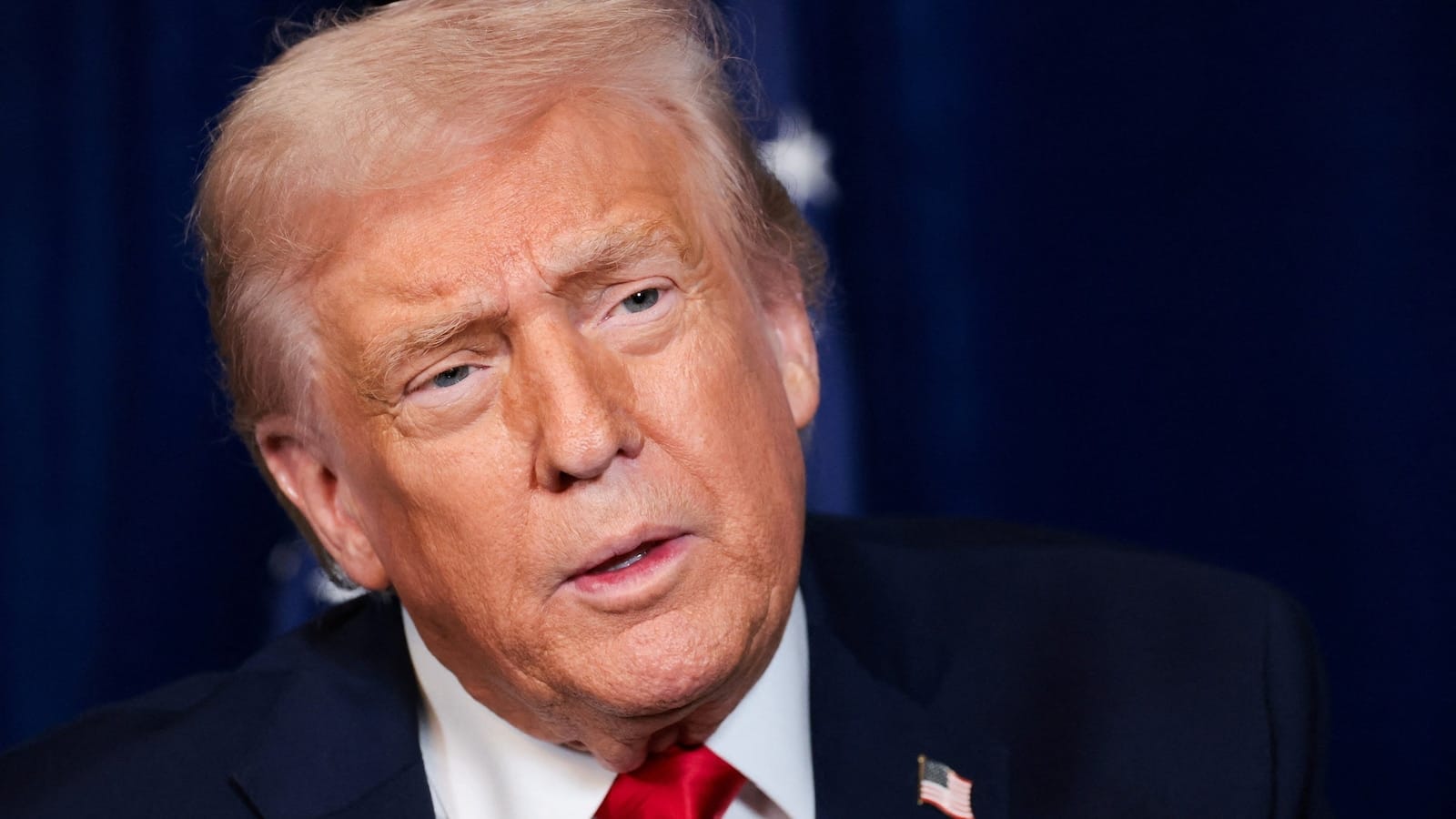
The Anatomy of a Discrepancy: Why a CT Scan Isn’t an MRI
As a cold strategist looking at the political landscape, it’s not the medical facts themselves that matter, but the information warfare surrounding them. The recent kerfuffle over Donald Trump’s health, specifically the correction where he claimed to have received a CT scan instead of the previously reported MRI, is less about a simple factual error and more about a calculated strategic vulnerability. The entire political ecosystem hinges on managing perception, and in a high-stakes presidential race where advanced age is a central theme, controlling the narrative around physical vitality becomes paramount.
This isn’t just about an aging politician; it’s about the very foundation of his carefully cultivated persona. Trump’s brand has always been built on an almost superhuman image of boundless energy, defiance, and resilience—a man who never sleeps, never shows weakness, and constantly dominates his opponents. This image, however, collides harshly with the biological realities of aging. When a candidate in his late 70s, facing a grueling campaign schedule, exhibits moments of physical frailty or cognitive pauses, the media and the opposing campaign immediately go on the offensive, creating a feedback loop of scrutiny that can be debilitating for a candidate whose support relies heavily on projecting strength.
Q&A: The Strategic Implications of the Medical Narrative
Q: Why is this discrepancy between an MRI and a CT scan such a big deal, strategically speaking? Isn’t it just a simple mistake?
A simple mistake? In politics, especially at this level, there are no simple mistakes; only unforced errors that reveal underlying weaknesses. The choice between an MRI and a CT scan, particularly when misreported, highlights a specific strategic calculation, or perhaps a tactical failure of information control. A CT scan is very different from an MRI. A CT scan (Computed Tomography) is often used for acute situations—looking for things like internal bleeding, bone fractures, or, critically in a neurological context, signs of a stroke or acute trauma. An MRI (Magnetic Resonance Imaging), on the other hand, provides much more detailed imagery of soft tissues, making it a standard tool for evaluating chronic conditions, long-term neurological health, and detailed brain structure. The key strategic distinction here is the implication of the tests. If the campaign initially wanted to project strength by claiming an MRI, perhaps it was meant to imply a routine check-up for a man who cares about his health. But by correcting it to a CT scan, especially after a period of scrutiny, it subtly shifts the narrative toward a different kind of concern—an acute event or a rapid assessment of potential emergency issues.
The strategic failure isn’t the lie itself; it’s the fact that they allowed the correction to become news. When a campaign feels compelled to walk back a medical claim, it creates a vacuum of trust that opponents can fill with speculation. The very act of correcting the record draws more attention to the precise area of concern—his cognitive health and physical status—which is exactly where Trump’s political opponents want to focus. The initial misdirection was designed to confuse, but the correction adds fuel to the fire, turning a minor health check-up into a full-blown media spectacle about trust and integrity.
Q: How does this fit into Trump’s broader strategy of controlling information? He often uses denial and deflection.
This incident is a textbook case of Trump’s ‘gaslighting’ strategy, which relies on generating so much noise that the audience loses sight of the original truth. The goal of this strategy is not necessarily to convince people of a new truth, but to create a state of perpetual confusion where nothing can be truly trusted. When Trump says he had an MRI, then later says he had a CT scan, it’s not about the accuracy of the statements in isolation. It’s about overwhelming the information pathways. By contradicting himself, he forces the media to focus on the contradiction itself rather than the underlying reason for the medical examination. The spin cycle becomes self-perpetuating, creating a fog of uncertainty where critics look foolish trying to parse the difference between medical jargon while the campaign moves on to the next topic.
For a strategist, this technique, while effective in the short term, carries significant risks. The Cold Strategist would recognize that this approach erodes long-term credibility, but for Trump, the calculation has always been about immediate tactical victories. He operates on the principle that the person who defines the argument, even if falsely, controls the outcome. His goal is to make the entire health issue seem like ‘fake news’ or ‘political hogwash’ fabricated by his opponents, even as his own contradictory statements provide the raw material for the accusations. This high-risk/high-reward strategy works best on audiences already predisposed to distrust traditional media outlets. It’s a very dangerous game of high-stakes information poker.
Q: What does this reveal about the strategic challenges for the Trump campaign as a whole?
The core strategic challenge for the Trump campaign right now is managing the gap between perception and reality. In 2016, Trump’s image was one of boundless energy and youthful defiance, despite being older than many prior candidates. Now, facing an opponent (Biden) who also struggles with age optics, Trump must find a way to maintain his advantage without constantly drawing attention to his own vulnerabilities. The health narrative becomes a central battleground because it directly challenges his core image. Every stumble, every verbal slip, and every medical correction is magnified tenfold.
The campaign’s response to this scrutiny is revealing. Their go-to tactic, exemplified by the CT/MRI confusion, is to simply deny, defy, and distract. They use a strategy of aggressive counter-punching rather than a proactive or transparent defense. This works well with his base, which views any media scrutiny as a badge of honor for their candidate, but it struggles to persuade swing voters who are genuinely concerned about the physical and mental stamina required for the presidency. The cold, analytical view here is that defiance alone isn’t a strategy; it’s a tactic that can only delay the inevitable scrutiny. The campaign needs a stronger, more consistent narrative to counter the perception of decline, and this CT scan incident proves they haven’t found it yet.
Q: How do you predict this specific issue will play out in the long run? Will voters care about a CT scan versus an MRI?
Voters won’t care about the clinical details. They care about the larger picture and the emotional resonance. The specific type of scan is irrelevant to 99% of the electorate. What matters is the perception of honesty and fitness for office. The strategic implication of this incident is that it reinforces the broader narrative that Trump is struggling with age and that his campaign is deliberately being opaque about it. When the campaign tries to cover something up, even poorly, it makes the issue itself seem more serious than it might actually be. The most significant consequence of this entire episode is that it will be used by opponents to create a sense of doubt. The campaign has now given ammunition to those who want to question his fitness for office, not just by pointing to specific incidents, but by using the campaign’s own contradictory statements against it.
Furthermore, a cold strategist recognizes that this issue isn’t going away. It’s not a temporary news cycle. The health and age of both candidates will be recurring themes throughout the campaign. The CT scan incident sets a precedent for how these issues will be handled: with denial, counter-accusation, and deflection. The campaign is essentially choosing to fight every battle on this front rather than offering a preemptive, reassuring narrative. This might satisfy the base, but it risks alienating a larger portion of the population that wants stability and transparency in their leaders. The long-term prediction for this strategy is high volatility and increased polarization around an issue that should be a simple matter of fact, not political spin.
Q: What is the bottom line from a purely strategic perspective?
From a purely strategic perspective, this entire episode is a tactical loss for the Trump campaign. They failed to control the narrative, first by making a questionable claim (MRI) and then by drawing attention to the correction (CT scan). The initial goal of projecting strength was undermined by the subsequent need for clarification, turning the health issue from a minor point of interest into a major source of scrutiny. This demonstrates a certain degree of sloppiness in their information management and provides valuable ammunition to the opposition. The campaign’s default setting of ‘defiance’ and ‘counter-attack’ might work on other issues, but when it comes to physical health, defiance can be interpreted as weakness. A truly cold, calculating strategist would have ensured this issue was handled with maximum transparency to minimize speculation or, failing that, would have maintained a consistent lie rather than walking it back and drawing attention to the inconsistency. The fact that they did neither suggests that managing the optics of age is proving to be a greater challenge than previously anticipated.

Photo by u_dg9pheol on Pixabay.