
You Can’t Make This Stuff Up
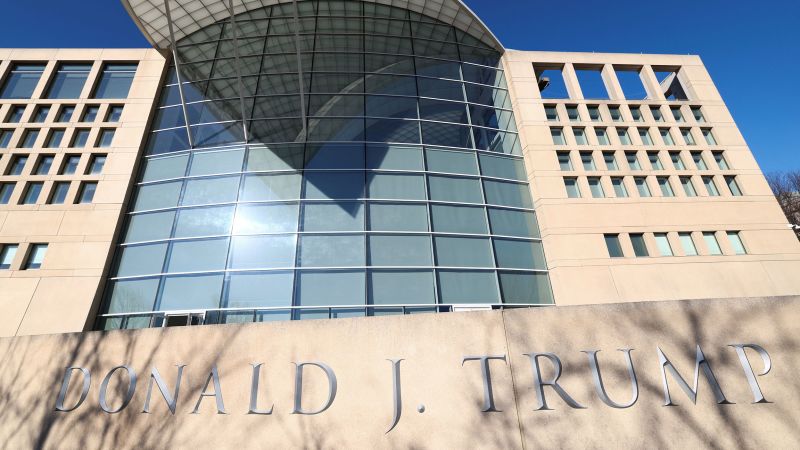
Let’s just get this out of the way. You’re reading this right. The United States Institute of Peace, a nonpartisan federal institution tasked with the monumental job of promoting international peace and resolving violent conflicts, has been renamed. For whom, you ask? A Nobel Peace Prize winner? A renowned diplomat who spent a lifetime brokering treaties? Ghandi? No, no, don’t be silly. It’s been branded, like a cheap steak or a failing casino, with the name of Donald J. Trump. The ‘Donald J. Trump Institute of Peace’. It’s a sentence that feels like a practical joke, a headline from a satirical newspaper that accidentally slipped into our reality. This isn’t just irony. This is irony on steroids, mainlining absurdity directly into the nation’s veins. It’s a monumental, glittering, gold-plated slap in the face to the very concept of peace itself.
And the most galling part? The sheer, unadulterated nerve? This is the same administration that, year after year, tried to completely gut the Institute, to zero out its budget, to leave it for dead on the side of the fiscal highway. They wanted it gone. Kaput. A historical footnote. They saw an organization dedicated to preventing wars as a waste of money, an annoying little gnat buzzing around the head of the military-industrial complex. But when they couldn’t kill it (thanks to a Congress that, for once, showed a flicker of sanity), they did the next best thing in their playbook. They co-opted it. They hijacked it. They turned a symbol of diplomacy into a monument to ego. It’s not about peace. It was never about peace for them. It’s about a name. A brand. A legacy built not on accomplishment but on appropriation.
First, They Came for the Money (A Timeline of Sabotage)
To understand the depth of this cynicism, you have to look at the timeline. This wasn’t a sudden decision; it was the final act in a long play of contempt. The US Institute of Peace (USIP) was founded in 1984 under Ronald Reagan—yes, a Republican—as a testament to the idea that preventing conflict is smarter and cheaper than fighting wars. It’s always had bipartisan support. A simple concept, right? A no-brainer. But then came the Trump administration’s budget proposals. In 2017, the first budget draft came out, and what did it do? It proposed eliminating funding for the USIP entirely. They wanted to shut the lights off. The justification was, as always, “budget cuts” and “reducing federal spending,” which is laughable when you look at the trillions being spent elsewhere. The USIP’s budget is a rounding error in the Pentagon’s coffee fund (a mere $38 million or so at the time). It’s chump change. But it was a symbolic target. It represented everything they weren’t: patient, diplomatic, globalist, and (gasp) intellectual.
Congress, to its credit, pushed back. Republicans and Democrats alike saw the value in the Institute’s work in conflict zones like Afghanistan, Colombia, and Nigeria. They restored the funding. So what happened the next year? The administration tried again. And the year after that? They tried again. It became a morbid annual tradition, like the swallows returning to Capistrano, only instead of birds, it was a budget proposal aimed at the heart of America’s soft power. They repeatedly and systematically tried to destroy the organization from the inside by starving it of resources. They failed every single time, but the message was clear: we don’t believe in this. We don’t believe in peace through dialogue. We believe in peace through overwhelming force and lucrative arms deals (and maybe a few angry tweets). That’s the context. That’s the setup for this cosmic joke.
The Ultimate Rebranding: From Substance to Symbol
So, after years of trying to murder the Institute, what do you do when you realize it’s unkillable? You do something even more insidious. You perform a hostile takeover of its identity. You slap your name on the front of the building and declare victory. It’s a tactic straight out of a corporate raider’s handbook, or maybe a third-world dictator’s. If you can’t beat ’em, brand ’em. The physical act of putting Trump’s name on that building is a declaration. It says, “This now belongs to me. Its mission is subordinate to my image. Its history is erased and replaced with my legacy.” It transforms an institution dedicated to a noble, universal cause into a personal trophy. A trinket. Another golden tower in a gaudy real estate portfolio of the soul.
Think about the message this sends to the world. We have diplomats and peacemakers on the ground in the world’s most dangerous places, working under the banner of the USIP. They rely on their reputation for impartiality and dedication to non-violent resolution. What happens to their credibility now? They walk into a negotiation with warlords in a dusty, war-torn village and have to explain that they represent the ‘Donald J. Trump Institute of Peace’. The name itself is polarizing. To half the world, he’s a buffoon; to the other half, a strongman. Almost nowhere is he seen as a peacemaker in the traditional sense. His idea of a deal is a threat-laden negotiation where one side (his) wins and the other gets bullied into submission. That’s not peace. That’s a temporary ceasefire born of intimidation. The name itself undermines the mission. It’s a poison pill slipped into the very identity of the organization.
What Does ‘Peace’ Even Mean Anymore?
This whole debacle forces us to ask a terrifying question: what is the official definition of “peace” according to the people who made this decision? Judging by their actions, it seems to be the absence of annoying news coverage. A state of quiet submission. The “peace” they seem to be chasing is one where their authority is unquestioned and their brand is supreme. The Abraham Accords, which will inevitably be cited as the justification for this move, were fundamentally transactional deals. They were about normalizing relations between Israel and a few Arab nations, primarily through the lubricant of massive arms sales and shared animosity towards Iran. It was a business deal. A good one, for some. But it wasn’t exactly the Camp David Accords. It didn’t solve the core, festering wound of the Israeli-Palestinian conflict. It just… went around it. Declaring that a grand act of peacemaking is like a real estate developer building a shiny new mall next to a toxic waste dump and declaring the neighborhood revitalized. You haven’t solved the problem, you’ve just put up a prettier facade to distract from it.
And now, that very philosophy is literally carved into the stone of the Institute of Peace. The message is clear: peace is a brand. Peace is a photo-op. Peace is a product to be sold, and the salesman’s name is the most important part of the package. The actual, difficult, thankless, generational work of reconciliation and bridge-building? That’s for suckers. That’s the stuff you cut from the budget. But a big, shiny sign with your name on it? Priceless. It’s the perfect monument for an era that values appearance over substance, branding over belief, and ego over everything. It’s not an Institute of Peace anymore. It’s a mausoleum for the idea of it.

Photo by geralt on Pixabay.