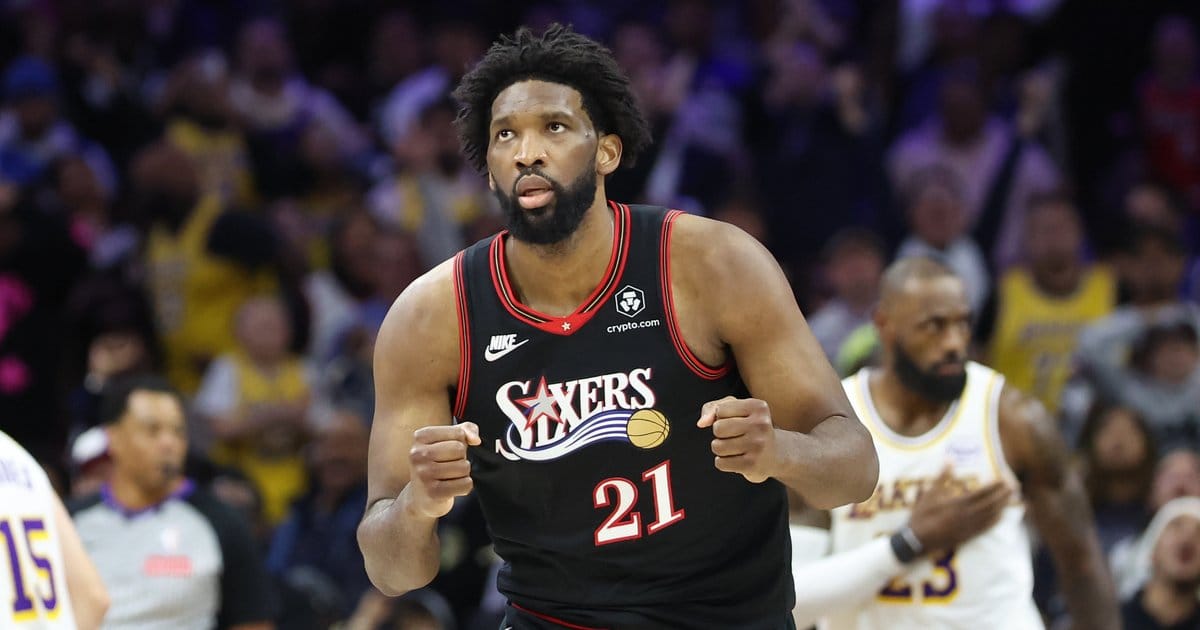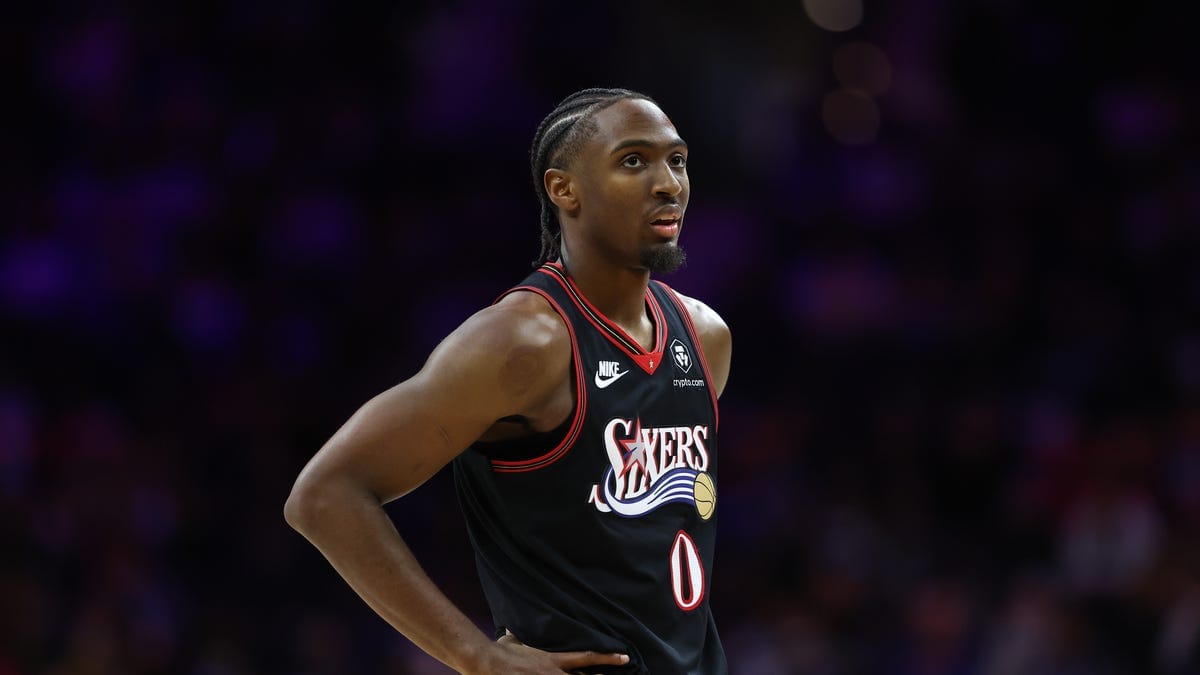
They Think You’re Stupid: The Official Lie About Maxey and Embiid
Let’s not dance around the issue. The corporate media and the NBA establishment want you to believe a very simple, very neat story about the Philadelphia 76ers and their star players, Joel Embiid and Tyrese Maxey, ahead of a seemingly ordinary Friday night matchup against the Indiana Pacers. The official line? It’s a simple case of Maxey having a sudden illness, a downgrade from probable to questionable or out, and Embiid simply managing the lingering effects of a previous injury, a ‘knee injury recovery’ situation that keeps him listed as probable. This narrative, carefully crafted by public relations departments and dutifully regurgitated by talking heads on television, suggests that these are just minor, almost accidental bumps in the road, the natural wear and tear of a long season. They present these updates as straightforward medical fact, a neutral data point for your fantasy league or your sports betting slip, asking you to accept the information at face value without questioning the underlying mechanics of power and profit that actually dictate these decisions in today’s multi-billion dollar league. This is the official story, and if you swallow it whole without gagging, then frankly, you’re part of the problem.
The truth, however, is far uglier than a simple stomach bug. The constant manipulation of injury reports, the late downgrades of star players, and the euphemistic use of terms like “load management” are not just isolated incidents; they represent a fundamental betrayal of the fan, a systematic devaluation of the regular season, and a clear sign that the league’s priorities are completely skewed towards corporate interests and television contracts rather than the integrity of the game itself or the loyalty of the ticket-buying public. This isn’t just about one game against the Pacers, which might seem insignificant on paper; it’s about the erosion of trust between the institutions of professional basketball and the very people who pay for its existence. The specific details of Maxey’s alleged “illness” are merely the latest symptom of a much deeper institutional sickness that has infected the entire sport, turning what should be genuine athletic competition into a carefully scripted, risk-averse commercial enterprise where player health is a commodity to be managed, not a force of nature to be overcome. The question isn’t whether Maxey is actually sick, but rather, why we are so quickly conditioned to accept these excuses for strategic rest when the real reason—protecting high-value assets for playoff profits—is staring us right in the face.
The Great Deception: From ‘Probable’ to ‘Disgrace’
Let’s look closely at the language used in these reports, because the devil, as always, is in the details. The initial report lists Embiid and Maxey as “probable.” This is a standard tactic. It keeps the public hopeful. It keeps ticket sales strong. It ensures that television networks aren’t panicking about potential viewership drops before the game even starts. Then, closer to game time, the pivot occurs. Maxey gets downgraded. Suddenly, what was merely an ‘illness’—which in the old days, a guy would play through with a fever, or at least a sniffle—becomes significant enough to pull him from a game entirely. Embiid, meanwhile, remains on the probable list for “injury recovery,” a term so vague it could mean anything from needing a good night’s sleep to having a serious medical issue that is being downplayed. The real injury, you see, isn’t on the knee; it’s in the scheduling. It’s the physical and mental toll of a relentless schedule designed for maximum profit, forcing teams to make difficult choices that prioritize long-term asset value over short-term fan satisfaction. This isn’t about an individual player’s health anymore; it’s about the league’s collective decision to prioritize the playoff brackets over the regular season grind. The regular season, once the crucible of genuine competition, has devolved into little more than a necessary evil, a 82-game-long appetizer before the main course of the playoffs, and we, the paying customers, are expected to simply accept this new reality. The idea of an “iron man” player, someone who plays every game regardless of minor ailments, is now considered naive, a relic of a bygone era before analytics and advanced metrics took over the front offices. Now, a player’s greatest asset isn’t their toughness; it’s their availability during the high-leverage games in April and May, even if it means sacrificing the integrity of the product in November and December. It’s a calculated decision, designed to protect the investment in the superstar, a strategy that views the regular season game not as an end in itself, but merely as a means to an end. This is where the populist anger really ignites, because this isn’t just about a team resting a player; it’s about a fundamental disrespect for the working-class fan who saved up to buy tickets to see the stars play. They came to see Embiid and Maxey, not the deep bench. The establishment, however, would have us believe that a ticket to see a game is merely a ticket to a generic entertainment event, not a promise to witness the best players competing at their peak. It’s a bait-and-switch operation, plain and simple, and it’s happening every single night across the league.
The Betrayal of the Fan: Where Your Money Really Goes
When you buy a ticket to a regular season game, especially one where the stars are listed as probable, you are implicitly making a transaction based on trust. You trust that the team will field its best possible roster, that the players will give maximum effort, and that the integrity of the competition will be preserved. The minute a star player is held out for strategic rest—whether it’s officially called “load management” or a more convenient “illness”—that trust is broken. The fan, the “us,” is left feeling cheated. This isn’t about Embiid or Maxey specifically, mind you; this is about the system that forces them into this position. The system, run by the “them,” which includes team owners, front office executives, and the league office, prioritizes the profitability of the playoff product over the experience of the regular season consumer. They want their stars healthy and well-rested for the high-stakes, high-revenue playoff games. They want to avoid injury at all costs, especially during mid-season games against opponents that are considered less of a threat. The Indiana Pacers, while a decent team, represent exactly this kind of opponent for a championship contender like the Sixers. The calculation is cold and calculating: maximize the chances of winning in the playoffs by sacrificing the integrity of the regular season. The problem with this calculation is that it completely ignores the emotional investment of the fan base. The people who buy tickets, the people who spend money on merchandise, the people who tune in every night on cable television—these are the ones who are paying the price for the league’s strategic maneuvering. The constant resting of stars in the name of injury prevention fundamentally undermines the value proposition of a regular season ticket. Why would anyone pay top dollar to attend a game if they know there’s a strong possibility that the star players won’t be playing, and that the official reason given will be nothing more than a convenient excuse to protect the team’s assets? This practice not only disrespects the paying customer, but it also creates a culture of cynicism around the sport. It teaches fans to expect deception, to question every injury report, and to view the league not as a sporting competition but as a business operation where the outcome is secondary to the financial health of the organization. This isn’t basketball; it’s a glorified spreadsheet. And we, the fans, are just numbers on that spreadsheet, too.
The Shifting Culture: A League in Decline
The transition from a league where stars played through pain to one where they rest for minor ailments didn’t happen overnight; it was a gradual erosion of values driven by changes in player contracts and the rise of data analytics. Look back at previous generations. We had guys like Michael Jordan, who, even in exhibition games, played with an intensity that suggested every minute on the court was sacred. We had iron men like Karl Malone and John Stockton, who seemed to play every single game for years on end, battling through injuries that would sideline a modern player for weeks. Today, the prevailing culture is one of caution and preservation. The stars are viewed as assets to be protected, not competitors to be unleashed. The massive contracts and endorsement deals have incentivized a risk-averse approach, where the financial cost of a potential injury far outweighs the short-term benefit of playing through pain during a regular season game. This shift has fundamentally changed the nature of the sport. We no longer celebrate toughness and grit; we celebrate strategic resting and calculated preservation. The narrative has changed from “what a warrior” to “what a smart business decision.” This isn’t progress; it’s a decline in competitive spirit. The league, in its pursuit of maximizing profits and protecting its investments, has sacrificed the very essence of what made it appealing in the first place: the spectacle of athletic heroes overcoming adversity. Instead, we are left with a product that feels increasingly manufactured, where the outcomes are predetermined by who decides to sit out, not by who performs better on the court. This new reality is particularly galling when you consider the impact on the development of younger players and the overall competitiveness of the league. When stars are constantly resting, the quality of the product suffers, and the regular season becomes less and less meaningful. This is not just a problem for the Sixers or the Pacers; it’s a problem for the entire league. The NBA is slowly but surely eating itself from the inside out, prioritizing short-term financial gains over long-term fan loyalty. And when the fans finally decide that enough is enough, that they are tired of being treated as second-class citizens, the entire house of cards will come crashing down. We’re getting close to that breaking point. The suits better watch out. The little guy is getting angry, and he’s not going to keep quiet much longer. This isn’t just about basketball anymore; it’s about the very integrity of entertainment in all professional sports. It’s time to demand better from the people who run the game. We deserve real competition, not calculated management.