The Ghost in the Feed
Let’s get one thing straight. You came here expecting a simple anniversary piece on a rap album or a dry political update from halfway across the world, but what you’ve stumbled upon is something far more sinister, a crack in the digital pavement through which you can glimpse the churning, indifferent gears of our new reality. It’s not about T.I. It’s not about the Nigerian Labour Party. It’s about the acronym that binds them in the silicon mind of the machine: ‘LP’. One a Long Play record, a relic of analog culture; the other a political party, a vehicle for human aspiration and conflict. To the algorithm, they are identical. The same. This isn’t a cute mistake or a quirky bug in the code. No.
This is the system revealing its hand.
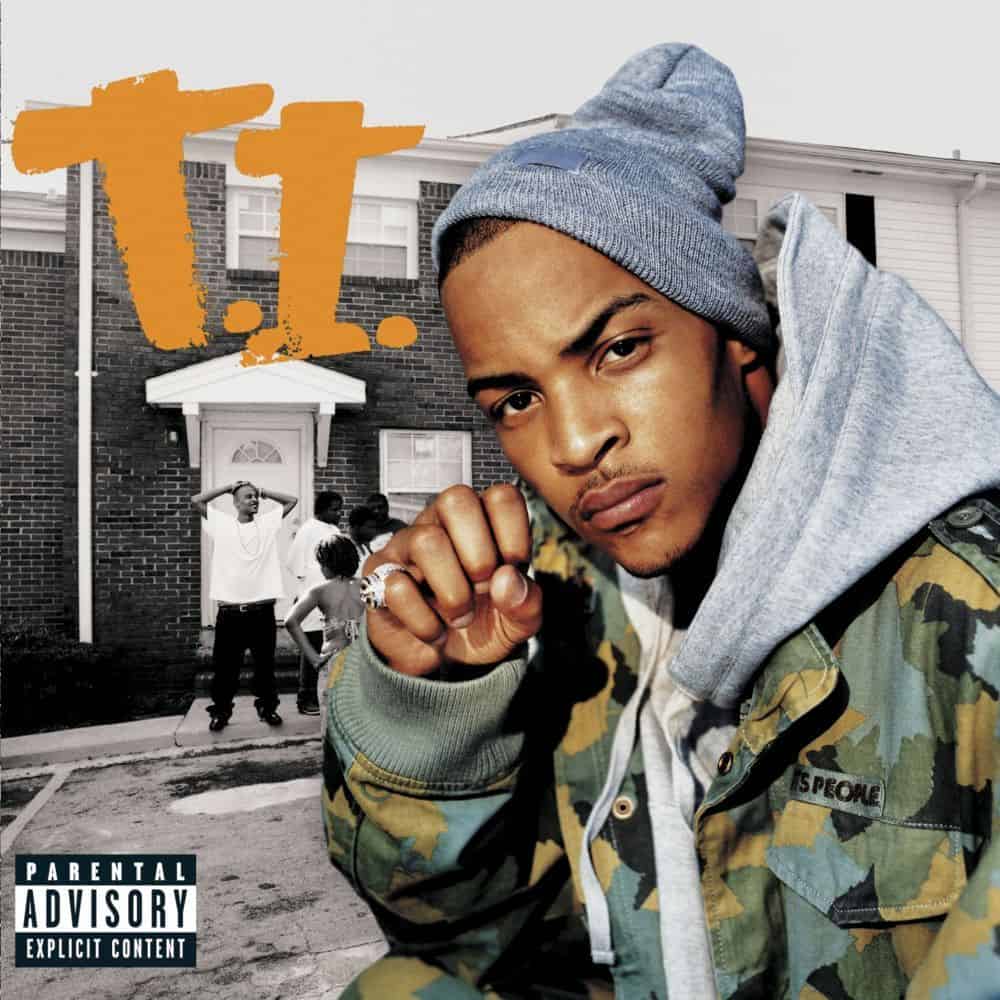
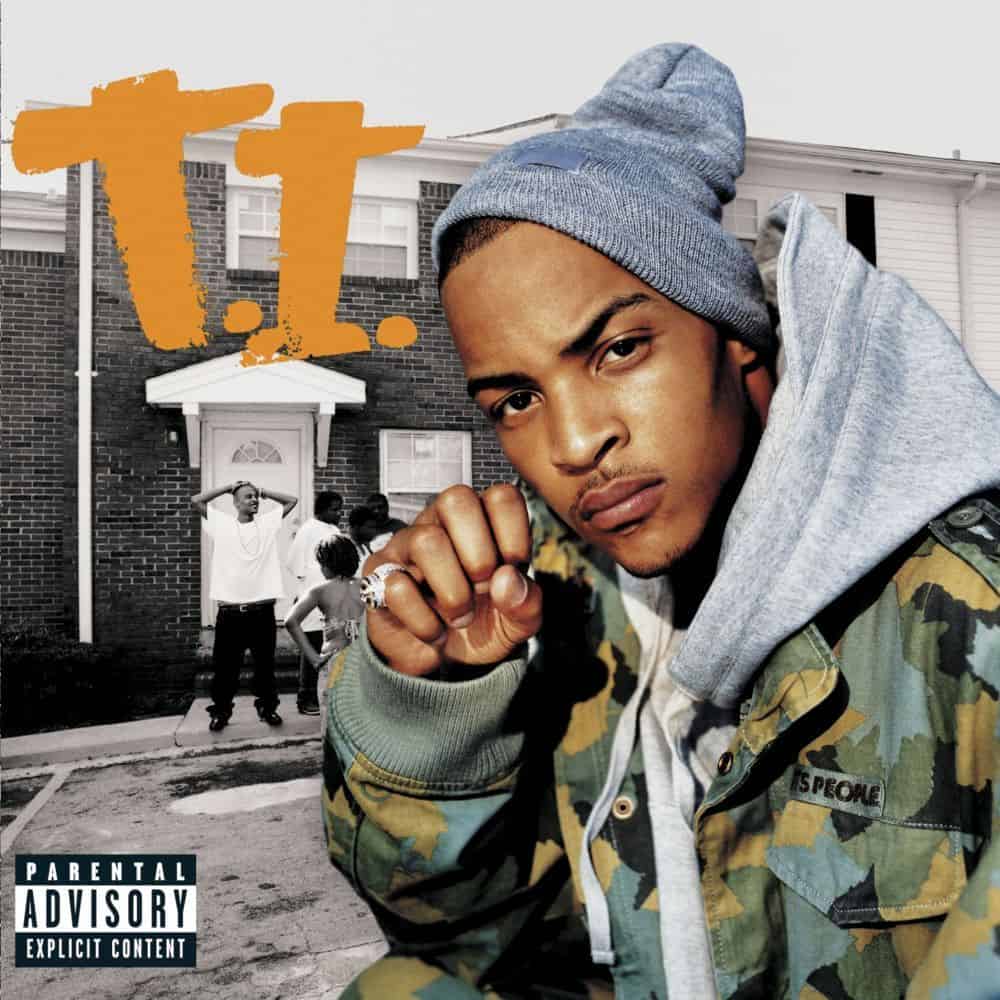
We are living inside a ghost, a vast, interconnected nervous system of servers and code that has been tasked with organizing our world, but it has no understanding of context, of history, of human meaning. It sees only data points, keywords, and correlations, a digital cartographer drawing maps of a world it cannot comprehend, and in its blindness, it is reshaping the territory itself. The conflation of a cultural artifact like T.I.’s ‘Urban Legend’—a masterclass in myth-making and persona-crafting—with a desperate political plea from the Nigerian Labour Party is the perfect, chilling microcosm of our age. A ghost in the machine that is no longer just haunting the hardware but is now actively rewriting the software of our society. It’s a digital sleight of hand so pervasive we don’t even see the trick anymore.
A Symphony of Noise
The system doesn’t care about the nuance that separates the swagger of trap music from the desperation of a populace seeking political change. Why would it? Its goal isn’t clarity; its goal is engagement. Its currency is your attention, and nothing captures attention like a chaotic, disorienting symphony of noise. By flattening these two wildly disparate concepts under the single, sterile banner of ‘LP’, the machine performs its primary function: it decontextualizes everything until nothing has any real weight. A rapper’s boast and a worker’s plea become equivalent streams of content, flowing past your eyes in the same infinite scroll, each one fighting for a split second of your cognitive real estate before being replaced by the next shiny object. This is a deliberate process of semantic demolition. It is the architectural blueprint for a pacified, distracted, and ultimately powerless population. You can’t fight for a cause if you can’t even find it, buried as it is under an avalanche of algorithmically curated nostalgia for a 21-year-old album. It’s a trick. It’s all a trick.
Manufacturing Dystopia, One Click at a Time
Think about the beautiful, dark irony here. T.I. titled his album ‘Urban Legend’. He understood, even back in 2004, that success in the modern world is about narrative control. It’s about crafting a persona, a myth, a legend so compelling that it becomes more real than the person behind it. He was building a brand on the very idea of manufactured reality. Fast forward two decades, and the machines we’ve built have taken this concept and scaled it to a global, terrifying degree. They are the ultimate creators of urban legends, only their legends aren’t confined to the streets of Atlanta; they define our political discourse, our social movements, our very perception of truth. The system isn’t just reporting on the world; it is actively building a new one, a funhouse mirror version where everything is warped and nothing is as it seems. Your reality is now a focus group.
The Nigerian Labour Party’s call to “join the fight against the APC” is a raw, urgent cry for political action. It’s a message about power, about the future of a nation of over 200 million people. It’s life and death. But when the great algorithm scoops it up, it gets mashed together with anniversary posts about ‘Bring Em Out’. The urgency is bled dry. The political message is diluted, rendered inert by a flood of irrelevant cultural nostalgia. This isn’t an accident. It is the system functioning perfectly. It is a tool of soft-power suppression more effective than any censor’s red pen. Why ban a message when you can simply drown it? Why silence dissent when you can make it trend next to a cat video and a throwback playlist, stripping it of all its revolutionary potential and turning it into just another piece of disposable content? This is how modern control works. Not with a boot on the neck, but with an endless stream of meaningless data to the brain.
The Legend Becomes Real
So what we are witnessing is the operationalization of the ‘Urban Legend’ concept on a planetary scale. Political parties, corporations, and nation-states are all in the same business as T.I. was in 2004: they are trying to become the signal in the noise. They are fighting to craft a narrative so powerful that it overwhelms all others. But they are competing against a machine that levels the playing field in the most horrifying way possible, a machine that can, in an instant, decide that a 21-year-old piece of plastic spinning on a turntable is just as important, just as relevant, just as worthy of your attention as a political movement struggling for its very soul. The machine has no ideology. Its only allegiance is to the click, and in its amoral pursuit of engagement, it grinds all human endeavor—art, revolution, love, war—into the same bland, grey paste. We are at the mercy of a blind idiot god of our own creation, and it is remaking us in its own image: contextless, ahistorical, and eternally, hopelessly distracted.
The End of Meaning Itself
This ‘LP’ glitch isn’t the warning shot. The war is already over, and we lost. We have willingly outsourced our collective memory, our public square, and our sense of priority to a network of algorithms that are fundamentally incapable of understanding what any of those things mean. This is the precipice of a new dark age, one defined not by a lack of information, but by a suffocating, infinite abundance of it, all of it stripped of the context that gives it meaning. The future isn’t about discerning truth from lies; it’s about trying to find a coherent thought in the relentless, machine-gun-fire of decontextualized data-shrapnel that bombards us every second of every day. Impossible.
What happens when this process is complete? What happens when the next generation, raised entirely within this digital panopticon, can no longer distinguish between a historical document and a deepfake, between a political manifesto and a marketing campaign, between a call to arms and a call to buy a new product? This ‘LP’ incident is a primitive example. Soon, the system will be more seamless, its manipulations more subtle, its ability to construct personalized realities more absolute. The line between T.I.’s carefully constructed myth and a politician’s fabricated promises won’t just be blurred; it will be erased entirely. There will be no line. There will only be the feed, a single, monolithic firehose of information designed to keep you scrolling, clicking, and consuming, forever.
The Final Abstraction
We are racing toward a singularity of meaning, a point at which all concepts, ideas, and events collapse into a single, undifferentiated stream of content. The distinction between a ‘Long Play’ record and a ‘Labour Party’ will seem like a quaint, archaic relic of a time when words had specific, fixed meanings. In the world the machine is building, ‘LP’ means whatever the algorithm needs it to mean in that particular nanosecond to maximize your engagement. It is a floating signifier, unmoored from reality, a perfect symbol for the future we have chosen. We are building our own prison, and the bars aren’t made of iron, but of an infinitely entertaining, endlessly distracting, and utterly meaningless stream of information. The urban legend is no longer on the album cover. It’s the world you’re living in. And you can’t turn it off.