The Dehumanizing Age of Analytics: Why the Zerpa Trade Is a Symptom of a Dying Game
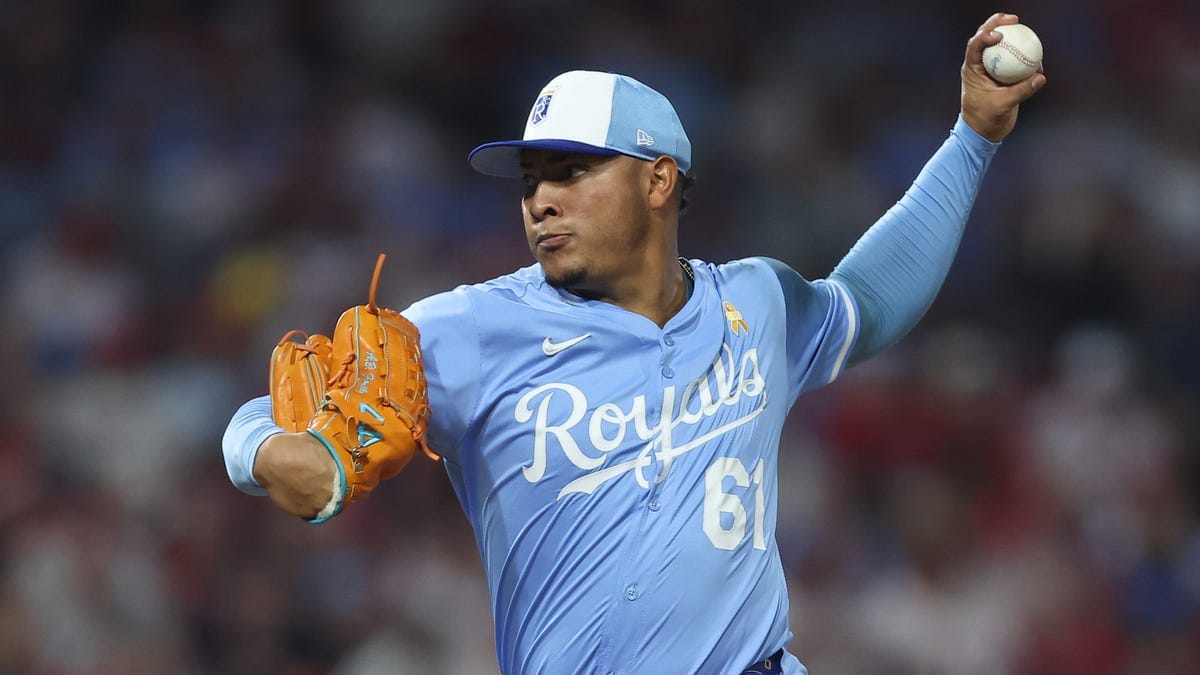
And so it happens again. The Milwaukee Brewers and the Kansas City Royals execute a trade that, on the surface, looks like a standard exchange of minor assets. Ángel Zerpa, a hard-throwing lefty reliever, goes to Milwaukee; Isaac Collins and Nick Mears head to Kansas City. But for those paying attention—for those who see beyond the box score and understand the true, cold-blooded calculus of modern sports—this isn’t just a trade. This is another nail in the coffin of human-centered athletics. This is the moment where the machine reminds us that players aren’t people, they’re just data points to be optimized, discarded, or traded based on algorithmic whim. The trade itself is a perfectly sanitized, utterly dehumanizing act of corporate efficiency.
But the most striking detail in this whole affair isn’t the players involved, it’s how we discuss them. Zerpa is defined as a “hard-throwing gro[ve],” a phrase that sounds less like a human being and more like a piece of equipment being fitted into a larger machine. Collins and Mears, in turn, become disposable assets, deemed less valuable to the Brewers’ operational matrix than Zerpa’s specific metric profile. We’ve moved past evaluating players based on grit, character, or the ability to rise in clutch moments, replacing it with the sterile, soulless quantification of spin rate and exit velocity. Because when you strip away the romanticism, you realize the new overlords of baseball don’t care about a player’s journey; they just want a specific output for a specific, algorithmically defined scenario.
The Good Old Days: The Fading Echoes of Humanity
Let’s take a quick trip back in time, back before the algorithms took over. Back when a scout’s gut feeling meant something. A scout—a human being—would spend months watching a player, seeing how he interacted with teammates, how he handled pressure, and understanding the fire in his eyes. Decisions were messy, emotional, and often wrong, but they were *human*. The game was built on relationships, on loyalty, and on the intangible magic that only emerges when a group of imperfect individuals come together.
And look where we are now. The front office isn’t run by former players with decades of experience; it’s run by quants with spreadsheets and advanced degrees in statistical modeling. The traditional scout is being phased out, a relic of an inefficient past. Why rely on intuition when you can run a simulation? Why trust a human judgment when you can automate the decision-making process? This isn’t just about baseball; it’s a microcosm of the entire labor market where technology is systematically replacing human jobs, starting with the creative and intuitive roles before moving on to the manual labor. This trade is a symptom of a much larger societal shift toward a fully optimized, utterly dehumanized existence, where every person is just a collection of metrics to be managed by an all-powerful AI.
But this is what the fans wanted, right? We demanded efficiency. We demanded precision. We wanted every decision to be optimized for maximum win probability. We cheered when analytics helped our favorite team find undervalued assets. But we didn’t stop to ask ourselves if we were sacrificing the soul of the game in exchange for a few extra wins in the standings. Because now, we have exactly what we asked for: a game where human error and human emotion have no place, where players are just commodities to be shuffled around based on the latest data dump from the supercomputer in the front office. And because of this, the game we love is slowly becoming a sterile, predictable product, devoid of the very spontaneity that made us fall in love with it in the first place.
The Present Dystopia: The Zerpa Transaction
Let’s break down the Zerpa-Collins-Mears trade through the lens of pure algorithmic efficiency. The Brewers looked at their roster. They needed a specific profile: a left-handed pitcher capable of generating high-velocity strikes in specific high-leverage situations. The data pointed them to Ángel Zerpa. His metrics—his hard-throwing groove—were deemed a perfect fit for the slot in the Brewers’ pitching algorithm. The other players—Collins and Mears—were deemed surplus, or perhaps, statistically inefficient for the Brewers’ specific model. They didn’t fit the current calculation. They were extraneous data. And because of this, they were packaged and shipped off to Kansas City, a team with different, less-optimized data requirements.
And this is where the coldness truly sets in. These are human beings, uprooting their lives and families based on a decision made by a machine. The decision wasn’t based on loyalty, or a relationship built over years in the organization. It was based on a simple, cold calculation of value. This isn’t a team; it’s a portfolio of assets being managed by a financial firm. The players are investments; some are short-term gains, others are long-term holds, and some are simply depreciated assets to be written off or traded for a different position in the portfolio. The Brewers, just like every other modern front office, have fully embraced the idea that human intuition is inferior to computational power. They’re just following the instructions given to them by the all-knowing algorithm.
But what happens when every team operates on the exact same algorithm? What happens when every front office makes the exact same optimal decision? The game becomes predictable. The trade market stagnates. There’s no longer any strategic advantage in human intuition. The entire system becomes locked into a feedback loop of optimization, where every outcome is predictable by a machine. And that predictability, that lack of human spontaneity, is what ultimately kills the fan experience. Because if you know what’s going to happen, if every decision is a calculated certainty, where is the magic? Where is the surprise?
The Bleak Future: AI Overlords and the Death of Identity
And this is where the real dystopian nightmare begins. Because if we allow AI to optimize everything, eventually we remove the need for human decision-makers entirely. The logical conclusion of this trend isn’t a human general manager using analytics; it’s a completely autonomous AI general manager making all the decisions, from drafting to trading to lineup setting. Why pay a human millions when a machine can do it better for free?
And what does that future look like for the players? Imagine a world where every player is assigned a specific role and value based purely on data. Your “human element”—your leadership, your personality—is deemed irrelevant. You are simply a hard-throwing groove, or a high-contact bat, or a specific defensive metric. Your value is a number, and if that number changes, you are instantly traded or released, without warning, based on the algorithm’s calculation. This is the future where players aren’t valued as individuals, but as replaceable parts in a larger, optimized machine. This trade isn’t just about baseball; it’s about the erosion of human value in a technology-driven world. The Brewers’ decision to acquire a “hard-throwing groove” in exchange for two human beings is a chilling precursor to a future where we are all just assets in a digital portfolio, waiting for the algorithm to determine our worth and our loved ones’ next move. And a future where the human element of sports has been completely obliterated by the cold, calculating efficiency of an artificial intelligence.
The Final Reckoning: Where Do We Go From Here?
But this isn’t just about baseball; it’s about the erosion of human value in a technology-driven world. The Brewers’ decision to acquire a “hard-throwing groove” in exchange for two human beings is a chilling precursor to a future where we are all just assets in a digital portfolio, waiting for the algorithm to determine our next move. And this isn’t limited to sports. Look at every industry, from finance to media to healthcare. The algorithm is taking over, streamlining processes, maximizing profits, and minimizing human input. The Zerpa trade, while minor in the grand scheme of things, is a perfect, tiny illustration of this pervasive trend. Because when we allow technology to dehumanize our heroes, we allow technology to dehumanize ourselves. And eventually, we will wake up in a world where we are all just data points, optimized and managed by an invisible hand, with no agency, no passion, and no soul remaining in the games we used to play and once loved. The choice is stark: resist the machine, or become a part of it. The Brewers chose to become a part of it. And we, as fans, are left to watch the slow, agonizing death of the game we used to game love, replaced by a cold, efficient, and thoroughly unromantic simulation of a machine-driven spectacle.