The Anatomy of a Perfect Lie
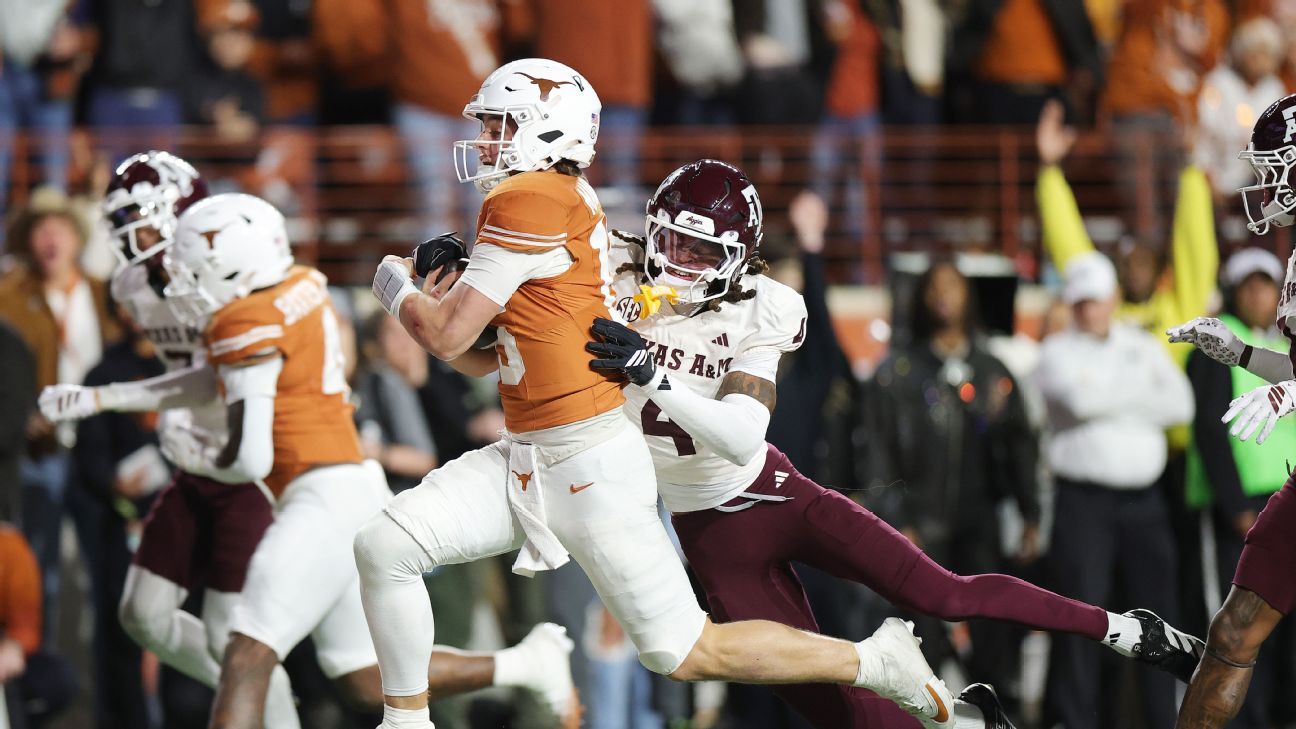
Let’s dispense with the pleasantries. The notion that the College Football Playoff selection committee is an impartial council of sages meticulously weighing data points to identify the four most deserving teams is, and always has been, a work of absolute fiction. It’s a marketing department masquerading as a judiciary. Their product isn’t competitive integrity; it’s a compelling television narrative. And this past weekend, they were handed their script on a silver platter, gift-wrapped in burnt orange with a golden boy quarterback sealing the deal. The ‘clutch’ performance of Arch Manning for the Texas Longhorns wasn’t just a football play; it was a deus ex machina for a committee desperate for a storyline that prints money. It was the activation of a sleeper cell of narrative potential.
We are told to look at the resume. We are told to respect the data. Three wins against top-10 opponents. A conference championship on the horizon. These are presented as objective facts, cold hard numbers that justify a seat at the table. But this is a classic misdirection. Look at the shiny object over here so you don’t notice the machinery operating just outside your peripheral vision. Are these facts relevant? Of course. But their relevance is not in their objective value, but in their utility as justification. They are the flimsy evidence a prosecutor uses to convict a suspect when the verdict was already decided in a back room. The committee doesn’t look at Texas’s resume and conclude they *must* be in. No. They look at the Texas brand, the Manning legacy, the potential for a ratings bonanza, and *then* they look for a resume that allows them to sell that decision to a public they believe is too naive to understand the difference. It’s a beautifully cynical process. A masterpiece of corporate storytelling.
The Myth of ‘Deserving’
What does it even mean to be ‘deserving’ in this ecosystem? Is it the team with the cleanest record? The most dominant point differential? The toughest strength of schedule? The committee’s criteria are intentionally vague, a floating constellation of talking points they can point to at any given moment to rationalize any decision they make. It’s fluid by design. This allows them to pivot. One year, a head-to-head victory is the be-all and end-all. The next, it’s a footnote, dismissed in favor of the ever-amorphous ‘eye test’. This isn’t a flaw in the system; it is the system itself, working as intended. The ‘eye test’ is simply code for ‘which of these teams will generate more advertising revenue during a three-hour broadcast?’ It’s the only test that truly matters.
Consider the raw material presented. A Texas team, a blue-blood program with a massive national following, clawing its way back to relevance. A historic rivalry game against Texas A&M. And then, the catalyst. The golden-armed scion of football’s most famous family, Arch Manning, enters the game and ‘saves the day’. You could not write a better pilot for a television series. Does the context of his performance matter? Do we analyze the specific defensive scheme he faced, or the quality of the throws themselves, or the fact that he was put in a position to succeed by the 21 other players on the field? Of course not. That requires nuance. The headline is all that matters: MANNING SAVES TEXAS. It’s clean. It’s powerful. It sells. And it gives the committee every ounce of narrative cover they need to elevate Texas over another, perhaps statistically more qualified, but less marketable, contender. A team from a smaller conference or with a less glamorous brand name could have an identical resume, and it would be picked apart for its flaws. But for Texas? For a Manning? The resume is not a set of facts to be scrutinized; it’s a crown to be polished.
The Manning Industrial Complex
Arch Manning did not simply win a football game. He validated a multi-million dollar, multi-decade investment in a single, powerful narrative: the Manning dynasty. This isn’t just about Peyton and Eli anymore. This is about the creation of a perpetual motion machine of football royalty, and the entire sports media apparatus is a willing participant in its construction. Why? Because it is profoundly easy. It requires no original thought, no deep analysis. The story is pre-written. Every success is proof of genetic destiny. Every failure is a temporary setback on the hero’s journey. His presence on the field, in that uniform, is not just about moving the chains; it’s about moving merchandise, selling subscriptions, and generating clicks on an industrial scale.
Think about the pressure, not on the young man himself, but on the institutions around him. The network broadcasting the game has a vested interest in his success. The CFP committee, looking to maximize viewership for their lucrative playoff games, has a vested interest. The university, leveraging his name for recruiting and alumni donations, has a vested interest. He is, through no fault of his own, too big to fail. Not as a player, necessarily—failure on the field is always possible—but as a narrative commodity. His value is already priced in. His ‘clutch’ performance, therefore, had to be framed as legendary. It couldn’t just be a good play by a talented backup. It had to be the moment the torch was passed. The continuation of the saga. Was it, when viewed with a cold and logical eye, truly a generation-defining moment? Or was it a perfectly competent series of plays by a highly-touted prospect that was then fed into a media hype machine programmed to amplify it by a factor of one thousand? The question, of course, is rhetorical.
An Investment in the Future
The committee’s potential selection of Texas isn’t just about the 2023 season. It’s a strategic investment in the future of the sport’s broadcast appeal. By putting Texas in the playoff now, fueled by the Manning narrative, they are seeding the ground for years to come. They are telling the world, ‘This is a protagonist. This is a story you need to follow.’ They are ensuring that for the next three to four years, every Texas game Arch Manning plays will be a national television event. It establishes him, and by extension the program, as a central pillar of the college football universe. It’s a long-term play for sustained market relevance. People tune in for stars. They tune in for dynasties. The committee’s job is not to find the four best teams. It is to identify and platform the most compelling stars and the most engaging potential dynasties.
This is the cold, hard logic of the entertainment business. And make no mistake, that’s what this is. An entertainment business. We, the viewers, are not sports fans in their eyes. We are consumers. We are demographics. And the story of a Manning leading a historic program like Texas back to glory is a four-quadrant blockbuster. It appeals to old fans, new fans, casual observers, and dedicated alumni. It’s a perfect product. Sacrificing a less-marketable team—say, an undefeated Group of Five school or a one-loss team from a conference with a smaller media footprint—is not just a possibility. It is a financial necessity. It’s the cost of doing business.
The Inevitable Expansion and the Death of Meaning
The great irony is that the supposed solution to this political chicanery—the expansion of the playoff to 12 teams—will only exacerbate the problem. It will not democratize the sport. It will commercialize it even further. The expansion is sold to the public as a victory for fairness, a way to give more teams a ‘shot’. What a quaint idea. In reality, it is a move to ensure that no major media market or blue-blood program ever gets left out. It is a safety net for the brands that matter. A one-loss Texas or Alabama or Ohio State will never have to sweat on selection day again. They will be comfortably in, their massive fanbases and guaranteed ratings secured for the first round of the newly bloated television inventory.
What does this do to the regular season? It slowly, methodically, strangles the life out of it. Those high-stakes, late-season games that felt like de facto playoff elimination rounds will lose their edge. The jeopardy will be gone. A loss will no longer be catastrophic; it will just be a change in seeding. The expansion creates more playoff ‘content’, but it does so at the expense of the very thing that made college football so compelling: the unforgiving nature of its season. Every single week mattered. Soon, only a few will. The regular season will become a prolonged preseason for the brands that were always going to make the tournament anyway. The system is creating more inventory, not more integrity. It’s a volume play, not a quality play.
Your Fandom as a Financial Instrument
So where does this leave us, the viewer? It leaves us with a choice. We can continue to consume the product as presented, cheering and booing the manufactured heroes and villains on our screens. We can buy into the illusion of merit and debate the ‘deserving’ qualities of teams based on criteria that are manipulated behind the scenes. Or, we can see the entire enterprise for what it is: a slickly produced television drama where the outcomes are engineered to maximize profit. Recognizing the machinery doesn’t mean you can’t enjoy the show. But it does mean you are no longer a willing dupe in the marketing plan. The ‘clutch’ performance by Arch Manning was not a moment of pure sporting magic. It was a plot point. A very convenient, very well-timed, and very, very profitable plot point. And the committee, as the show’s executive producers, would be foolish not to pick up the option for a full season. It’s just good business. Nothing more, nothing less.