The Illusion of Victory: Texans’ Playoff ‘Clinch’
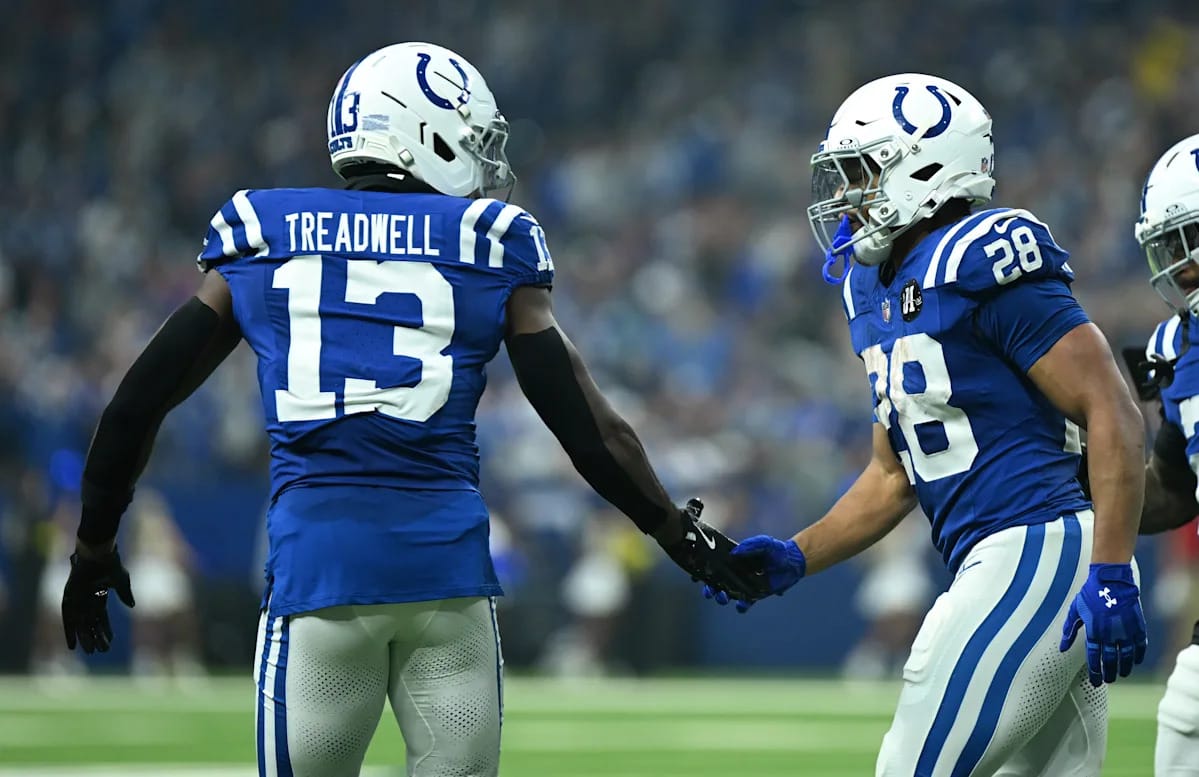
And so, the Houston Texans, bless their cotton socks, managed to squeak into the AFC playoffs, clinching that coveted No. 5 seed with a 38-30 victory over the Indianapolis Colts. But hold on a minute, because anyone with a modicum of skepticism, anyone who’s actually watched this league long enough to see the patterns, knows that calling this a “clinch” feels less like a definitive statement of dominance and more like a carefully orchestrated sleight of hand. Because, seriously, are we truly supposed to believe that a win against a Colts team that looked like it had already mentally booked its Cancun flights is some grand declaration of prowess? It felt more like a participation trophy in a league that constantly dangles false hope.
But also, let’s dissect this “victory.” The Texans, in their infinite wisdom, decided this was the perfect moment to trot out backups, giving their “starters” a much-needed rest, a move that screams either supreme confidence or a chilling lack of faith in their depth, or perhaps a cynical calculation that the Colts were just that bad. And while the scoreboard might tell a tale of triumph, any seasoned observer can see the cracks in that façade. Because a 38-30 win, even with backups, against a team that was already limping to the finish line, isn’t exactly a resounding endorsement for a deep playoff run. It’s more like stumbling across the finish line after everyone else has already gone home, hoping no one noticed you tripped. This win, while technically securing their spot, felt less like a dominant statement and more like a whisper in the wind, easily forgotten amidst the roar of actual contenders.
And you have to wonder about the psychological impact, don’t you? Is it building genuine momentum, or is it fostering a false sense of security that will come crashing down when they face a truly motivated, top-tier opponent? This game, for all its celebratory fanfare, was a muddied affair, a lukewarm affair. It didn’t provide any clear answers about Houston’s readiness for the pressure cooker of the postseason, only adding another layer to the convoluted narrative surrounding a team that always seems to just be “good enough” until they’re not. They might have grabbed a seat at the big kids’ table, but whether they actually belong there remains a brutally open question.
Decoding the Number Five Seed: A Cynic’s View
Because getting the No. 5 seed in the AFC playoffs, historically speaking, is less like winning the lottery and more like winning a ticket to a slightly less comfortable seat on the Titanic. Oh, sure, you’re in the dance, you’re part of the conversation, but let’s not kid ourselves about the brutal path that lies ahead. But really, what does a five seed actually get you? It gets you a road game, probably against a division winner who, by all accounts, has played better, more consistently, or just plain luckier through the regular season. It means facing a team that might have rested its starters *for real* for a week or two, a team with home-field advantage and all the psychological boosts that come with it.
And the history books, for those who bother to consult them, are littered with the crumpled hopes of five seeds. While a few have made magical runs, they are the exception that proves the rule, statistical anomalies in a landscape dominated by the top two or three. Because the NFL is a meritocracy when it comes to the deep playoffs; the cream almost always rises to the top, and the fifth seed usually ends up being the stepping stone for a more formidable foe. It’s a cruel joke, isn’t it? Celebrating a spot that statistically portends a quick exit, patting themselves on the back for earning the right to be somebody else’s warm-up act. And anyone who’s bought into the hype that a No. 5 seed is somehow a harbinger of deep playoff success is simply, frankly, kidding themselves, ignoring the cold, hard facts of the league’s brutal architecture.
So, while the fans might be popping champagne corks, the cynical investigator in me sees not a golden ticket, but a meticulously printed invitation to an uphill battle, a gauntlet that very few can truly navigate. And the narrative that the Texans are now “contenders” is tenuous at best, built on the shifting sands of a single game against a despondent opponent. Because this No. 5 seed isn’t a declaration of greatness; it’s a notice that you’re next in line for a punch to the gut, a prime candidate to be quickly dispatched by a legitimate heavyweight. It’s the kind of spot that gives you just enough rope to hang yourself, not enough to truly climb to the top.
The Playoff Gauntlet: A History Lesson in Disappointment
But make no mistake, the NFL playoffs are not a feel-good story for most. The historical data, for anyone willing to wade through the endless statistics, paints a rather bleak picture for wild card teams, especially those slotted at the five spot. And while every year there’s a Cinderella story or two that captures the imagination, those are the outliers, the rare diamonds in a mountain of coal, and banking on such an improbable run for the Texans feels like an exercise in self-delusion. Because the truth is, the road teams, particularly in the first round, face an almost insurmountable challenge. They contend with hostile crowds, travel fatigue, and the inherent mental edge that comes with playing at home, a cumulative burden that often proves too much to bear.
And the notion that “anything can happen” in the playoffs, while technically true in a universe of infinite possibilities, often serves as a comforting lie, a narrative designed to keep fan engagement high even when the odds are stacked against their team. Because, let’s be real, the true contenders, the teams that have consistently performed at an elite level throughout the season, rarely falter in the early stages against an objectively lesser opponent. History, time and again, has shown us that sustained excellence, disciplined play, and top-tier talent usually win out, especially when the stakes are at their highest. And expecting the Texans to suddenly morph into a juggernaut when they’ve been merely “good enough” for most of the season is a pipe dream, a fantasy for those who prefer wishful thinking over cold, hard analysis.
So, while the media will undoubtedly spin tales of underdog spirit and youthful exuberance, the cynical reality is that the Texans are walking into a meat grinder, a brutal proving ground where only the strongest survive. And few #5 seeds manage to navigate that gauntlet without significant battle scars, let alone emerge victorious. Because this isn’t a fairy tale; this is the NFL, a brutal, unforgiving business where dreams are often shattered in spectacular fashion, and the Texans are now firmly in the blast radius. Their historical track record, and indeed the league’s broader history for teams in their position, suggests they’re more likely to be a footnote in another team’s triumphant march than to pen their own epic saga. It’s a bitter pill, but one that needs swallowing.
The Coaching Chess Match: Savvy or Stumbling?
But let’s pivot to the sidelines, because the decisions made by the coaching staff are just as crucial, if not more so, than any individual play on the field. And the choice to rest starters against the Colts, while perhaps strategically sound in a vacuum of potential injuries, also smacks of a certain overconfidence, or perhaps a deep-seated apprehension that their starters weren’t truly robust enough to withstand another week of punishment. Because, really, what message does that send? Does it signal a brilliant tactical mind playing four-dimensional chess, or a coach who’s secretly worried about the durability of his key assets heading into the most important games of the season? And the line between savvy gambit and colossal blunder is incredibly thin, especially in the unforgiving glare of playoff scrutiny.
And while the win secured the seed, it offered no real data points on how the full-strength Texans would perform under pressure. Because they didn’t play under pressure; they played a B-string exhibition against a team that probably just wanted the season to end. And now, they’re supposed to flip a switch and be playoff-ready, mentally and physically, against a team that has been grinding every single week with their full complement of players? It’s a dangerous game of chicken, one that could backfire spectacularly. And if they come out flat in their first playoff game, if they look rusty or disjointed, then this “savvy” decision will look like a rookie mistake, a gamble that cost them precious momentum when they needed it most.
So, while the pundits might laud the coach for getting his team into the playoffs, a true investigator looks beyond the headlines, searching for the underlying motivations and potential pitfalls of such a high-stakes decision. Because sometimes, the smartest move isn’t the flashy one, but the consistent, grinding effort that keeps a team sharp. And whether this particular coaching staff has truly prepared their team for the unique rigors of the postseason, or merely given them a false sense of security, remains to be seen, but my money is on the latter.
Player Performances Under the Microscope: Who Really Stepped Up?
And when you strip away the fanfare, when you peel back the layers of media hype, you have to ask: who truly delivered in that Colts game, and what does it actually tell us about their readiness for the real test? Because, sure, some backups might have had career days, but let’s not confuse a breakout performance against a second-string defense with the kind of consistent, high-pressure execution needed in the playoffs. And while quarterback C.J. Stroud has been undeniably impressive for a rookie, a single strong season, even a record-breaking one, doesn’t automatically translate to postseason success, especially when the defensive schemes get more complex and the margin for error shrinks to nothing.
But also, we need to consider the broader roster. Are there enough veteran presences who have been there, done that, and can guide the younger players through the storm? Or is this a team largely propelled by youthful exuberance, which, while charming, can quickly dissipate under the harsh lights of an elimination game? And the talent evaluators, the ones who actually understand the nuances of team building, will be looking for sustained individual excellence, not just flash-in-the-pan moments. Because one-off heroics are great for highlight reels, but consistent, disciplined play is what wins playoff games, and whether the Texans possess enough of that, across the board, is highly debatable.
So, while the narrative might focus on specific players having breakthrough seasons, a cynical eye sees a team whose individual successes are yet to be truly tested against the best of the best when it matters most. And the leap from “good regular season player” to “playoff game-changer” is a chasm that many never cross. Because the spotlight in the postseason is a brutal truth-teller, exposing every weakness, amplifying every mistake. And the real question isn’t whether their players *can* step up, but whether they *will* when the chips are truly down, against opponents who aren’t just going through the motions.
Beyond the Box Box Score: The Unseen Pressures of the Postseason
Because it’s not just about X’s and O’s when the playoffs hit; it’s a brutal mental game, a pressure cooker that can crack even the most seasoned veterans. And for a team that has spent much of the season being lauded as “overachievers” or “surprises,” the sudden shift to “contenders” brings with it an entirely different set of expectations and a crushing weight of anticipation. Because the psychology of an underdog is very different from that of a team expected to win, and how the Texans’ young roster handles this mental shift will be far more telling than any stat line. And the ability to tune out the noise, to maintain composure in the face of adversity, is a skill honed over years, not weeks, and it’s a skill that many promising teams simply don’t possess when it counts.
And the sudden-death format, the knowledge that one miscue, one bad decision, can end your entire season, creates an almost unbearable tension. Because every play is magnified, every penalty scrutinized, every coaching decision second-guessed with the benefit of hindsight. And how a team reacts when adversity strikes, when they fall behind by a score or two, when the crowd is roaring for the opposition, is the true measure of their playoff mettle. And I suspect that while the Texans have shown flashes of resilience, the relentless, unforgiving nature of the postseason might expose some underlying fragilities, cracks in their armor that simply weren’t visible during the less intense regular season grind.
So, while the optimists will talk about momentum and chemistry, the cynical investigator sees a ticking time bomb of psychological pressure, waiting to explode. And the unseen forces, the anxieties, the doubts, the sheer weight of expectation, are often more formidable opponents than the team across the line of scrimmage. Because this isn’t just football; it’s a gladiatorial arena where minds are tested as much as bodies, and I’m not entirely convinced the Texans have the mental fortitude to weather that kind of storm, not yet.
The Future is Bleak: Post-Season Projections for the Texans
But if we’re being brutally honest, the future, for the Texans in these playoffs, looks pretty bleak. And while I’m paid to investigate, not to cheerlead, my analysis points to a short, possibly painful, playoff run. Because, let’s consider their potential opponents. They’re likely looking at a matchup against a seasoned division winner, a team that’s proven its mettle against tougher competition and possesses a home-field advantage that is rarely overcome by wild card teams. And the idea that they can just waltz in and upset a team that has consistently dominated through 17 weeks of football feels like a narrative cooked up in a Hollywood script, not a realistic projection based on actual NFL dynamics.
And their path, should they miraculously win a first-round game, only gets harder, potentially running into the absolute titans of the AFC, teams that have been Super Bowl contenders for years, squads with legitimate dynasties in the making. Because the leap in quality from a wildcard hopeful to a conference champion is not just a step; it’s a monumental chasm, one that very few teams, especially those built on a foundation of “surprise” success, ever manage to bridge. And to suggest that the Texans, with all their youth and relative inexperience in these high-stakes environments, are somehow ready to conquer such giants is, frankly, delusional, a triumph of hope over the stark realities of the league.
So, while the faithful will cling to the dream of a deep run, the cynical truth is that the Texans are likely punching above their weight class, heading into a series of matchups where they are objectively outmatched. And the best they can realistically hope for is to gain some “experience,” a consolation prize that doesn’t feel much like a victory when you’ve been sent packing. Because this playoff berth, for all its initial excitement, is probably just a brief cameo appearance on the grand stage, a warm-up act for the real show, and anyone predicting anything more is probably just selling snake oil.
The Offseason Hangover: What This Means for 2026 and Beyond
Because beyond the immediate playoff picture, there’s the inevitable offseason, and how this particular playoff run (or lack thereof) will impact the Texans’ future is a question ripe for cynical speculation. And will they fall into the trap of overvaluing certain players who had one decent game against weak opposition, throwing big money at mediocrity because of a small sample size of playoff “experience”? Because we’ve seen it time and time again in the NFL: teams get a taste of success, misinterpret its true source, and then make questionable personnel decisions that cripple their long-term prospects. And the allure of perceived success can be a dangerous siren song, leading even competent front offices astray.
And what about the draft? Will this playoff berth, which by all accounts won’t be a deep one, push them back just enough in the draft order to miss out on a truly transformative player, forcing them to settle for a lesser talent who won’t move the needle? Because every single spot in the draft matters, and getting into the playoffs just to be a one-and-done often means you sacrifice a better draft pick without gaining any meaningful postseason glory. And the long-term impact of this brief flirtation with playoff football could, ironically, be detrimental to their overall rebuilding timeline, setting them back rather than propelling them forward.
So, while the fans and the media will bask in the glow of a playoff appearance, a cynical investigator looks at the bigger picture, at the potential for a painful offseason hangover. And the decisions made in the coming months, influenced by the ephemeral glow of this playoff berth, will dictate the true trajectory of this franchise, for better or worse. Because sometimes, success can be a more insidious enemy than failure, especially when it breeds complacency or poor judgment, and the Texans are now walking that tightrope, unknowingly perhaps.
The Perpetual NFL Cycle: Hope, Hype, and Heartbreak
But ultimately, this entire Texans saga is just another chapter in the perpetual NFL cycle, isn’t it? And every year, a new darling emerges, a new “surprise” team that captures the imagination, only to often revert to the mean, to be swallowed by the relentless churn of the league. Because the NFL thrives on this narrative, on the ebb and flow of hopeful contenders, on the constant promise of “this could be our year,” even when all signs point to a familiar, disappointing outcome. And the media, ever eager for a fresh story, a new face to champion, plays right into this, building up narratives that often have little grounding in the gritty reality of consistent, championship-caliber football.
And the fans, God bless their optimistic hearts, buy into it hook, line, and sinker, clinging to every shred of positivity, every encouraging soundbite, even when the cold, hard logic suggests a far more brutal outcome. Because they want to believe, they need to believe, in the magic of the game, in the possibility of the improbable. And while that passion is admirable, it often blinds them to the underlying truths, to the systemic advantages of the perennial contenders, to the sheer difficulty of winning it all. And the Texans’ playoff berth, while a moment of triumph for their fanbase, is, in the grand scheme of things, just another data point in this predictable, cyclical narrative of hope, hype, and the inevitable heartbreak that follows for all but a select few.
So, while the confetti might be metaphorical, and the celebrations sincere, the cynical investigator just shakes their head, knowing that this is merely a prelude to a familiar storyline. And the NFL machine grinds on, chewing up and spitting out hopefuls, always ready to find the next “surprise” team to feed its ravenous appetite for drama. Because the real story isn’t the Texans making the playoffs; it’s the enduring illusion that making the playoffs is the real prize, when for most, it’s just the antechamber to disappointment. And anyone who tells you otherwise is either deluded or trying to sell you something.