
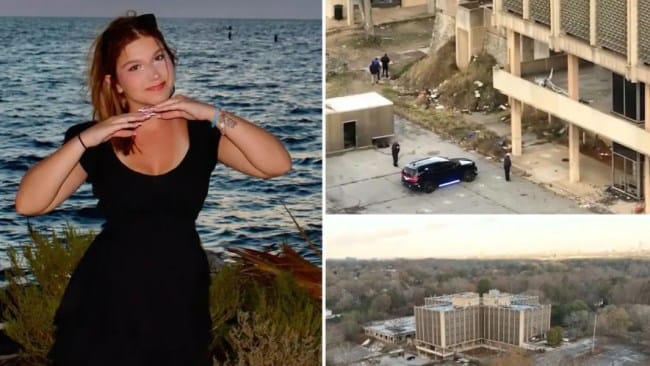
Welcome to the Upside Down of Reality: When Pop Culture Collides with Peril
Alright, folks, settle in. We’ve got ourselves a real head-scratcher, or perhaps, a tragically predictable one, if you’ve been paying any sort of attention to the human condition and its perpetual dance with the utterly boneheaded. We’re talking about Leah Palmirotto, a 19-year-old, who (and this is where the plot thickens, or thins, depending on your cynicism level) met her untimely end after a fall at what’s become an almost mythological location: a Stranger Things filming site. A community gathered in Georgia, tears were shed, memories shared, and the usual outpouring of grief happened (as it should, mind you, for a life cut short). But let’s be real, beneath the genuine sorrow, there’s always a simmering question, isn’t there? A little voice in the back of your head, wondering, what the hell were they doing there in the first place?
This isn’t just about a tragic accident; oh no, this is a full-blown societal symptom, a neon-lit billboard flashing warnings about our collective obsession with chasing fleeting thrills for an audience of digital ghosts (and the occasional real-life consequence). It’s a story as old as time, repackaged for the Instagram generation, where ‘urban exploration’ is less about historical curiosity and more about capturing that perfect, edgy shot that screams ‘YOLO’ right before you, well, you know, bite the dust. The allure of the forbidden, especially when tinged with the glamour of a massively popular Netflix show, is a potent cocktail, and sometimes, someone pays the ultimate bar tab. It’s a sad state of affairs, indeed.
What in the Actual Hell is Urban Exploring, and Why is a Stranger Things Site Such a Hot Ticket?
Urban exploring, or ‘urbex’ as the cool kids call it (or perhaps, called it, given recent events), is basically the grown-up version of breaking into abandoned buildings in your hometown, only now with better cameras and a global audience ready to laud your ‘bravery’ or lament your ‘foolishness.’ It’s about venturing into decaying structures, forgotten factories, decrepit hospitals, and, in this particularly poignant case, abandoned sets or locations tied to pop culture phenomena. The appeal, they’ll tell you, is the thrill of discovery, the peeling back of layers of history, the adrenaline rush of trespassing where you shouldn’t, an almost spiritual communion with the ghosts of the past. Sounds deep, right? Mostly, it’s just folks doing something incredibly dangerous for clout. No offense, but that’s the tea.
The Stranger Things connection is a total game-changer, though (and not in a good way, clearly). This isn’t just any old abandoned warehouse; it’s a place where Vecna might’ve lurked, where Eleven honed her powers, where the very fabric of reality seemed to bend and break. For a generation immersed in digital worlds, these physical touchstones to their beloved narratives become almost sacred, drawing pilgrims seeking to step into the fictional shoes of their heroes. It transforms a derelict building into a portal, a tangible link to a world they desperately wish was real. Who needs a boring old museum when you can walk through the actual Upside Down, right? It’s a potent fantasy, a dangerous delusion, really. And when you mix that potent fantasy with the ‘do it for the ‘gram’ mentality, you’ve got a recipe for disaster that’s more predictable than the next Marvel movie. We see it time and again.
This fascination with ruins, particularly those tied to grand narratives, isn’t exactly new under the sun (or under the flickering neon sign of an abandoned film set). Throughout history, people have been drawn to the crumbling empires, the derelict castles, the ghostly remains of past glories. The Romantics practically made a career out out of swooning over broken columns and moss-covered stones, attributing deep, profound meaning to decay and transience. What’s different now, however, is the velocity and accessibility of that fascination, amplified exponentially by social media, turning isolated acts of adventurous curiosity into widespread, highly visible, and tragically competitive trends. Everyone wants to be the first, the best, the most daring, a true pioneer in the art of selfie-stick-assisted peril, effectively making these dangerous exploits a dime a dozen. It’s a global phenomenon, this digital bragging rights thing.
In a world increasingly sanitized and safe (at least on the surface), the raw, untamed danger of these forgotten spaces offers a perceived authenticity, a connection to something ‘real’ that feels missing from their curated online lives. It’s a rebellious act, a middle finger to the suffocating safety regulations and the bland monotony of everyday existence, a desperate grab for an adrenaline hit that feels more genuine than any video game could ever provide. Young people, especially, are wired for risk-taking, for pushing boundaries, for exploring the unknown, and when you combine that innate drive with the siren song of social validation, you get scenarios like Leah Palmirotto’s tragic accident. It’s a confluence of factors, a perfect storm of youthful exuberance and digital pressure. You can’t deny it.
The global reach of Stranger Things means these locations aren’t just local curiosities; they’re international pilgrimage sites for fans, attracting people from far and wide, often with little to no understanding of the real-world risks involved beyond what they might see in a carefully edited YouTube video. They arrive unprepared, often ill-equipped, and almost always overconfident, believing that their sheer fan dedication will somehow protect them from collapsing floors or unseen hazards. It’s a charming but ultimately lethal naiveté, a belief that the magic of fiction can somehow shield them from the cold, hard laws of physics (and gravity, which, as we all know, is a real buzzkill). Gravity always wins, folks. Every single time.
So, Who Gets to Take the Blame for This Mess? The Kid, the Property Owner, or the Big, Bad Boogeyman Called ‘Society’?
Ah, the blame game! A timeless classic, always guaranteed to get people riled up and pointing fingers faster than you can say ‘attractive nuisance.’ Let’s start with the obvious: the individual. Leah was 19. An adult (legally, anyway, though the brain isn’t fully formed until like, 25, but I digress). She made a choice to enter an abandoned, dangerous building. Trespassing, plain and simple. In a purely legal, cut-and-dried sense, she bears a significant portion of the responsibility for her actions. You play with fire, you get burned. That’s just how the cookie crumbles, right?
But wait, there’s more! What about the property owner? This isn’t just some random dilapidated shed; it’s a known filming location for a massively popular show. That, my friends, makes it an ‘attractive nuisance’ (a legal term, not a judgment on anyone’s personality, thank goodness). When a property owner knows, or reasonably should know, that children (or, apparently, even young adults obsessed with pop culture) are likely to trespass on their land and encounter a dangerous condition, they have a certain duty of care. Even if it’s private property, leaving a deathtrap open for public consumption, especially when it’s become a de facto tourist attraction, is just asking for trouble. It’s a negligence nightmare waiting to happen, a lawsuit lottery ticket just begging to be scratched. Shut it down, secure it, or tear it down, for crying out loud. It’s not rocket science.
And then there’s the big, nebulous ‘society.’ The glamorization of risk. The relentless pursuit of viral content. The desensitization to danger in our media-saturated world. Hollywood creates these incredible, immersive worlds, and sometimes, those worlds spill over into reality in ways nobody intends (or, let’s be honest, often doesn’t even consider during production). Does Netflix have a responsibility to warn people away from their old filming locations? Probably not legally, but morally? That’s a trickier pickle. It’s a complex web. We’ve created a culture where the line between real and fictional is blurred, where the digital persona often takes precedence over real-world safety, and where the thrill of the forbidden is constantly marketed as the ultimate experience. It’s a vicious cycle, a race to the bottom of the common sense barrel, where real consequences are just an inconvenient plot twist. It really makes you wonder.
The historical context here is crucial; societies have always grappled with how to manage dangerous places, from ancient ruins to industrial hazards. The difference now lies in the unprecedented scale of access and information (or misinformation, depending on where you source your ‘facts’). Back in the day, if you wanted to explore a dangerous place, you had to *find* it, often through local legend or word-of-mouth. Now, a quick Google search or a scroll through TikTok will give you coordinates, tips, and a highlight reel of someone else’s near-death experience, effectively democratizing danger. It’s like a digital treasure map, only the treasure might just be a broken neck. Not exactly a pot of gold, is it?
Furthermore, the legal framework around property liability and trespass often feels ill-equipped to handle the nuances of the digital age. Laws designed for casual ramblers or mischievous kids don’t quite fit when an abandoned building becomes an international pilgrimage site for a specific fandom, driven by an insatiable hunger for content. Is a ‘No Trespassing’ sign enough when the cultural draw is overwhelmingly powerful? Should landowners be forced to hire private security for derelict sites simply because a TV show filmed there five years ago? These are the kinds of thorny questions that lawyers will be chewing on for years, probably with very expensive teeth. It’s a jurisprudential quagmire, a real head-scratcher for the legal eagles. Good luck with that one, chaps.
The Great Grieving Spectacle: What Do We Do When Tragedy Hits the Trending Page?
Ah, the vigil. The community coming together. The heartfelt tributes. It’s all very touching, very human, very necessary for those directly affected by such a devastating loss. And then, almost predictably, it becomes another news cycle, another trending topic, another hashtag to be replaced by the next cat video or celebrity scandal within a week (if it’s lucky). We live in an age of hyper-accelerated grief, where tragedies are consumed, processed, and discarded at warp speed, leaving little room for sustained reflection or genuine change. It’s a fleeting moment of collective sadness, a quick pause before we all dive back into the relentless current of digital distraction. Nobody wants to be a buzzkill, but let’s be honest about our collective attention spans. They’re shorter than a TikTok video.
The performative aspect of public grieving, especially on social media, adds another layer of complexity. People offer ‘thoughts and prayers’ not just out of genuine empathy, but also because it’s what you ‘do,’ a ritualistic performance of sorrow that signals your humanity (or at least your awareness of current events). It’s not inherently bad, but it does highlight how tragedy, even deeply personal ones, become public spectacles, fodder for online discourse, and opportunities for moral grandstanding. Everyone wants to weigh in, everyone has an opinion, everyone wants to be seen as compassionate, even if they secretly harbor the same judgmental thoughts about ‘stupid kids’ doing ‘stupid things.’ It’s a peculiar dance, this digital mourning. A real show.
This fleeting attention span isn’t just a modern phenomenon, but it’s certainly exacerbated by the digital age. Historically, public grieving rituals served a dual purpose: to honor the dead and to reinforce community bonds, often over extended periods. Now, with the rapid dissemination of news and the constant feed of new stimuli, the collective memory of a tragedy can be remarkably short-lived. A vigil might last an evening, a news story a few days, but the true, long-term impact on the wider public fades into the background noise, leaving only those closest to the tragedy to bear the enduring weight of their loss. It’s a sad truth, but truth it is. We move on too quickly.
The irony, of course, is that the very platforms that amplify these stories of risk and adventure are the same ones that host the outpouring of grief when those risks go catastrophically wrong. It’s a closed loop, a self-referential echo chamber where the glorification of a dangerous activity and the subsequent lamentation of its consequences are often separated by mere hours or days. The same influencers who might implicitly (or explicitly) encourage urbex culture are often the first to post tearful tributes when an explorer falls. It’s a moral tightrope walk, and many stumble off. It’s a classic case of having your cake and eating it too, only the cake is made of regret and the eating causes indigestion. A real mess, I tell you.
Looking into the Crystal Ball of Cynicism: What Happens Next? More of the Same, Or a Radical Rethink?
So, what’s the prognosis, dear readers? Do we expect a radical shift in human behavior, a sudden wave of common sense washing over the urbex community and property owners alike? (Spoiler alert: Probably not, you optimists, you). More likely, we’ll see a familiar pattern play out. There will be a temporary uptick in warnings, perhaps a few more ‘No Trespassing’ signs (which, let’s be honest, are often seen as suggestions rather than mandates by this demographic), and maybe, just maybe, one or two property owners might actually invest in some proper fencing. But the thrill of the forbidden, the allure of the ‘authentic’ experience, the relentless pursuit of social media glory – those aren’t going anywhere. They’re deeply ingrained in the human psyche, amplified by our digital overlords. It’s a pretty safe bet.
We’ll probably see more incidents like Leah’s, unfortunately. Perhaps not at the same Stranger Things location (though who knows, some people are truly committed to the bit), but at other pop culture landmarks, other abandoned sites, other dangerous places that become, for a fleeting moment, the backdrop for someone’s ill-fated adventure. Liability lawsuits will continue to be filed, lawyers will continue to get rich, and the cycle will perpetuate itself, grinding along with the dreary predictability of a broken record. It’s the human condition, folks, flawed and fascinating in equal measure, always pushing the envelope, often right off a cliff. What a show.
One might hope for a more proactive approach from the entertainment industry itself. Could Netflix, or any studio for that matter, include explicit, prominent warnings about the dangers of visiting filming locations, particularly abandoned ones? Could they, perhaps, even invest in securing these sites themselves, given the enormous cultural capital they derive from them? It’s a long shot, of course. Corporations aren’t exactly known for their bleeding-heart philanthropy when it comes to things that don’t directly impact their bottom line. But hey, a Joker can dream, can’t he? It wouldn’t cost an arm and a leg for them, really. Peanuts, actually.
The philosophical implications extend beyond just individual responsibility and corporate negligence. This incident forces us to confront our society’s relationship with risk, fame, and mortality. Are we, as a collective, becoming too comfortable with vicariously experiencing danger through screens, leading to a distorted perception of real-world threats? Is the constant bombardment of curated, often sensationalized content eroding our natural instincts for self-preservation? These aren’t easy questions, and there are no simple answers, only more layers of the messy, contradictory human experience to peel back. We’re a curious bunch, aren’t we? A walking, talking paradox.
Ultimately, the sad truth is that lessons from tragedies often only resonate with those directly impacted or those who are already inclined to listen. For the wider masses, it’s just another story, another fleeting moment of horror that quickly gets filed away under ‘things that happen to other people.’ The urge to explore, to push boundaries, to seek novelty, is a fundamental part of being human. When combined with the modern pressures of social validation and the blurring lines of reality and fiction, it creates a potent and sometimes lethal cocktail. So, buckle up, buttercups, because unless something fundamentally shifts in our collective consciousness (and I wouldn’t hold your breath), the Upside Down will continue to claim its unwitting victims, one ill-advised selfie at a time. It’s a grim forecast, I know. But somebody’s gotta say it.
The future, it seems, will be a continued balancing act between the thrill-seekers and the risk-averse, between the dreamers drawn to fictional worlds and the harsh realities of concrete and gravity. Property owners will continue to battle trespassers, legal debates will rage, and every now and then, another tragic headline will serve as a stark reminder of the price of adventure. It’s a perpetual cycle, a Sisyphean task for those trying to enforce safety in a world that often rewards daring over discretion. The only certainty is uncertainty, and perhaps, more tales of woe. What a world. What a tangled web we weave.
Photo by sandip44 on Pixabay.