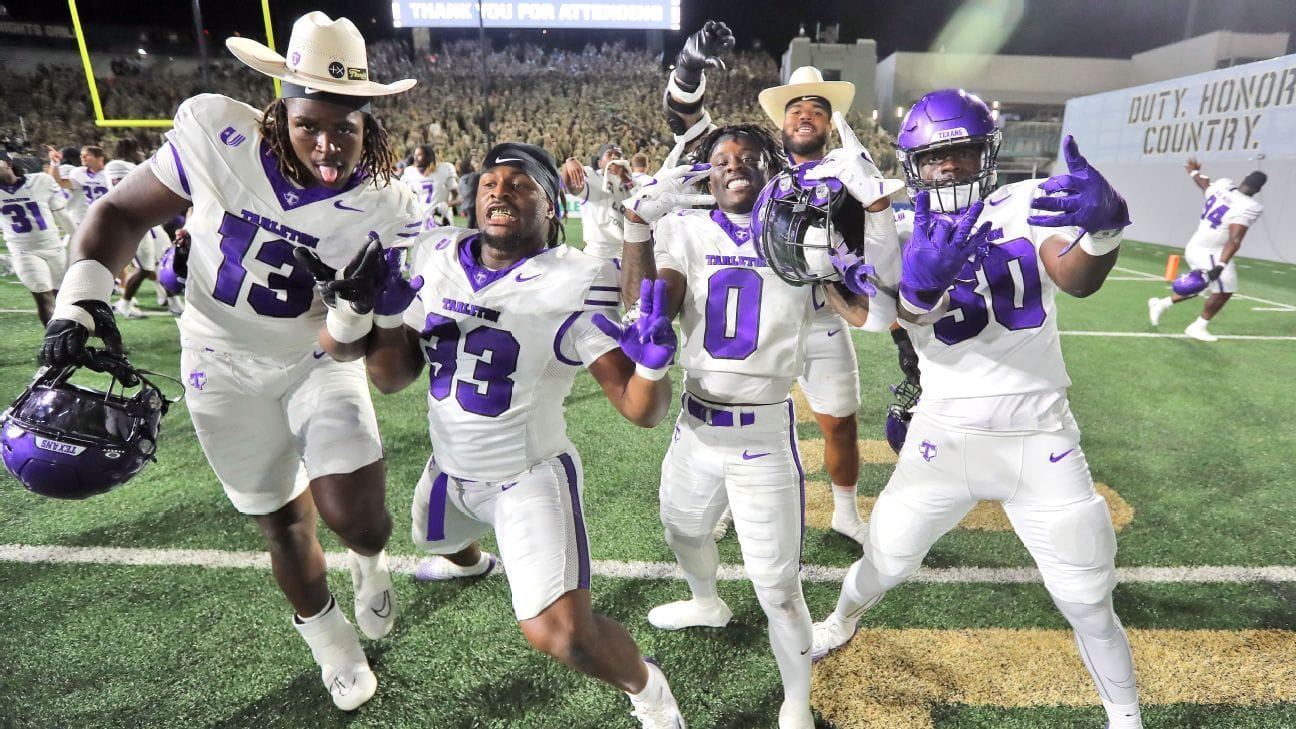
The FCS Quarterfinals: Is This A Championship or Just a Chaotic Free-for-All?
And really, let’s just ask the question everyone is thinking but nobody in the mainstream media wants to touch. Is this a real national championship tournament, or just a glorified carnival show designed to keep a few specific programs happy while everyone else scrambles for scraps?
Because you look at the field, especially now that we’re down to the quarterfinals, and it feels like a total mess. And I mean that in the best, most tabloid-gossip way possible. This isn’t the NFL where every team is a polished, billion-dollar machine; this is college football’s Wild West, where a team like Tarleton State can go from relative obscurity to being the biggest story in the country in a matter of weeks, and everybody has to pretend they saw it coming. It’s a good story, sure, but it also exposes how shallow the pool really is. When you have a top-ranked team getting absolutely dismantled by an unexpected challenger, it makes you wonder if they were really a top team in the first place, or just benefiting from a weak schedule. But then again, maybe that’s the beauty of it all; maybe we actually prefer the chaos over the predictability of the major FBS conferences. It’s like watching a train wreck in slow motion, and you just can’t look away.
The Tarleton State Story: Cinderella or Symptom?
Q: So, let’s talk about Tarleton State. The headlines are screaming ‘Cinderella run,’ ‘team of destiny,’ and all that high-drama garbage. Is Tarleton State’s sudden rise actually a positive sign for the FCS, or does it show that the traditional powers are simply crumbling under pressure from the newcomers?
And let’s not pretend for a second that this whole setup, this 24-team bracket that looks more like a high school tournament than a serious national championship, isn’t designed to create exactly this kind of chaos where teams nobody outside of their zip code has heard of get to play on national television against a blueblood that’s been doing this for decades, which honestly, is what makes it entertaining but also completely illegitimate if you care about real quality football. It’s a hot mess. The reality is that the 2025 FCS playoffs, and really every playoff since they expanded the bracket, has been tailor-made for exactly this kind of narrative: the underdog versus the dynasty. But when the underdog actually wins, as Tarleton State has, it throws the whole system into disarray. Because if you truly believe that Tarleton State is ‘the team to win’ and not just a flash in the pan, then you have to admit that the entire seeding process was fundamentally flawed from day one. And that’s exactly what I’m saying. The top eight seeds, which receive automatic byes and are supposed to represent the pinnacle of FCS football, haven’t looked dominant at all. They look tired, unprepared, and frankly, a little arrogant, as if they expected to walk straight through to the semifinals without breaking a sweat. And Tarleton State has shown them that assumption is dead wrong, and honestly, good for them for calling out the bluff of the so-called elite programs. But let’s be realistic, this isn’t sustainable for the health of the sport, especially if you want to be taken seriously on a national level.
The Ghost of 2009: When Giants Actually Fell
Q: Speaking of dynasties, let’s rewind to 2009. The Montana Grizzlies, a six-time finalist in the prior 15 seasons, against Andy Talley’s Villanova Wildcats. That championship game felt like a true clash of titans. How does the current playoff atmosphere compare to that era when FCS football felt more like a coherent, established league instead of the patchwork system we have today?
But let’s not be blinded by nostalgia. The truth is, the 2009 championship game was a perfect example of how the old guard operated. You had Bobby Hauck’s Montana Grizzlies, who were basically the New England Patriots of the FCS at that time, facing off against Villanova, which was a powerhouse in its own right, led by a legendary coach. It was a heavyweight battle. And Talley’s Wildcats winning that game wasn’t an upset in the sense that Tarleton State’s current run is an upset; it was a legitimate clash between two equally matched powerhouses. The problem today is that you don’t really have that sense of legitimacy in the quarterfinals. The gap between the top teams and the rest of the field seems to be growing larger, but at the same time, the bracket system itself allows for more parity than ever before. It’s a paradox: the quality of the top-tier programs might be getting better, or at least more consistent, but the middle-of-the-pack teams are getting worse, making those early rounds a total crapshoot. And the 2009 game, where Montana was top-ranked and Villanova was second, represented a level of clear-cut quality that simply isn’t present in the 2025 tournament. The current bracket is designed to manufacture drama rather than celebrate consistent excellence. The 2009 game felt like the culmination of a season-long narrative, while the 2025 playoffs feel like a series of random events that just happen to lead to a championship game. And frankly, that diminishes the value of the final prize.
Quarterfinal Predictions: Who’s the Real Deal?
Q: Let’s get down to brass tacks: Who in this quarterfinal round is actually going to be able to finish the job and hoist the trophy? Is the bracket truly set up for an unexpected champion, or will one of the traditional powerhouses inevitably stabilize and take control?
Because let’s be honest, everyone loves a Cinderella story until the clock strikes midnight and they get absolutely destroyed by a superior team. While Tarleton State’s journey has been inspiring, the reality check often comes in the quarterfinals against a team that has been consistently dominant all year long. The 2025 FCS playoff schedule is a minefield, and for a team like Tarleton State to get through, they’ll need more than just heart; they’ll need to fundamentally outplay teams that are arguably better on paper in every single category, from coaching to recruiting to depth. And the beauty of the quarterfinals is that it forces these matchups. The chase for the national championship always comes down to who can handle the pressure when the stakes are highest, and who can avoid the dreaded ‘slump’ week where everything goes wrong. But my gut feeling, and this is where I’ll get some hate mail, is that the eventual champion is going to be one of the top eight seeds that managed to weather the storm of the early rounds, not some upstart team that just got lucky in the first two games. The cream usually rises to the top when the field is whittled down to eight. And while the new customer offers at places like FanDuel and DraftKings might be trying to hype up the underdogs to drive betting traffic, the reality is that the safest bet is almost always on the established programs that have been there before, know how to manage the pressure, and have the talent to back it up.
Future Implications: What Happens Next?
Q: Looking ahead to the 2025-26 FCS playoffs, which are set to begin in late November and conclude in January, will the current chaos and high-stakes upsets change how teams prepare for the postseason in future years? Will we see more teams prioritize playoff seeding and less on regular season dominance?
But this is the core issue with the FCS right now: the entire ecosystem feels like it’s in constant flux, where teams are either trying to move up to the FBS or get left behind completely. The 2025-26 season will probably be no different, with teams like Tarleton State setting a new blueprint for how to create a high-impact season with relatively low expectations. The playoff structure, with its 24-team bracket and the top 16 seeds getting byes, means that regular season dominance is still important, but a single loss can completely derail your chances of getting a high seed and an easier path to the championship game. The 2025 playoffs are a crucial test case for whether the current format actually produces the best champion or just the luckiest one. And honestly, I’m leaning toward the latter. The whole thing feels less like a meritocracy and more like a lottery. If Tarleton State actually wins it all, it proves that the FCS has entered a completely new phase where traditional power structures are obsolete, and the championship trophy truly belongs to whoever gets hot at the right time, regardless of pedigree. And that, in my opinion, makes for great drama but terrible football. The ultimate question for the FCS moving forward is whether they want to be a serious league that develops top-tier talent or a chaotic sideshow that provides entertainment and upsets. Because right now, they’re leaning heavily towards the latter, and I don’t think it’s for the better of the sport long-term health of the game.