The Pass That Meant Nothing
They saw it, didn’t they? The pundits. The corporate yes-men in their sharp suits, sitting in a sterile studio, miles away from the so-called passion at Elland Road. They saw Dominik Szoboszlai, Liverpool’s midfield engine, spray a 50-yard diagonal pass during a mind-numbingly dull first half against Leeds. And they loved it. Oh, how they loved it. They called it a “Hollywood ball.” A moment of magic. A flash of brilliance in an otherwise forgettable 45 minutes of corporate-approved, risk-averse, sideways passing that they dare to call top-flight football.
Hollywood. What a perfect, damning word. Because that’s what this has all become. A movie. A heavily marketed, beautifully shot, emotionally hollow blockbuster with a predictable script and a cast of overpaid actors who know their lines. Szoboszlai’s pass wasn’t a moment of sporting genius born from desperation or instinct; it was a cinematographer’s dream. A slow-motion, 4K-ready clip perfectly packaged for the half-time analysis reel, for the endless social media churn, for the global broadcast partners who sell this slop to the masses. It achieved nothing. It led to nothing. It was a beautiful, pointless pirouette in the middle of a war that has already been won by the money men. It was content. Not football. Content.
A Symphony of Silence
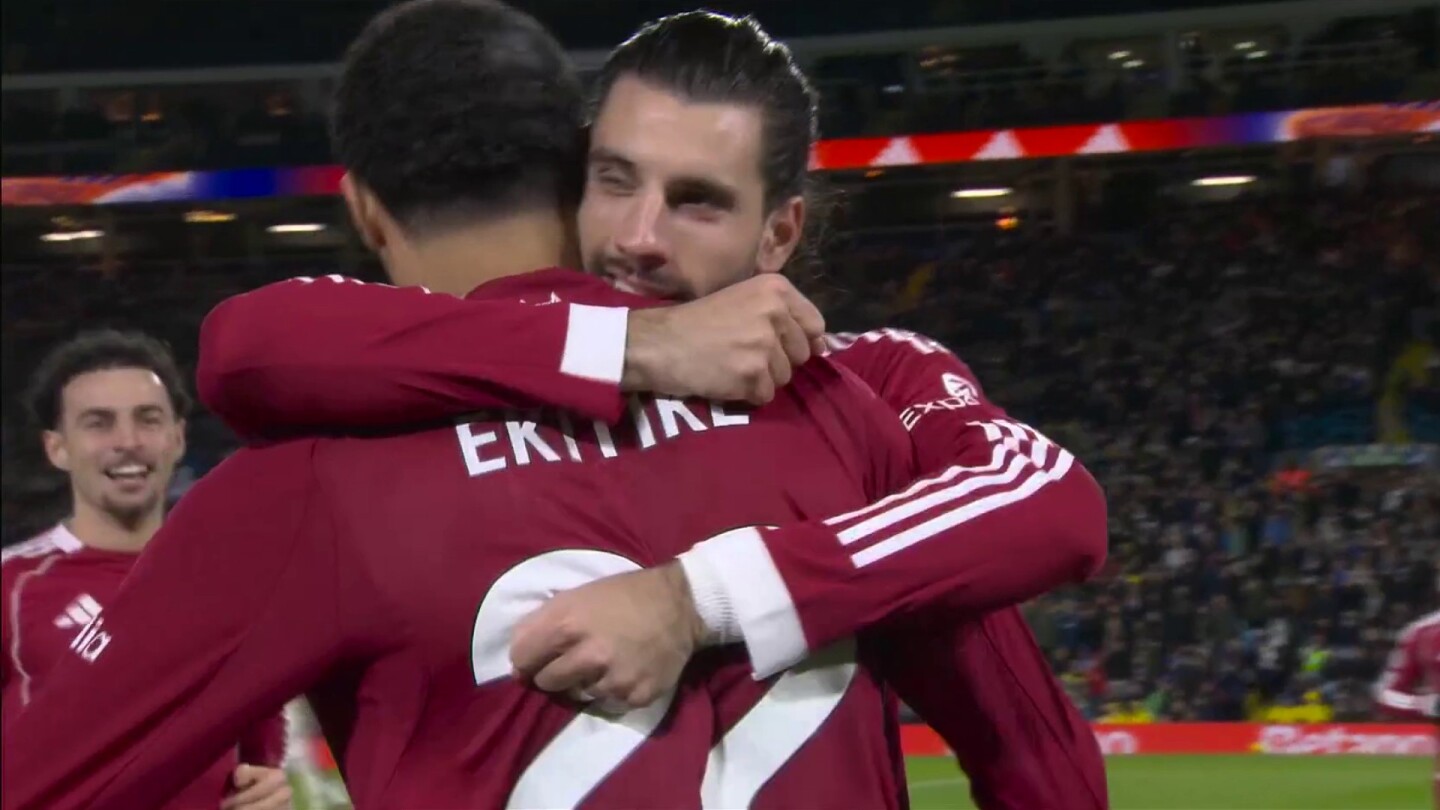
The rest of the half drifted by, a gray, lifeless affair. The supposed cauldron of Elland Road was reduced to a backdrop, its noise muffled by the sheer weight of financial disparity on the pitch. This wasn’t a contest of equals. It was a foregone conclusion playing out in real-time. Liverpool, the title defenders, going through the motions against a side they are mathematically and financially engineered to beat. And then, like a line delivered on cue, Hugo Ekitike scores. The opener. Tucked away. The script demanded a goal, and a goal was delivered. The machine keeps grinding, the narrative ticks along, and the consumers at home are given just enough of a jolt to keep them from changing the channel. It’s a farce. A complete and utter farce, and the most infuriating part is that they’re all in on it. The players, the managers, the owners, and especially the media lapdogs who are paid to convince you that you’re watching something that matters.
The Illusion of Competition
Don’t believe me? Just look at the rest of the day’s programming. The Football Tracker, that sanitized feed of information, tells us that “Man City and Chelsea facing tough tests.” Tough tests? Against whom? Each other? It’s a closed loop of state-funded projects and oligarch playthings battling for supremacy in a sandbox built for billionaires. The very concept of a “tough test” for these clubs is a marketing slogan. The real test was fought and lost two decades ago in boardrooms, not on the pitch. The rest of the league is just cannon fodder, feeder clubs, and plucky underdogs whose occasional, statistically insignificant victories are used by the narrative machine as “proof” that the magic is still alive. It’s not. It’s a ghost in the machine.
Then you flick over to Germany. “Bayern thrash Stuttgart.” Of course they did. Water is wet. The sun rises in the east. Bayern’s decades-long financial and political strangulation of the Bundesliga ensures that every season is a procession. A coronation march. It’s the illusion of a league, a pantomime of competition where one dragon sits atop a pile of gold, occasionally breathing fire on the villagers below just to remind them who’s in charge. Meanwhile, in France, “European champions PSG hosting Rennes.” The champions of Europe? A state-owned public relations vehicle designed to sportswash a nation’s reputation. Their victory is not a sporting achievement; it’s a geopolitical inevitability. A return on investment. Them playing a club like Rennes isn’t a match; it’s a corporate takeover demonstration.
The American Anomaly
And somewhere, buried in the noise, a different headline flickers. “No. 10 Iowa State takes down No. 1 Purdue.” An upset. A real, genuine, honest-to-god upset in a sport where the structure, for all its faults, still allows for chaos. It allows for the underdog to have its day in a way that European football has systematically stamped out. That single result from an American college basketball game has more sporting integrity, more raw, unscripted drama, than an entire weekend of Premier League, LaLiga, or Bundesliga action combined. Atletico Madrid’s visit to Athletic Club? Intriguing, maybe. But it’s a battle for third place. A fight for the right to be the best of the rest while the duopoly of Real Madrid and Barcelona vacuum up the money and the glory. We are living in a pre-written history, and we are paying a premium subscription to watch the pages turn.
A Glimpse of a Dead Future
This match report, this flimsy piece of digital paper from “Empire of the Kop,” is dated December 6th, 2025. It’s a dispatch from the future. A future that is already here. It’s a warning that the slow, creeping death of the sport we loved is nearly complete. The sanitization process is almost finished. The passion has been commodified, the tribalism has been monetized, and the unpredictability has been ironed out by algorithms and financial fair play rules that are only fair to the rich. Szoboszlai’s Hollywood ball is the perfect symbol for this new age. It’s an empty spectacle. A trick shot in an exhibition game. It’s for the tourists, for the hedge fund owners in their skyboxes, for the disconnected global audience who have never set foot in a real stadium and never will.
They have sold the soul of the game for television rights and shirt sales in emerging markets. They have traded roaring stadiums for silent, all-seater bowls. They’ve replaced working-class heroes with brand ambassadors and social media influencers who happen to be good at kicking a ball. The game isn’t about community anymore. It’s about engagement metrics. It’s not about glory. It’s about shareholder value.
The Final Whistle
So what do we do? We rage. We refuse to accept the script. We turn off the TV. We stop buying the merchandise. We go and watch our local, non-league teams play on muddy pitches for the love of the game. We have to remind ourselves what this was all about in the first place. It was about us. The fans. The community. The hope, however faint, that on any given Saturday, the impossible could happen. They are trying to kill that hope. They are trying to replace it with a polished, predictable, profitable product. They are giving us Hollywood balls when what we need is blood, sweat, and tears. They are selling us a beautifully packaged lie. And the worst part is, we keep on buying it. Stop buying it.