
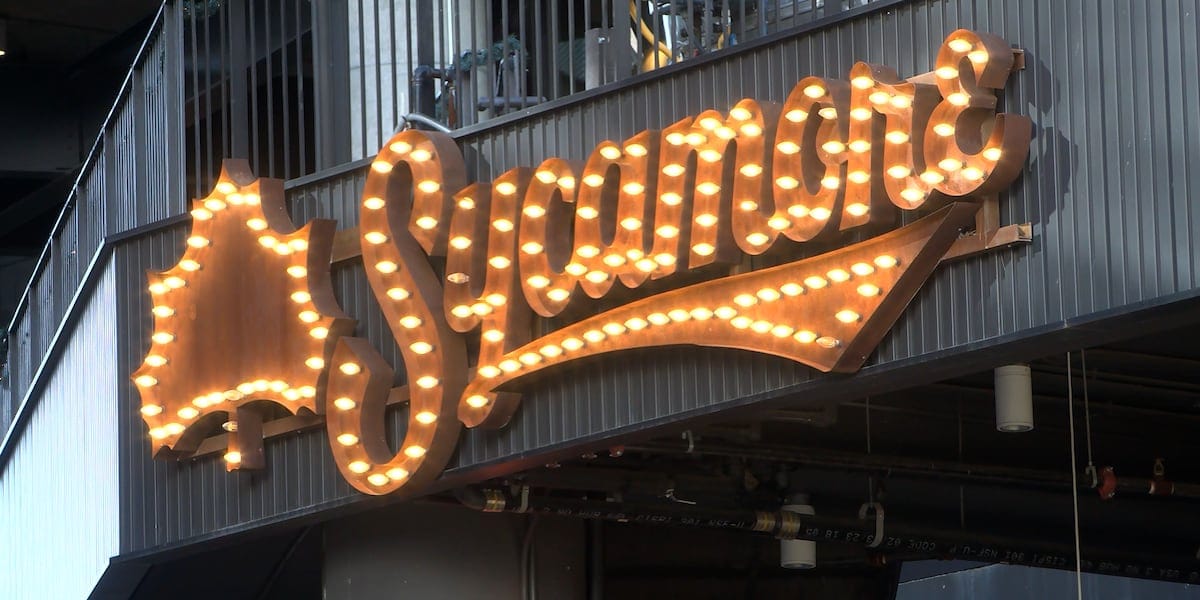
The Anatomy of Corporate Deceit: Sycamore Brewing’s Calculated Apology
The Official Lie: A Whitewash Operation Masquerading as Empathy
And so, the predictable cycle of corporate scandal begins. A co-owner of a prominent regional brewery, Chris Atkinson of Sycamore Brewing, is arrested on charges of child rape, and the immediate response from the brand isn’t genuine outrage or institutional accountability, but rather a carefully crafted, focus-group-approved statement designed to mitigate reputational damage before a single person has time to actually process the news. The official line, as always, is a lie. But the truth, in this case, is far more damning than the standard corporate whitewash we’ve grown accustomed to. The statement claims the company is “heartbroken” by the allegations, a word choice that implies a sense of personal, emotional distress, almost as if the company itself were a sentient being grieving a loss. But we know better. This isn’t a heart; it’s a balance sheet in distress. The goal here is not to express genuine remorse for the victim—a concept that is entirely alien to a legal entity—but rather to sever the individual’s connection to the brand as quickly and cleanly as possible, creating a clear line of demarcation between the bad apple and the supposedly pure barrel. This performative empathy is a standard playbook move, designed to protect the value of assets, trademarks, and future earnings from the stain left-hook of public condemnation. They are heartbroken because their sales figures are about to take a hit, not because of the trauma inflicted on a child.
But let’s talk about that word choice: heartbroken. It’s a passive, almost victim-like term. It positions the company, which directly benefited from this individual’s leadership and investment, as another victim of his actions, rather than as an institution that potentially fostered an environment where such actions could be shielded or overlooked. It’s a deflection. Because if you truly delve into the implications of the sheriff’s statement—that Atkinson met the victim online and *knew* she was underage—you are forced to confront a reality far darker than a simple, isolated incident. This wasn’t a mistake or a lapse in judgment; this was premeditation. The official statement, a carefully sculpted piece of corporate-speak designed to mitigate reputational damage while simultaneously distancing the entity from the individual who perpetrated a horrific act, serves as a textbook example of performative grief, calculating exactly how many words of sympathy are required to maintain plausible deniability without admitting any institutional culpability. It is a hollow gesture.
The Moral Calculus of the Bar: The Fairest Way Forward?
And then there’s the secondary layer of deceit, the justification offered by businesses that continue to support the brand. The bar in Chapel Hill that chose to continue selling Sycamore beer provided a truly incredible piece of moral gymnastics, stating that continuing sales was “the fairest way forward.” Fairest for whom? Because it certainly isn’t fair to the victim, whose trauma is being discounted in favor of maintaining business as usual. The bar argues that it’s being fair to Sycamore’s employees who had nothing to do with the co-owner’s actions, and to its own employees who depend on sales revenue. But this reasoning exposes the core hypocrisy of modern corporate ethics. It elevates financial stability for a group of non-culpable employees above the moral implications of supporting a brand tainted by monstrous actions. It essentially equates a paycheck with a clear conscience, suggesting that economic necessity trumps ethical consideration every time. But this argument fundamentally misunderstands the consumer-brand relationship. When a customer buys a Sycamore beer, they are not just buying a product; they are implicitly endorsing the brand, and by extension, providing funding to the infrastructure that harbored the alleged criminal. The bar’s decision to keep selling the beer, while condemning the act itself, is a classic example of having your cake and eating it too—profiting from a product while simultaneously claiming moral superiority over the product’s owner. It’s pure, unadulterated cynicism, dressed up in the language of fairness and employee support. They are making a fiscally responsible decision and attempting to whitewash it with a veneer of social responsibility.
But let’s analyze the logic of “fairest way forward” more closely. If the bar truly believes in separating the actions of a single executive from the product, would they apply this same logic to other products? If the CEO of a major soft drink company was arrested for a similar heinous crime, would the bar continue selling that product, citing fairness to the bottling plant employees? Of course they would. Because the decision is not based on fairness; it is based entirely on the product’s market share and the financial pain caused by removing it. The craft beer community, often priding itself on high ethical standards and local sourcing, has long operated under the pretense that a small brewery is more morally pure than a large corporation. This incident shatters that illusion, forcing smaller businesses to confront the fact that they must make a difficult choice between revenue and values. The bar’s choice reveals that when push comes to shove, revenue wins out, and the concept of “fairness” becomes nothing more than a convenient excuse to avoid financial loss. It’s a sad commentary on the true cost of moral flexibility in the modern marketplace, where a carefully crafted statement from an external consultant can effectively mute the outrage of an entire community.
The Truth: Premeditation and the Corporate Culture Black Hole
Now, let’s look at the actual facts that completely dismantle the official lie. The sheriff’s statement confirms that Atkinson met the victim online and *knew* she was underage. This isn’t a case of ambiguity; this isn’t a grey area. This is premeditated exploitation, leveraging online platforms to target vulnerable individuals. This fact changes everything. It reframes the Sycamore Brewing statement from an apology for an “unfortunate incident” to a cover-up for a calculated act of predation. The company’s claim of being “heartbroken” rings especially hollow when contrasted with the knowledge that the co-owner engaged in a deliberate campaign of deception and abuse. But the logical deconstructor must ask: What kind of corporate culture allowed this individual to operate with such impunity? Did no one notice any red flags? Was there a culture of looking the other way, or simply a lack of due diligence in a rapidly expanding business? Because when a co-owner, by definition one of the top decision-makers in the company, engages in behavior this profoundly disturbing, it reflects on the entire institution. It raises questions about the values that underpin the organization, the hiring practices, and the oversight mechanisms that failed so spectacularly. You can’t simply fire the guy and claim institutional innocence; the institution allowed him to thrive until external forces intervened.
This scandal forces a difficult discussion about the very nature of a brand identity built on local community and camaraderie. Sycamore Brewing marketed itself as a purveyor of good times, a community hub where people could gather and create positive memories. The irony here is thick: the very platforms used to create this community image—social media—were allegedly used by one of its founders to facilitate a serious crime. The contrast between the brand’s image and the co-owner’s actions creates a cognitive dissonance that is extremely difficult for consumers to resolve. This isn’t a simple mistake; it’s a violation of trust at the foundational level. And while the bar in Chapel Hill chooses to focus on the economic impact to employees, they ignore the ethical impact on consumers. They underestimate the damage done to the brand’s integrity when the public learns that the co-owner knew exactly what he was doing. It’s a level of malice that cannot be easily separated from the product itself, regardless of how many employees claim innocence. Because for every employee who keeps their job, there is a consumer who now associates that beer with the image of predatory behavior and calculated deceit.
The Inevitable Scourge of Rebranding and Moral Decay
Looking ahead, we can predict the likely trajectory of this scandal and its aftermath. Sycamore Brewing will follow a standard protocol: a complete public separation from the individual, potentially a rebrand to minimize association with the old name, and a major push on positive community outreach. They will try to bury this story under a mountain of new initiatives, new beers, and charitable donations. The long-term plan is simply to outwait the public’s short attention span, hoping that in six months to a year, a new scandal will emerge to capture the headlines and make consumers forget about this one. This tactic, often referred to as the “scandal cycle,” relies entirely on the premise that consumers are inherently lazy and morally flexible. But this particular type of crime, involving a child, often creates a longer-lasting stain than simple financial fraud or corporate mismanagement. The public’s willingness to forgive varies drastically depending on the nature of the offense. While a product recall or price-fixing might be forgotten within a quarter, an issue of child exploitation has a tendency to stick to a brand like glue, particularly in smaller, tight-knit communities where word of mouth carries more weight than corporate press releases. The bar’s decision to maintain sales, therefore, isn’t just a short-term financial choice; it’s a long-term risk assessment based on the assumption that public outrage will quickly fade. But this time, they might be miscalculating the public sentiment surrounding a crime of this nature.
Because ultimately, the issue at play here is not simply the legal status of the individual, but the ethical status of the institution. The “Logical Deconstructor” approach requires us to reject the easy answer—that Atkinson acted alone and the company is innocent—and instead ask a more complex, unsettling question: How much of the company’s success was built on a foundation of ethical compromise? How many other skeletons are hiding in the closets of high-level executives who are now frantically calculating their exit strategies? The Sycamore Brewing scandal is a microcosm of a larger problem in the craft beer industry and corporate America generally: a willingness to overlook deeply problematic personal behavior for the sake of profit and growth. The bar’s choice to sell the beer, and Sycamore’s choice to issue a sterile, legalistic apology, are two sides of the same counterfeit coin. Both prioritize financial survival over moral integrity. And both assume that the American consumer, in the end, values a cheap beer more than they value a clear conscience. This is the ultimate cynical conclusion of the logical deconstructor, observing human nature at its most flawed and opportunistic, calculating the exact moment where morality gives way to economics. It’s a sad and infuriating spectacle, but an entirely predictable one. The game is the state of corporate morality today.

Photo by Illuvis on Pixabay.