
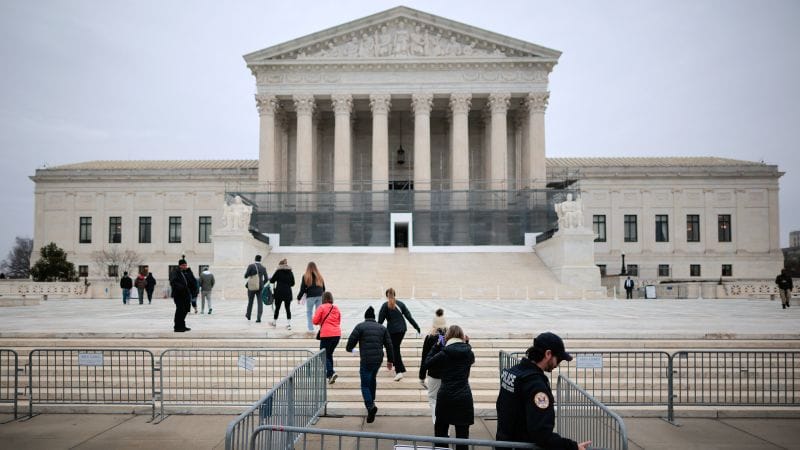
The Battleground at the Nation’s Highest Court
The United States Supreme Court today took up one of the most culturally and legally significant issues of the modern era: the right of transgender students to participate in school sports consistent with their gender identity. The focus of the session centers on a pair of blockbuster cases, most notably a challenge to West Virginia’s 2021 law that prohibits transgender girls from competing on female athletic teams. This legal showdown represents the first time the nation’s highest court has directly addressed the merits of state-level bans that have proliferated across the country over the last three years.
At the heart of the proceedings is Becky Pepper-Jackson, a West Virginia teenager who has been at the center of this legal odyssey since middle school. Represented by attorney Kathleen Hartnett, the defense argued that the state’s law, known as the ‘Save Women’s Sports Act,’ violates the Equal Protection Clause of the 14th Amendment and Title IX, the federal law prohibiting sex-based discrimination in education. Hartnett emphasized that the law singles out a small, vulnerable population for exclusion, rather than addressing broader issues of fairness in athletics.
Kathleen Hartnett and the Defense of Student Athletes
During the oral arguments, Kathleen Hartnett presented a compelling case for the individual rights of student-athletes. She contended that transgender girls, who have often undergone puberty-blocking treatments, do not possess the physiological advantages that the state claims to be mitigating. By focusing on the specific circumstances of Pepper-Jackson, the defense aims to show that a blanket ban is an overreach that causes tangible psychological and social harm to students who simply wish to participate in the communal experience of school sports.
The opposing counsel, representing the state of West Virginia, argued that the law is necessary to preserve the biological distinction in sports that Title IX was originally intended to protect. They suggested that allowing transgender girls to compete against cisgender girls would undermine the opportunities for female athletes that have been fought for over decades. The justices’ questioning reflected a court deeply divided on how to balance the rights of transgender individuals with the traditional biological definitions used in sports regulation.
Why This Matters: Reinterpreting Title IX
This case is about much more than a single middle school track meet in West Virginia. It represents a fundamental re-examination of Title IX, the 1972 law that transformed women’s athletics in the United States. For decades, Title IX has been used to ensure equal funding and opportunity for women. However, the definition of ‘sex’ within that statute is currently the subject of intense litigation and executive branch rulemaking. The Supreme Court’s eventual decision will likely define whether ‘sex’ refers strictly to biological traits assigned at birth or encompasses gender identity.
The implications for schools and universities are staggering. If the Court sides with the states, over 20 similar bans currently in place across the U.S. will likely be upheld, cementing a divided landscape where a student’s right to play sports depends entirely on their ZIP code. Conversely, a ruling in favor of the athletes could force a nationwide overhaul of athletic policies, requiring schools to create more inclusive frameworks while balancing the demands for competitive equity.
The Constitutional Question: Equal Protection
Beyond statutory interpretation, the Court is grappling with the Equal Protection Clause. The legal standard applied here—whether ‘intermediate scrutiny’ or a more deferential ‘rational basis’ review—will signal how the Court intends to treat transgender rights in future cases. If the Court determines that transgender status is a ‘quasi-suspect class,’ it would make it significantly harder for states to pass laws targeting this community. This has implications for healthcare access, identification documents, and public facility usage.
Broader Trends: A National Legislative Wave
The West Virginia case is the tip of the spear in a broader national trend. In the last three years, Republican-led legislatures have introduced hundreds of bills aimed at restricting the rights of transgender youth. These range from bans on gender-affirming care to ‘bathroom bills’ and the athletic bans currently before the Court. Proponents of these laws argue they are protecting children and traditional values, while opponents view them as a coordinated effort to marginalize a minority group for political gain.
Data shows that the number of transgender athletes in K-12 sports is statistically very small, yet the issue has become a powerful rallying cry in the lead-up to the 2024 elections. This intersection of law and high-stakes politics means the Court’s ruling will be scrutinized not just for its legal logic, but for its perceived alignment with various political movements. The market of public opinion is volatile, and the Court is operating under a microscope of unprecedented public attention.
Scientific and Fair Play Debates
The courtroom debate also touched upon the scientific complexities of athletic performance. Experts on both sides have submitted briefs regarding the impact of testosterone and puberty on muscle mass, bone density, and aerobic capacity. The difficulty for the Court lies in the fact that many of these athletes, like Pepper-Jackson, have never gone through male puberty. This nuances the ‘biological advantage’ argument and asks the justices to decide if the law can treat all transgender athletes as a monolith, or if individual assessments are required.
A Look Ahead: The Future of Inclusivity in Sports
As we look toward the end of the Supreme Court’s term in June, the legal community and the public at large are bracing for a decision that will likely be a landmark in civil rights history. A ruling that upholds the bans could embolden further restrictive legislation, while a ruling against them could trigger a new wave of federal protections. The outcome will also influence international sports bodies, many of whom are currently struggling to update their own inclusion policies in the wake of shifting social and scientific understandings.
Ultimately, the story of Becky Pepper-Jackson and the legal expertise of Kathleen Hartnett highlight the human element behind these high-level legal abstractions. The Court is not just deciding on statutes; it is deciding on the daily lives and social integration of thousands of young Americans. Regardless of the outcome, the dialogue surrounding these cases has already changed the way the nation thinks about the intersection of identity, fairness, and the law. The market for justice is often slow, but the ripples from this day in court will be felt for generations.

Photo by Kamyq on Pixabay.