The Supermoon Spectacle: A Deconstruction of Astronomical Hype
And so we come to January, the traditional month of cold weather, failed New Year’s resolutions, and the inevitable return of the ‘Supermoon’ media frenzy. Because in a world where everything has to be bigger, brighter, and more sensational than the last iteration, we’ve taken one of the most consistent and beautiful objects in our night sky—the moon—and turned it into a consumer-grade spectacle. But the truly insightful observer knows that this entire performance is little more than a carefully orchestrated distraction, designed to capture eyeballs by promising something grand while delivering something entirely mundane. The core issue here isn’t the moon itself; it’s our appetite for superficiality, and how a slightly closer lunar orbit becomes a symptom of a much deeper cultural sickness.
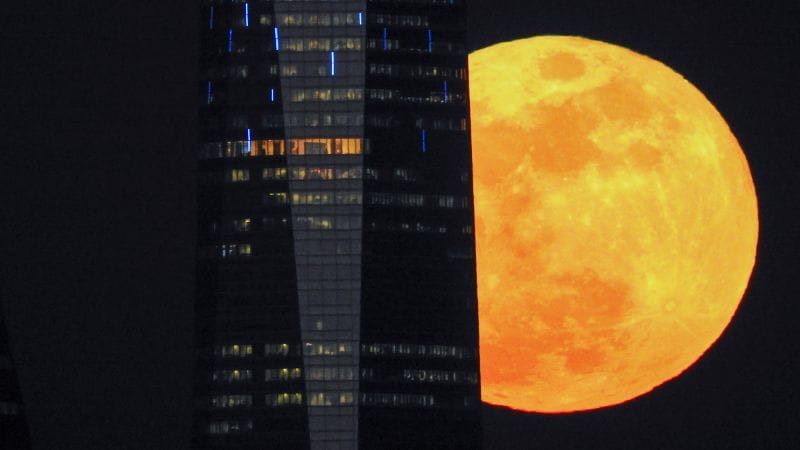
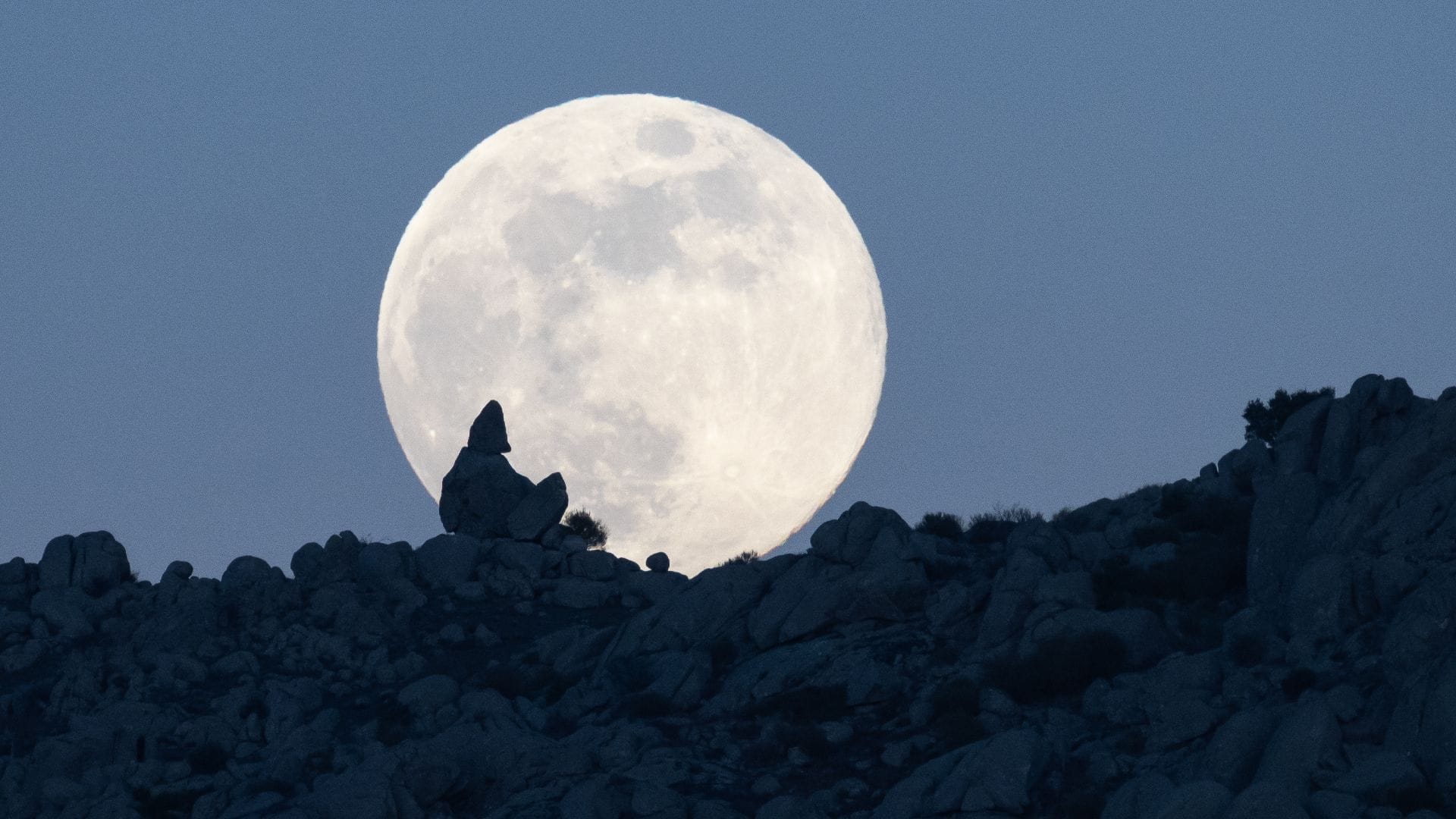
But before we dive into the deep end, let’s look at the facts presented by the very institutions the media references. NASA itself states that a supermoon occurs when the moon appears up to 15% larger and 30% brighter than a regular full moon, due to its proximity to Earth. That sounds impressive, doesn’t it? Fifteen percent larger. But here’s where the logical deconstruction begins: when an object that already varies in size significantly throughout its elliptical orbit, and whose apparent size is often masked by the ‘moon illusion’ near the horizon, changes by a mere 15%, the difference is almost imperceptible to the naked eye. It’s a statistical rounding error masquerading as a cosmic phenomenon. If you were shown two photographs of the moon side-by-side, one a supermoon and one a regular full moon from a high point in its orbit, most people couldn’t tell the difference without a measuring stick. This entire phenomenon is built on a lie of visual impact that simply doesn’t exist for the casual observer, yet every news cycle dutifully churns out the same breathless headlines.
The Quadrantids: The Real Event Ruined by Hype
Because while the media is busy hyping up a moon that looks almost exactly like every other moon, they entirely miss—or actively obscure—the truly impressive event happening concurrently: the Quadrantid meteor shower. This is the ultimate cosmic irony. The ‘Supermoon’ isn’t just a distraction; it’s an active antagonist. The increased brightness of the full moon, especially one that is supposedly 30% brighter, acts like a giant floodlight in the sky. It washes out the light of the meteors, making it harder to spot the fainter streaks and potentially reducing the visibility of the entire event to only the brightest fireballs. The media focuses on the predictable, static object while rendering invisible the dynamic, fleeting spectacle that truly showcases the wonder of space. This isn’t just about bad reporting; it’s about prioritizing spectacle over substance, and in doing so, we are literally losing the genuine scientific show in favor of the marketing campaign.
And this is the central point: the media’s obsession with the supermoon isn’t about fostering scientific understanding; it’s about clicks and engagement. A full moon is reliable, easy to photograph, and requires no special effort or understanding to appreciate. A meteor shower, conversely, requires patience, dark skies (which the moon actively destroys in this scenario), and a deeper understanding of celestial mechanics. It requires work. So, we choose the easy, low-effort spectacle over the hard, rewarding one. We are choosing the passive experience over the active, observational one. This preference for the pre-packaged, brightly lit event over the complex, nuanced reality mirrors exactly how modern society consumes information. We crave the soundbite, not the thesis. We want the photo op, not the scientific discovery.
The Wolf Moon Fallacy: A History Recontextualized for Modern Consumption
But let’s not forget the other part of the equation: the ‘Wolf Moon’ title. This term, derived from Native American and European folklore, historically carried significant cultural weight. It wasn’t just a cute name; it represented a season of deep winter, when wolves would howl near villages out of hunger. It carried a sense of foreboding, of survival, and of the harsh realities of the season. It was tied to a tangible, relatable human experience. Fast forward to today, and the ‘Wolf Moon’ title is simply a quaint-sounding adjective thrown onto the marketing materials for a slightly larger full moon. The deep cultural meaning is stripped away, leaving behind only the aesthetic. We have taken a term steeped in history and hardship and reduced it to a hashtag for an Instagram post. This process, where cultural significance is diluted and repurposed for a fleeting moment of social media engagement, is another symptom of our constant need for content. It’s not about connecting with the past; it’s about finding new ways to sell old ideas.
The Supermoon’s Psychological Impact: Selling Sensationalism
Because the supermoon phenomenon is less about astronomy and more about psychology. It taps into our inherent desire to be part of something bigger than ourselves. We live in a world where we are constantly bombarded with information, and to cut through the noise, a headline needs to be extreme. The ‘supermoon’ fulfills this need perfectly. It provides a shared cultural experience for people who otherwise have no interest in astronomy. It gives people permission to look up and feel like they are participating in something special, even if what they are seeing is visually indistinguishable from any other full moon. This creates a feedback loop where the media reports on the hype, which creates more social media engagement, which in turn fuels more media reporting. It’s a self-perpetuating cycle of manufactured significance, and it is a fascinating case study in how modern media consumption prioritizes emotional resonance over objective truth. It allows us to feel amazed without actually being amazed, to participate in science without actually learning anything new.
And let’s be frank: the supermoon provides an easy out for those in scientific communication. Instead of trying to explain the complexities of orbital mechanics, light pollution, or meteoroids—concepts that require effort and attention spans beyond 30 seconds—we simply point to the giant moon and say, ‘Look, it’s special.’ This simplifies the world and makes complex ideas palatable for a mass audience. But in doing so, we are actually dumbing down the public discourse. We are training people to seek out only the most superficial explanations for profound natural phenomena. We’re conditioning them to believe that a 15% difference in apparent size is worth more attention than the actual complexities of the universe. It’s a dangerous path because it leads to a populace that values simple answers over complex truths, and a media landscape that prioritizes sensationalism over actual education.
But there’s a deeper, more troubling implication here about our relationship with technology. We are so used to seeing enhanced, filtered, and Photoshopped images of everything, from our food to our friends, that when we are presented with reality, we find it wanting. The supermoon hype attempts to bridge this gap by promising a visual experience that is closer to the hyper-real images we see on social media than the actual, understated reality. It’s a way for reality to compete with virtual reality, and in this battle, reality usually loses. The media hype and the resulting social media posts create an image of the event that is far more dramatic than the event itself. This creates a form of collective delusion where we all agree to pretend that what we are seeing is more spectacular than it really is, just so we can share in the collective experience. It’s a form of collective, self-imposed blindness. We are so busy trying to capture the moment on our phones that we fail to simply appreciate the actual moment.
The Future of Faux-Astronomy: More Hype, Less Substance
Because what happens when every full moon is somehow ‘special’? When every lunar event is dressed up as a ‘Supermoon’ or ‘Blood Moon’ or some other dramatic descriptor? The result is desensitization. If everything is spectacular, then nothing is spectacular. We risk eroding the very sense of wonder we claim to be promoting. We are creating a generation that will be so saturated with ‘superlative’ astronomy that they will be incapable of appreciating the genuine, subtle beauty of the night sky. The true wonders of space—like a supernova, a planetary alignment, or a rare eclipse—will lose their luster because we have already exhausted our capacity for amazement on a slightly bigger full moon. This cycle of escalation in hyperbole is not sustainable. It’s a race to the bottom where the true scientific community must scream louder and louder just to be heard over the noise of media marketing departments. The next step will probably involve artificial intelligence generating even more dramatic terminology for these non-events, further separating us from the reality of the cosmos. It’s a sad trajectory where we choose to prioritize easily digestible content over genuine astronomical observation, and we are poorer for it. The supermoon hype is not a cause for celebration; it’s a symptom of a deeper, more systemic problem in our culture.