
The Anatomy of a Systemic Collapse: Phoenix’s Illusory Dynasty
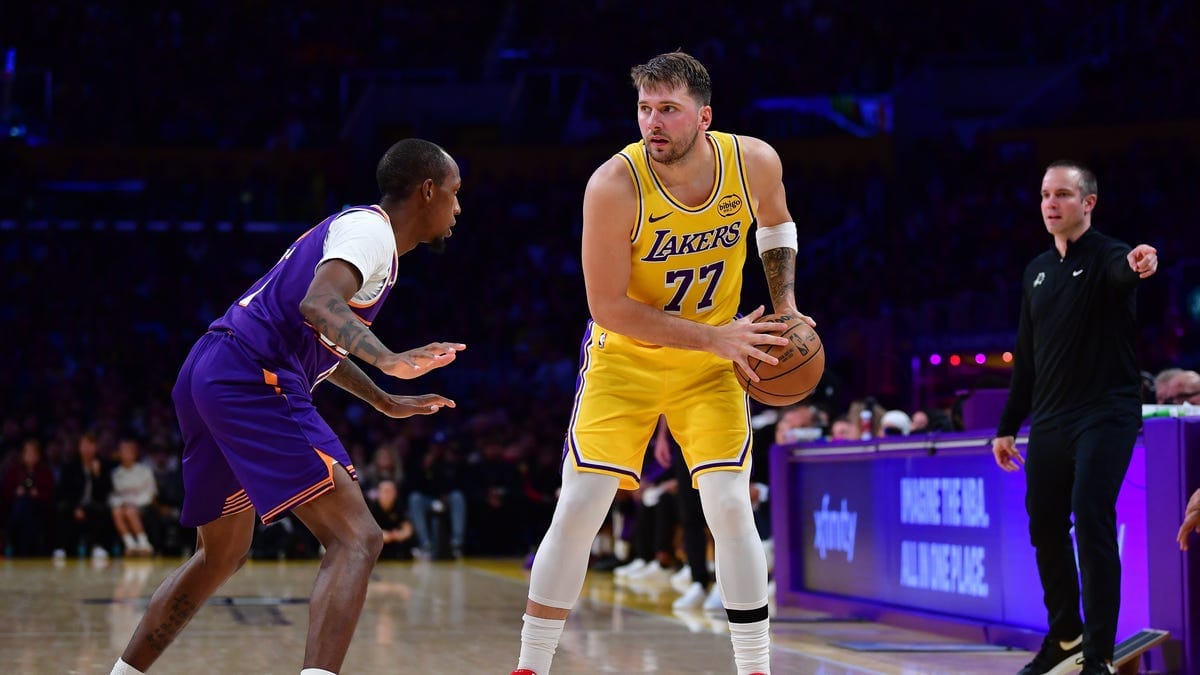
When you look at the Phoenix Suns today, what you are truly witnessing is not just a team in a temporary slump. You are observing a predictable, catastrophic failure of strategic planning. The recent “worst loss in franchise history” wasn’t a fluke; it was the inevitable climax of a roster construction philosophy fundamentally flawed from its inception. The Suns went all in on the idea of a ‘Big Three,’ sacrificing all depth, all rotational versatility, and all future flexibility for three high-usage, ball-dominant perimeter players. This, in itself, is the primary strategic blunder. You don’t build a modern NBA contender by putting three isolation specialists together and expecting them to magically create a cohesive defensive unit. It simply doesn’t work that way; basketball is a team sport, not a collection of individual highlight reels, and Phoenix’s front office chose to ignore this fundamental truth in favor of marquee names. The cold reality is that this game against the Lakers is less a test of skill and more an autopsy of a team already declared brain dead. They are facing a Laker team that, despite its own issues, possesses one crucial advantage: a singular, transcendent force in Luka Doncic who can mask flaws better than any committee of aging stars can.
The current state of the Phoenix Suns represents the high cost of desperation, a desperate gamble made by a franchise perpetually chasing validation after nearly achieving a title with a different core. The ghosts of past failures haunt this team; the memory of that 2021 Finals run, where they collapsed against Milwaukee, seems to have driven management to abandon all sense of prudence. They saw a high-flying, up-tempo team and decided the only way to improve was to add more firepower, ignoring the fact that they were already defensively sound but lacking depth. The result is a roster where the stars are essentially living statues on defense and the bench unit is non-existent. A single injury to one of their core players—or even just an off night—sends the entire structure crashing down. This isn’t just a minor setback for Phoenix; it’s a strategic implosion that will likely define the next half-decade for the franchise. The upcoming game against the Lakers is merely the formal announcement of the collapse, a public humiliation where Doncic and company will expose the soft underbelly of this deeply dysfunctional team. It raises a significant question: when a team loses by fifty points, as Phoenix did, how do you even begin to rebuild the mental fortitude required to compete at the professional level?
The Lakers: Doncic’s Calculated Chaos
While Phoenix teeters on the brink of structural disintegration, the Los Angeles Lakers present a different, equally complex strategic model. The Lakers are not a deep, cohesive team in the traditional sense; rather, they are a high-wire act where everything depends on the singular brilliance of Luka Doncic. The statistics confirm this: Doncic has to carry an immense load, not just offensively, but often defensively by generating possessions through steals and high-value assists. His individual performance in nearly every advanced metric far exceeds the contributions of his supporting cast. The Lakers’ record, currently 17-7 and sitting fourth in the Western Conference, is a direct reflection of Doncic’s ability to transcend mediocrity. This, however, is a strategic weakness in disguise. It is an unsustainable model for long-term championship success, a ‘house of cards’ built on the premise that one player can continually defy gravity for an entire season and four playoff series. Look at the history of the league; superstar isolation has rarely led to championships in the modern era unless paired with significant depth and two-way role players. The Lakers, much like the Suns, have sacrificed long-term stability for short-term gains, albeit in a different manner. They have built around a superstar rather than building a true team. The cold strategist recognizes that this approach carries immense risk, especially as the season progresses and fatigue sets in for the key player. Is it possible for Doncic to maintain this level of performance without eventually breaking down physically or mentally?
The upcoming matchup against the Suns is a gift for the Lakers. They are playing a wounded animal at the exact moment of its greatest vulnerability. Phoenix, fresh off its worst loss ever, will either respond with a desperate surge of adrenaline or, more likely, completely check out under pressure. For the Lakers, this game serves as an opportunity to reinforce their identity as a Doncic-centric team capable of dominating weaker opponents. The pregame hype surrounding the Suns’ ‘need to respond’ creates a unique psychological advantage for Los Angeles. The pressure on Phoenix to perform will be immense, forcing them into hero ball and individual actions that play directly into the Lakers’ hands. The Lakers’ strategy will be simple: survive the initial desperate flurry, then let Doncic exploit the numerous defensive lapses and lack of cohesion inherent in Phoenix’s roster. The Suns’ ‘Big Three’ will find themselves constantly trying to outscore a team led by a player who is simply better at both scoring and facilitating than any of them currently are. The strategic mismatch here is profound, favoring the Lakers in every conceivable way, despite their own underlying structural weaknesses.
The Future Implications: The Great Western Collapse
This game between the Suns and Lakers is more than just a regular season contest; it is a microcosm of the current power dynamic in the Western Conference, where true contenders are rare, and many teams are masking deep-seated problems with star power. For Phoenix, the consequences of this game are far-reaching. If they lose badly, as expected, it will likely accelerate a potential roster implosion. The cold, hard reality of the NBA is that GMs don’t sit still when a multi-million dollar experiment fails so spectacularly. The trade rumors surrounding the Suns’ ‘Big Three’ are not hypothetical; they are a necessary consequence of their strategic failure. The front office will soon face an impossible choice: hold onto a flawed core hoping for a miraculous turnaround, or admit defeat and trade away valuable assets for role players and future picks. The latter, while difficult, seems increasingly likely. The Suns have built a team that cannot defend and lacks playmaking outside of their three stars. This model simply cannot win in the playoffs, where opposing teams can focus on stopping a few key players and exploit the lack of depth. The outcome of this game will be a clear indicator of whether or not Phoenix has any fight left, or if they are already planning for a rebuild.
For the Lakers, the implications are equally significant, albeit in a less immediate sense. While Doncic’s current form is impressive, the front office must be looking at the overall roster construction and planning for the long term. Can they truly compete with the top-tier teams in the league—the Celtics, the Timberwolves, the Nuggets—without significant upgrades to their supporting cast? The answer, strategically, is no. The Lakers are currently performing above expectations thanks to Doncic’s herculean effort, but this level of output is not sustainable in a seven-game series against a genuinely elite opponent. The pressure on management to find suitable complimentary pieces for Doncic is immense. This game against Phoenix offers a temporary respite, a chance to gather momentum and demonstrate dominance over a struggling rival. But the cold strategist knows that this victory, if it comes, will merely kick the can down the road, delaying the inevitable decision about how to truly build a championship roster around their generational superstar. Both teams face fundamental challenges that extend far beyond a single game; this contest is merely a glimpse into a potential future where the Western Conference experiences a significant realignment based on strategic failures and unsustainable dependencies on-court burnout. It’s a battle of two broken systems, and the one with the better individual player—Doncic—will almost certainly prevail.