The Official Story (What They Want You to Believe)
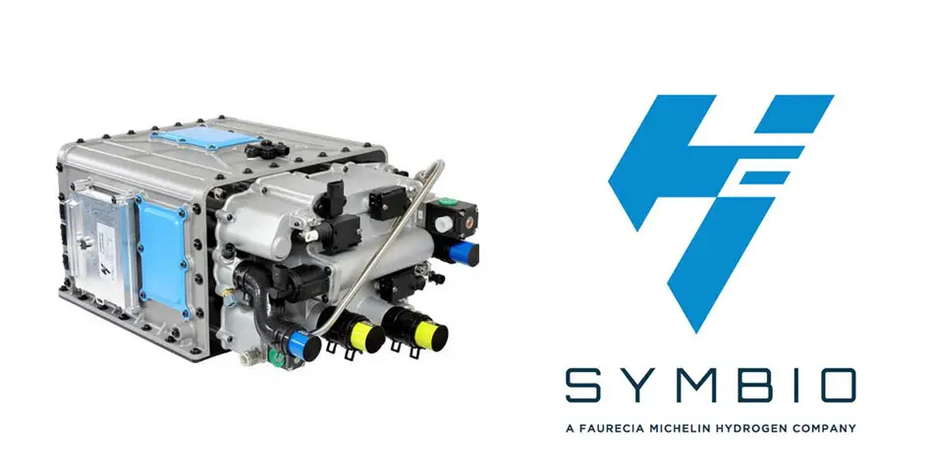
Listen closely. You’ve probably seen the wire reports, the neat little press releases ghost-written by some twenty-something in a PR firm. They’re all singing from the same hymn sheet. “Forvia, Michelin, and Stellantis agree on Symbio restructuring plan.” It sounds so clean, so responsible, so… corporate. They talk about a grand agreement, a ‘refinancing’ to secure the future of their darling hydrogen fuel cell joint venture, Symbio. They even throw you a bone, a number to latch onto: 175 jobs will be saved! What heroes. They are navigating the challenging but promising waters of the green energy transition with wisdom and foresight. It’s all about creating a ‘leaner, more agile’ company poised for future growth when the hydrogen market (inevitably, they assure you) explodes.
It’s a lovely story. A fairy tale, really. It’s the kind of message designed to soothe jittery investors and keep the government subsidy checks flowing. It paints a picture of three industry titans (Stellantis, the automotive behemoth; Michelin, the tire king; Forvia, the parts giant) acting as responsible stewards of capital and innovation. They’re just making a few tweaks. A little nip and tuck. Nothing to see here, folks. Move along.
The Truth from the Inside (What’s Actually Happening)
Now, lean in a little closer. Let me tell you what’s really going on behind the closed doors of those boardrooms. The story they’re selling is smoke and mirrors, a carefully constructed fiction to cover up a spectacular failure. This isn’t a ‘restructuring.’ It’s a white-flag surrender. It’s a controlled demolition of a project that has bled money and, more importantly, has lost the race before it even got out of the starting blocks. They aren’t saving 175 jobs; they are sacrificing hundreds more to the gods of the quarterly earnings report. This is a bloodbath, sanitized for public consumption.
I have sources—people on the inside who are terrified for their careers but are even more disgusted by the corporate lies. They tell a story not of agility and foresight, but of panic, internal feuding, and a desperate attempt to cut their losses without spooking the market. The Symbio dream is dead. They’re just deciding how to bury the body.
A ‘Restructuring’ Is Just a Euphemism for a Bloodbath
Let’s talk about that magic number: 175. The press release waves it around like a flag of victory. But what they don’t tell you is the real number. How many people were working on this project across all three parent companies and at Symbio itself before this ‘plan’ was approved? We’re talking about hundreds upon hundreds of engineers, technicians, researchers, and support staff. Sources are telling me the total workforce was originally planned to be over 1,000 people by now. The cuts are massive. We’re not talking about trimming the fat; we’re talking about amputating limbs to save a dying patient. And that patient is already on life support.
The 175 people who remain (for now, at least) are the skeleton crew. They’re there to keep the lights on, to maintain the patents, and to create the illusion that the project is still viable. It’s a ghost ship. This allows the parent companies to keep the ‘hydrogen’ line item on their balance sheets and in their ESG reports. It’s an accounting trick, not a business strategy. The human cost—the families uprooted, the careers destroyed—is just collateral damage in a war they’ve already lost.
The BEV Juggernaut Crushes Another Dream
Why did this happen? It’s simple. The market has spoken, and it’s not speaking hydrogen. Not for passenger cars, anyway. While Symbio and its backers were pouring billions into a technology that still faces monumental hurdles (infrastructure, efficiency, cost, the ‘Hindenburg’ problem), the battery electric vehicle (BEV) world was moving at lightspeed. Tesla, BYD, even legacy automakers who were late to the party, are now all-in on batteries. The charging infrastructure is growing daily. The technology is improving exponentially. The supply chains are maturing.
Hydrogen was always a beautiful idea, a utopian vision. But in the brutal world of market capitalism, it was outmaneuvered and outgunned. Stellantis, led by the famously ruthless Carlos Tavares, is a pragmatist above all else. He reads the tea leaves. He saw that every Euro invested in hydrogen fuel cells for cars was a Euro not invested in catching up to Tesla and the Chinese BEV giants. The internal pressure must have been immense. He couldn’t keep funding a science project while his company was at risk of becoming the next Nokia. This ‘restructuring’ is Tavares cutting bait on a bad bet. Plain and simple.
Stellantis, Michelin, Forvia: A Marriage of Convenience Goes Sour
This joint venture was never a true partnership of believers. It was a hedge. A marriage of convenience. Let’s break it down.
For Stellantis (the child of Fiat Chrysler and PSA Group), it was about optics. They were seen as being behind on electrification. So what do you do? You make a big, splashy announcement about investing in the *next* big thing: hydrogen! It looks innovative. It buys you time. It allows you to lobby governments in Brussels and Paris for ‘technology neutral’ subsidies. But their heart was never in it. They were building BEV platforms the entire time (as they should have been), and Symbio was their side-bet, their Plan B that they hoped they’d never need.
For Michelin, it was a desperate search for diversification. The world is moving towards vehicles that are heavier (thanks to batteries) and have instant torque, which chews through tires faster. That’s good for business in the short term, but they see the writing on the wall. What happens when mobility changes entirely? They saw hydrogen as a way to pivot from being just a ‘tire company’ to an ‘advanced materials and mobility’ company. Symbio was their ticket to the sexy, high-tech world of future propulsion. A world that, it turns out, chose a different path.
And Forvia (itself a mega-merger of Faurecia and Hella)? As a massive automotive supplier, they are terrified of being rendered obsolete by the simplicity of electric motors. An EV has drastically fewer parts than an internal combustion engine car. Fewer parts means less business for suppliers. Hydrogen fuel cell systems are complex, with stacks, tanks, compressors, and humidifiers. For Forvia, hydrogen represented a lifeline—a future where they could still sell complex, high-value component systems. The failure of Symbio is an existential threat to their long-term business model.
When the market turned and the losses mounted, this marriage of convenience fell apart. The ‘agreement’ they announced wasn’t a friendly chat; it was a tense, drawn-out negotiation where each party tried to minimize its own losses and pin the blame on the others. This is the corporate equivalent of a messy divorce.
Follow the Money (And the French Politics)
Don’t forget the political dimension. This was a French flagship project. Michelin, Forvia, Stellantis (via its Peugeot/Citroën roots)—these are crown jewels of French industry. The French government, under President Macron, has been a huge proponent of building a European ‘hydrogen economy’ to compete with Asia and America. Billions in public subsidies and loan guarantees were earmarked for projects just like Symbio. Paris and Brussels wanted this to work. Badly.
This collapse is therefore a massive political embarrassment. The ‘restructuring’ is the only face-saving way out. They can’t just shut it down and admit that taxpayer money was flushed down the drain on a losing technology. No. They have to perform this slow, theatrical wind-down. They will keep a shell of a company alive, claim they are ‘pivoting’ to heavy-duty trucks or stationary power (the last refuge of a failed passenger car H2 venture), and continue to milk whatever remaining subsidies they can. It’s a charade to protect politicians and executives from accountability. It’s your money they’re playing with.
What Happens Next? The Slow-Motion Implosion
So what’s the future for the 175 survivors at Symbio? They’re living on borrowed time. The company is now a zombie. It exists, it walks, but it has no soul and no real future. The parent companies will starve it of any serious R&D funding. The best talent will leave for the booming BEV industry. It will become a ‘cost center,’ an entry in an accounting ledger to be minimized.
The best-case scenario is that they manage to develop some niche technology for commercial trucks or buses, and Stellantis, Michelin, and Forvia sell off the remnants to the highest bidder in a few years for pennies on the dollar. The worst-case (and more likely) scenario is that it quietly fades away. More ‘restructuring’ plans will be announced every 18 months, each one shrinking the company further, until one day, it’s just a handful of lawyers managing a patent portfolio. The press release announcing its final closure will be issued on a Friday afternoon before a long holiday weekend. Nobody will even notice.
Don’t believe the hype. This isn’t a strategic pivot. It’s the end of a chapter. A very, very expensive chapter.