The Algorithm of Servitude: Why Elise Stefanik Got Debugged
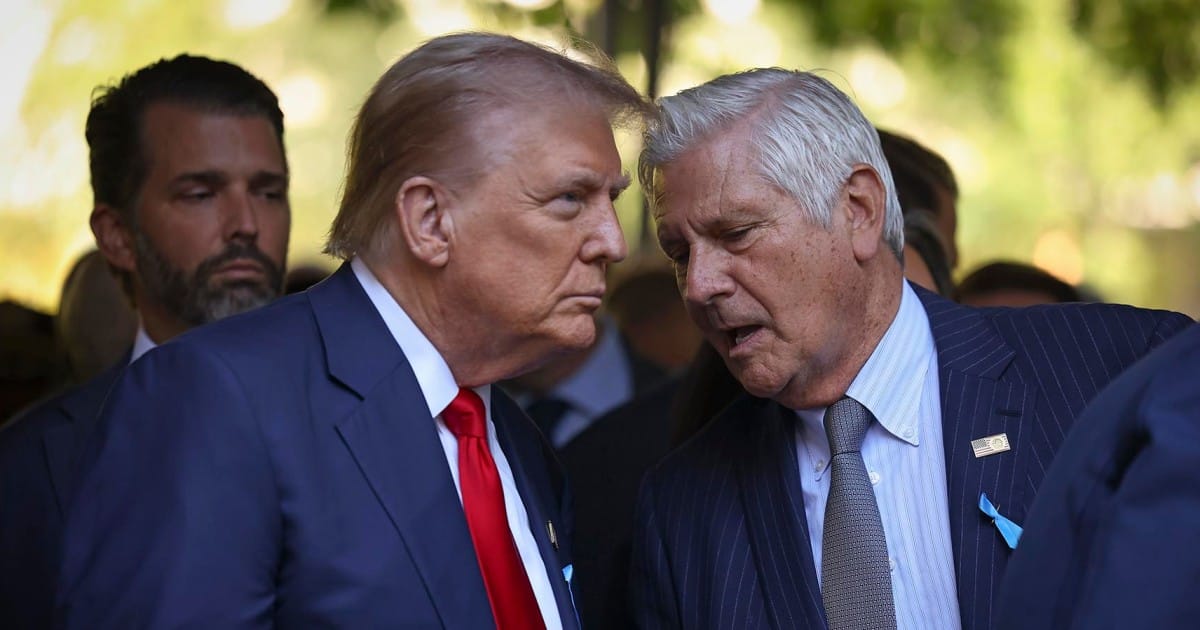
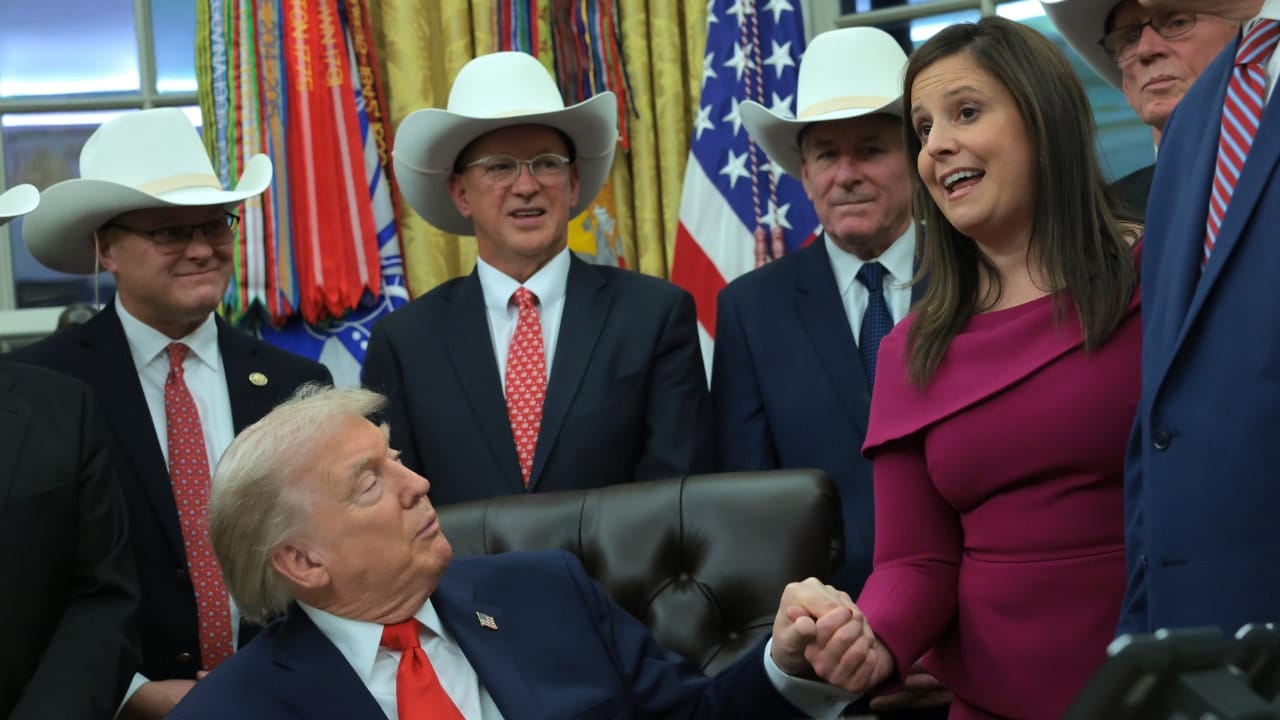
We are watching political Darwinism in action, ladies and gentlemen, but this isn’t natural selection; it’s purely mechanical, driven by the capricious whims of a singular figure who operates outside the standard rules of political gravity. Elise Stefanik, bless her heart, spent the last two years executing a textbook strategy for modern advancement in the Republican party: absolute, unquestioning loyalty to the former President, turning herself into a human shield and an effective rhetorical weapon for the MAGA agenda. She traded her moderate past, her establishment connections, and perhaps even a sliver of her soul for what she believed was a guaranteed ticket to Albany, only to find out that the price of admission was infinitely higher and constantly changing, finally culminating in the most abrupt, public rejection imaginable when Trump endorsed Bruce Blakeman just 24 hours after her hasty retreat.
This isn’t about New York politics. This is about the terrifying fragility of digital loyalty in the modern machine, where even optimizing your entire career for one man’s approval doesn’t guarantee a damn thing. It raises critical questions about whether political operatives understand the difference between earned respect and temporary digital validation.
Q: Did Stefanik misread the loyalty code, or was she simply chasing a phantom metric?
The short answer is she tried to game the system, and the system, which is based on an analog power structure masquerading as a digital movement, simply deleted her data. Stefanik’s pivot was so dramatic, so complete, that she convinced herself that consistent, performative adoration was the key. She became the poster child for the idea that if you simply parrot the correct talking points, if you defend the leader against all comers—even if those defenses rely on dubious factual grounds—you will be rewarded with the golden ticket. She spent countless hours perfecting the political calculation, believing that by becoming the ultimate defender against the ‘fake news’ and the ‘deep state,’ she was earning political capital that was impossible to revoke. This hyper-optimization of her persona, the calculated move away from her own history to align perfectly with the prevailing winds, was an attempt to guarantee an outcome through sheer algorithmic compliance, a strategy she believed was foolproof, which is why her exit was so shocking to the beltway types who still think politics is merely transactional.
What a punchline.
She failed to recognize that Trump’s loyalty test isn’t about consistent performance; it’s about constant, unpredictable submission, a process that ensures no one ever feels secure enough to establish their own power base. The moment she hesitated, the moment the endorsement didn’t arrive exactly on schedule, the value of her loyalty stock plummeted to zero. Stefanik had executed the perfect political software patch, but when it came time for the installation, the server—Trump—was offline, or worse, busy talking to Blakeman, who suddenly became the hot potato.
Q: What does this failure say about the future of ‘digital fealty’ in the Republican Party?
It’s a chilling warning, a real splash of cold water for every ambitious politician currently bending themselves into a pretzel trying to land the former President’s favor via Twitter or Fox News appearances. It proves that the entire infrastructure of modern conservative politics—the fundraising, the media appearances, the social media presence—can be instantaneously invalidated by a single, personal decision made outside the purview of metrics or polling data. We’ve entered an era where political success isn’t determined by policy competence or constituent service; it’s determined by whether you pass a subjective, high-stakes personality test administered by a jury of one. This system is inherently unstable and deeply anti-democratic, relying on instant digital affirmation rather than actual political groundwork, a fact that should terrify anyone who values consistency in governance.
This whole episode is a perfect metaphor for the dangers of operating in a culture driven by instantaneous digital reward. Stefanik thought she had enough points on her loyalty card, but the store changed the redemption requirements right as she got to the counter. The failure isn’t just Stefanik’s; it’s the structural failure of believing that political power can be quantified and earned like a high score in a video game. It’s a total shell game where the rules are rewritten every Tuesday morning, and the biggest irony is that the moment she dropped out, presumably because the necessary digital validation wasn’t forthcoming, Trump handed it to someone else, showing her that her time was up and the whole game had moved on without her.
The ultimate kicker is the immediate pivot to Bruce Blakeman, who represents exactly the kind of local, grassroots, traditional Republican power structure that Stefanik had spent two years aggressively mocking and distancing herself from in her feverish quest for MAGA cred. This move wasn’t strategic; it was punitive, a clear message: You don’t abandon the race and expect the endorsement to follow you into the sunset; you wait for the boss to tell you what to do, and if you leave early, the consequences are immediate and brutal.
Q: How does the Tech Skeptic perspective view this reliance on digital endorsements?
As a tragic comedy, frankly. Look, for years I’ve been railing against the idea that technology and social media metrics should dictate real-world outcomes. Stefanik’s entire strategy was based on optimizing her output for the digital sphere—generating viral defenses of Trump, getting high engagement numbers, and ensuring maximum visibility in the right cable news echo chambers. She was looking for the digital green light, the political equivalent of ‘verified status,’ which she saw as the necessary precursor to the gubernatorial run. This dependence on mediated approval is a cancer on governance. When the Kingmaker speaks through a text post or a brief statement released by email, rather than through months of meetings, strategic planning, or shared ideology, it means the whole political ecosystem is running on cheap, unreliable infrastructure. We are trading robust, analog political relationships—where trust is built over time, coffee, and actual legislative work—for the brittle, instantaneous gratification of a digital thumbs-up, which can be withdrawn faster than you can say ‘fake news.’ It’s terrifying that the fate of state leadership hinges on who the President decided to tweet about on a Saturday morning.
We’ve outsourced critical political decision-making to the realm of performance art and digital calculation, and the Stefanik episode is the perfect, painful demonstration of what happens when the algorithm decides you are no longer relevant. She became entirely dependent on the machine, and when the machine stuttered, she collapsed.
Boom.
Think about the historical context. When political giants like Eisenhower or Reagan threw their weight behind someone, it was usually the culmination of months, maybe years, of vetting and political debt. It was an analog bond, sealed with handshakes and shared objectives. Now, it’s a capricious, one-off event, entirely dictated by the digital mood of the principal actor, a mood that changes hourly depending on who was just on TV or what focus group data just landed on the desk. Stefanik didn’t fail at traditional politics; she failed at the modern iteration of digital loyalty, a game she tried to master but didn’t write the code for. The real lesson here is that you can’t trust the metrics when the owner of the platform can delete your entire account with zero notice.
Q: What is the long-term cost of Stefanik’s strategic retreat?
The immediate cost is obvious: she lost the governorship and seriously degraded her standing as a future party leader independent of Trump. But the deeper, more profound cost is the absolute institutional chaos this engenders. She sold the farm, burned the establishment bridges, and hitched her wagon to the biggest star in the sky, only to have the star decide that wagon wasn’t aerodynamic enough. Now, she is in a unique political limbo. Can she credibly return to being the moderate, measured voice she once was? Absolutely not; she incinerated that persona with her own rhetorical fire. Can she continue to rely solely on the MAGA base? Unlikely, since the leader of that base just publicly humiliated her and elevated a rival.
She’s trapped in a kind of digital purgatory, a casualty of her own optimized ambition, left holding the bag while Blakeman gets the shine. Her path forward is foggy, dependent entirely on her ability to spin this brutal rejection into some kind of valiant strategic retreat, which is political spin doctoring of the highest order. She needs a serious system reboot, not just a simple software update, but in the Trump era, system reboots are rarely authorized unless the leader hits the button himself. This is the danger inherent in political careers built on borrowed digital heat rather than authentic, sustainable light. You risk being left out in the cold when the plug gets pulled, leaving you entirely irrelevant in the next news cycle, a horrifying fate in a world obsessed with ‘what’s trending now.’ We should all learn from this painful digital failure.