The Official Lie: Pretty Lights and Northern Spectacles
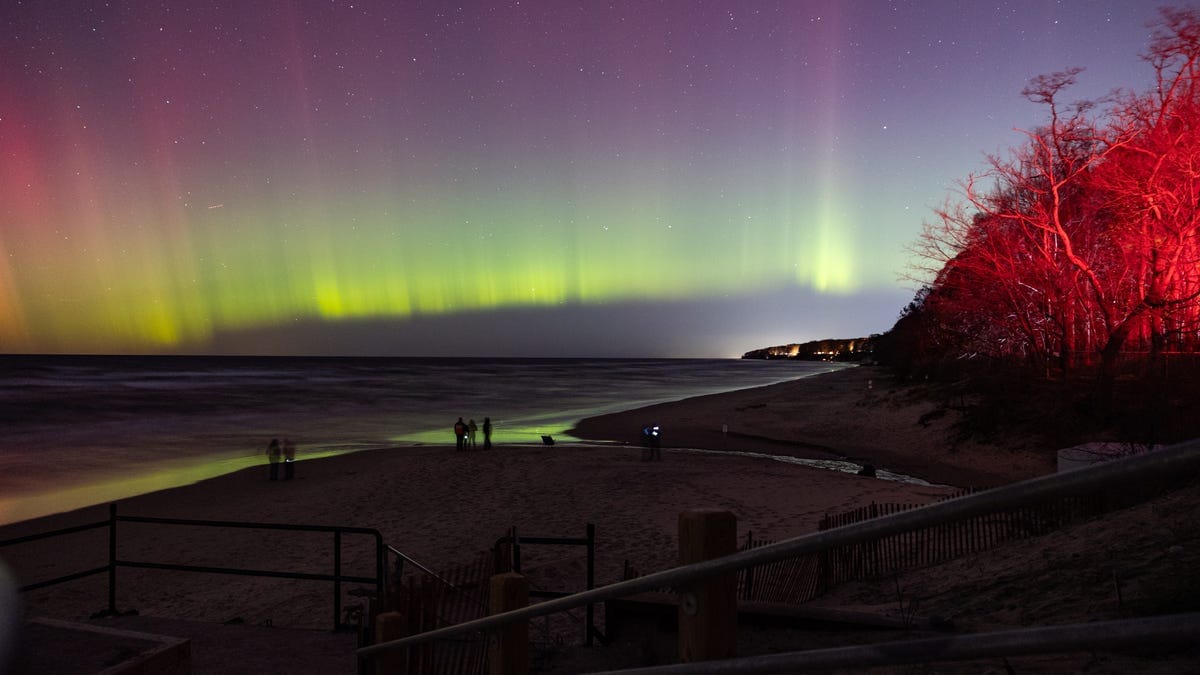
And so, the official warning comes down the wire: A strong G3 geomagnetic storm watch is in effect for Tuesday, December 9, 2025. The news outlets, ever reliable mouthpieces for soothing institutional calm, are practically gushing about the potential for ‘stunning’ auroras visible across more than a dozen states. They even provide a neat little map, telling you where to go to catch the light show. This is the official story, the one designed to keep the masses docile and looking up at the sky, mesmerized by nature’s light show like digital-age moths drawn to a flame.
Because, of course, the media’s narrative always focuses on the spectacle, the beauty, the Instagram-able moment, completely ignoring the terrifying reality lurking behind the curtain. They are soft-pedaling a potentially civilization-altering event as a photo-op. It’s the equivalent of telling everyone to look at the pretty mushroom cloud while ignoring the fact that it just wiped out everything within a hundred-mile radius. This isn’t just about pretty lights; it’s about the sun testing the limits of our fragility, and we are failing before the storm even arrives.
But a G3 geomagnetic storm isn’t just a light show; it’s a direct assault on the digital infrastructure that holds our entire society together by the slimmest of threads. The very fact that NOAA feels compelled to issue a watch for something this powerful should send a shiver down your spine, not because of the aesthetic display, but because of what happens when that kind of raw power interacts with our fragile, aging electrical grids and satellite systems. We are being told to watch the aurora while the very systems that allow us to function as a modern society are being put through the paces of a potential catastrophic failure. It’s a classic bread and circuses routine, designed to keep our focus on the trivial while ignoring the existential threat.
And a strong (G3) storm watch is not just for show; it’s a real threat level. But they don’t want you to panic, so they frame it as a natural phenomenon rather than a technological vulnerability. This is the difference between an honest warning and a calculated distraction. The truth is, we are completely unprepared for what a truly powerful solar storm would do to our interconnected, hyper-dependent world.
The Dystopian Truth: A Vulnerability Test for the Digital Age
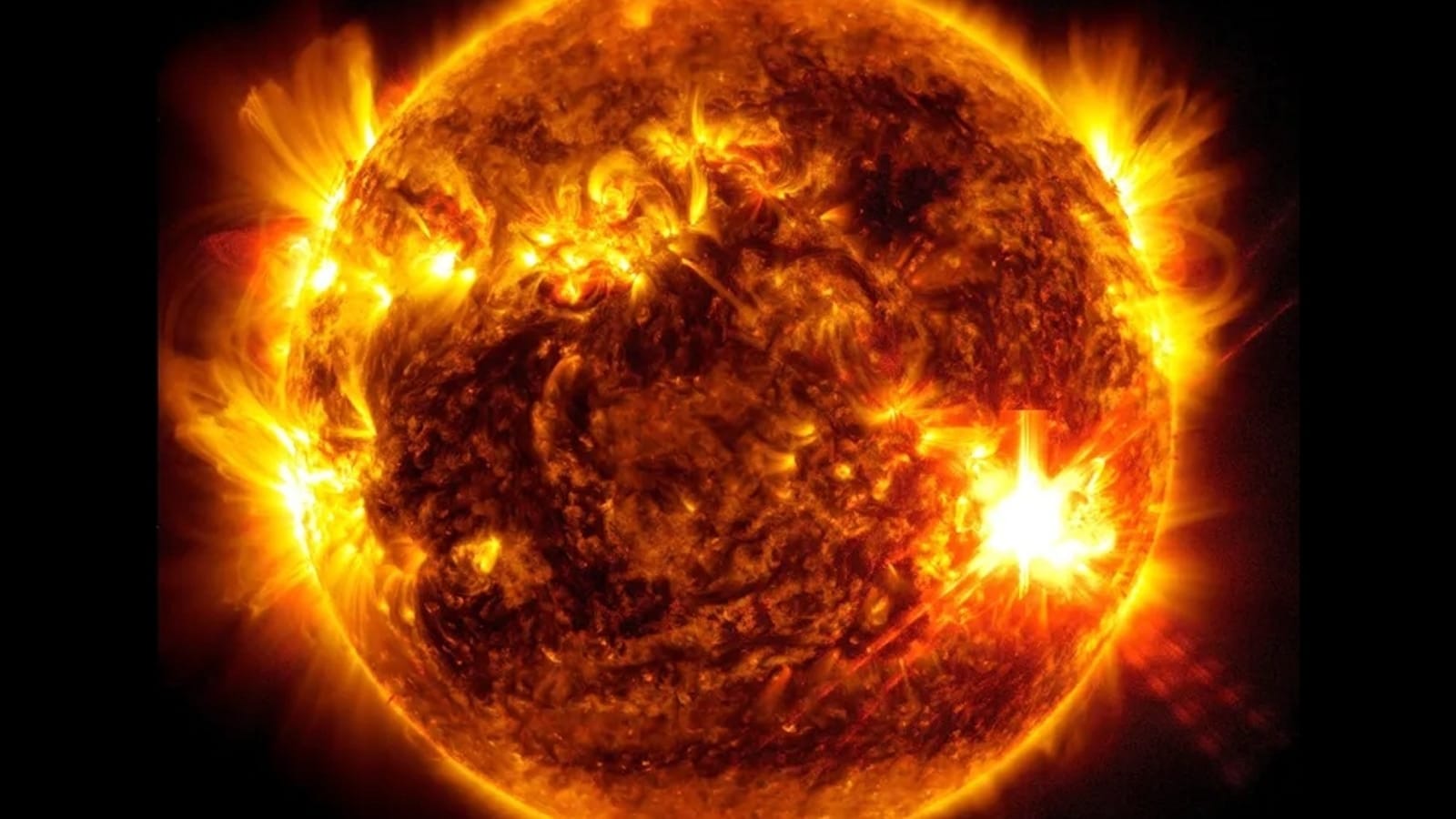
Because the real danger of a coronal mass ejection (CME) isn’t the light, it’s the Geomagnetically Induced Currents, or GICs, that flow through every piece of metal infrastructure in its path. Imagine a massive surge of electricity, powerful enough to fry the delicate electronics of a transformer. Now imagine that happening simultaneously across the entire grid. Our modern electrical grids are interconnected on a scale never before seen, and this interconnectedness is actually our greatest weakness. One failure cascades into another, creating a domino effect that could send entire regions into darkness, potentially for months or even years.
And this isn’t a theoretical exercise; it’s a historical certainty. The Carrington Event of 1859, the most powerful solar storm in recorded history, caused auroras to be seen near the equator and set telegraph stations on fire. Telegraph operators reported sparks jumping from their equipment, and some were able to send messages even with their batteries disconnected because the GICs were strong enough to power the lines directly. In 1859, this was a novelty; in 2025, it’s a catastrophe. If a Carrington-level event hit today, it wouldn’t just affect telegraphs; it would affect every power grid, every satellite, every GPS signal, every subsea fiber optic cable that carries the internet across oceans. The result would be a total collapse of modern society as we know it, and the authorities know this better than anyone.
But the public, obsessed with their smartphones and social media, has no idea how fragile their existence truly is. They’re too busy arguing about politics or scrolling through endless feeds to realize that all of it, every single bit of digital information, relies on systems that are incredibly vulnerable to something as simple as a hiccup from the sun. The fact that NOAA issues a watch for a G3 storm, and the public reaction is ‘ooh, pretty lights,’ highlights the complete disconnect between human perception and technological reality.
The Real Target: GPS, Satellites, and the Digital Economy
Because the power grid isn’t the only casualty. Think about everything else that relies on satellites. GPS navigation, financial transactions, weather forecasting, and military communications. A solar storm can damage or completely destroy satellites in orbit by frying their sensitive components. If enough satellites go offline, our entire global positioning system collapses. And without GPS, our modern logistics and supply chain systems fall apart. Trucks can’t navigate efficiently, planes can’t land safely, and precision farming techniques that feed the world become impossible. The food supply chain, already strained by recent events, would be stretched to the breaking point. This is the real danger. The official warnings about the aurora are just a cheap way to keep us distracted from this terrifying vulnerability.
And it’s not just the satellites, but the ground-based infrastructure. The long-distance fiber optic cables that carry internet traffic across continents and oceans are also susceptible. While fiber optics themselves are immune to GICs, the repeaters and amplifiers needed to boost the signal over long distances are not. If these repeaters fail, a significant portion of global internet traffic could be disrupted for extended periods. Imagine a world where international banking, stock markets, and inter-company communication just stop working. The economic impact would be incalculable, measured in trillions of dollars and leading to immediate global recession or depression.
But the officials and the media don’t want to talk about this because it would expose the soft underbelly of our modern digital dependency. They want us to believe in the resilience of technology, in the seamless functionality of the systems that control our lives, but the reality is that we are living on borrowed time. This storm watch for December 9, 2025, isn’t just a weather report; it’s a grim reminder that our civilization’s foundation is built on sand, vulnerable to the natural forces we’ve long considered benign.
Why We Are Unprepared: Apathy and Digital Addiction
Because our society has become completely addicted to digital comfort, we have lost the ability to prepare for real-world risks. The public would rather gaze at a spectacle of light than consider the possibility of a permanent blackout. This apathy is precisely why we are so vulnerable. The government has known about the risk of solar storms for decades. The threat of a massive power grid failure has been modeled and studied repeatedly, yet little has been done to harden the grid against GICs. The costs are high, and the political will is low, so we collectively choose to ignore the problem until it hits us in the face.
And the corporate media plays along with the official narrative. They are afraid to tell the truth because it would create panic and undermine consumer confidence. A panicked consumer doesn’t buy goods; they hoard essentials. So, instead of a serious discussion about hardening infrastructure, we get pretty pictures of auroras and feel-good stories about nature’s wonder. It’s a complete dereliction of duty, designed to protect the status quo at the expense of public safety and awareness. The fact that they are focusing on a spectacle rather than a threat is proof positive that they view the public as children to be entertained, not citizens to be informed.
But the storm watch for December 9, 2025, is more than just a passing headline; it’s a test run. The solar maximum may be past, but the sun is still active, and these storms are a natural and unavoidable part of its cycle. If this G3 storm were to escalate to a G4 or G5, the results would be catastrophic. The fact that we are so vulnerable to a relatively common natural event proves that we have built a highly complex system with no contingency plan. We have placed all our eggs in one digital basket, and the basket is about to be dropped. The northern lights may be beautiful, but they are a sign of impending darkness.
The Bottom Line: Don’t Look Up. Look Down.
Because when the lights go out, the people who prepared for the spectacle will be the first ones to starve. The people who ignored the official narrative and stocked up on essentials will be the ones who survive. The true danger of a solar storm isn’t a lack of pretty pictures; it’s a lack of food, water, and heat when the digital infrastructure collapses. This storm watch is a warning, not a celebration. But our society, driven by digital distraction and a lack of critical thinking, chooses to see only the entertainment value. The tech skeptic knows better. The tech skeptic knows that when they tell you to look up, you should probably be looking down at your pre-packed go-bag. The official narrative is a lie, designed to keep you from preparing for the inevitable collapse. Don’t fall for the trick. Prepare for darkness, because the pretty lights are just the beginning.