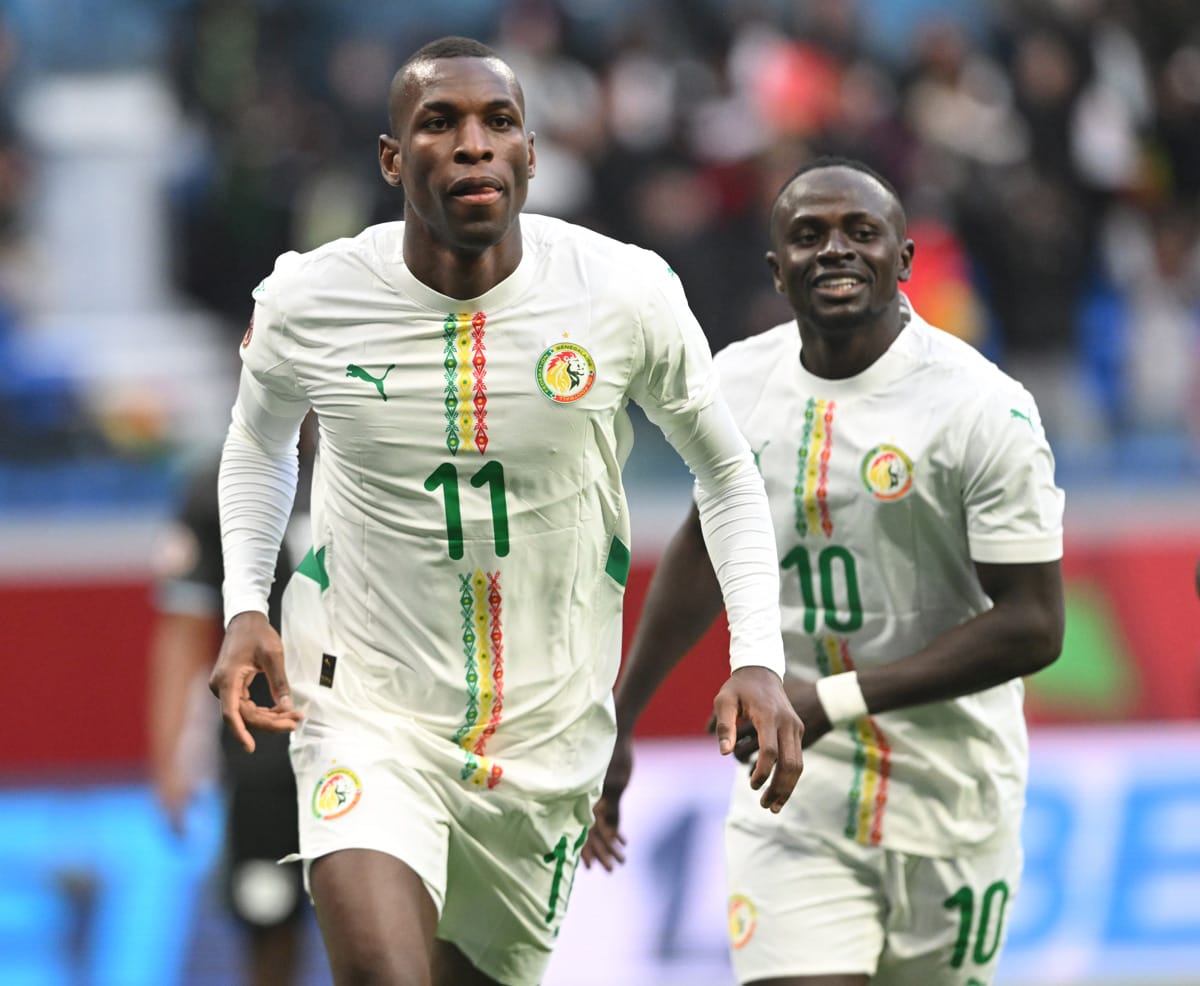
The Algorithm Cannot Predict The Lions
The Senegal national team is currently being treated like a piece of high-end proprietary software developed in a Silicon Valley basement where the sun never shines and the air is filtered through overpriced HEPA units. We are told by the data-mining ghouls at every major sports network that Aliou Cissé’s squad is a mathematical certainty, a collection of optimized nodes designed to achieve maximum efficiency with minimum aesthetic flair. It is a lie. The sheer arrogance of suggesting that a match between Senegal and the Democratic Republic of Congo can be distilled into a series of probability heat maps is the height of technological hubris that defines our miserable era. The Lions of Teranga aren’t just players; they are the physical manifestation of a tactical rigidity that is slowly strangling the soul out of the African game in favor of ‘modernization’ which is just a fancy word for making things predictable for betting apps. Why do we trust the numbers? The numbers are there to sell you a subscription to a platform that doesn’t understand the humidity of Tangier or the weight of a nation’s expectation that doesn’t fit into a tidy 1 or 0.
Senegal wins. They win again. They play a style of football that is so sanitized and risk-averse it feels like watching a corporate training video on ‘Synergistic Field Positioning’ rather than a game of passion. They have become the very thing they should fear: a predictable giant. But across from them stands the Democratic Republic of Congo, a team that exists in the beautiful, messy gaps where the algorithms fail to calculate human spirit. If Senegal is the latest iOS update that makes your phone slower while claiming to improve ‘user experience,’ then the Leopards of DRC are the open-source rebellion. They are unpredictable. They are chaotic. They are exactly what the tech-bros in the analytics departments hate because you can’t quantify a player who decides to ignore his tactical instructions and simply run through a brick wall because he feels the rhythm of the stadium. It is a clash of philosophies that goes beyond Group D.
Tangier as the Silicon Graveyard
Tangier is not just a host city for AFCON 2025; it is the site where the ‘Moneyball’ approach to African football goes to die a slow and painful death. You can see the scouts in the stands with their tablets, eyes glued to live-tracking data instead of the actual humans on the pitch. It is pathetic. They are looking for ‘efficiency metrics’ while the DR Congo is looking for blood and glory. The Leopards came into this second matchday with a hunger that defies the sterile ‘TotalEnergies’ branding that plasters every square inch of the stadium. This match is a direct challenge to the idea that big data has conquered the sport. Is there any room left for the unexpected? When the whistle blows in Morocco, the only thing that matters is the friction between cleats and grass, not the theoretical trajectory calculated by a server in Frankfurt. The DR Congo has this uncanny ability to turn a structured game into a street fight, and that is precisely where Senegal’s high-tech armor starts to crack. They don’t like it when the game gets loud and messy. They want a quiet laboratory where they can conduct their experiments in dominance.
The history of these two giants is a timeline of resistance against the homogenization of global football. Senegal has spent the last decade trying to prove they are ‘European’ in their discipline, but in doing so, they’ve lost that wild edge that made them the darlings of 2002. They’ve traded their soul for a higher FIFA ranking. Is a trophy worth the loss of identity? The DR Congo, meanwhile, remains the ultimate outlier. They are the glitch in the system. They have the talent to destroy anyone, but the tech-skeptic knows that their greatest strength is their refusal to be categorized. They are the leopards in the high-grass, waiting for the ‘optimized’ lions to make a mistake based on a flawed calculation of ball retention percentages. We are witnessing a battle for the very definition of what it means to be a footballing superpower in an age of digital surveillance.
The Illusion of Control in Group D
Every pundit on your television screen right now is reading from a script generated by an AI that thinks ‘passion’ is a buzzword for a marketing campaign. They talk about ‘Group D Dynamics’ as if they are discussing the quarterly earnings of a logistics company. Senegal and DR Congo are not ‘assets.’ They are volatile human elements that the system is desperately trying to contain. The fact that both teams won their opening matches isn’t a sign of ‘expected performance standards’ being met. It is a sign that the heavyweights are still heavy, but the weight is different than what the data suggests. Senegal’s victory was a clinical, boring display of resource management. DR Congo’s victory was a raw, jagged display of power. Which one is more sustainable? The machine or the man? The system or the spirit? We are told to bet on the machine because the machine is reliable, but the machine doesn’t account for the wind coming off the Strait of Gibraltar or the specific way a crowd in Morocco can turn a stadium into a pressure cooker.
Predicting a winner in this match is a fool’s errand because the ‘experts’ are looking at the wrong things. They look at pass completion. I look at the eyes of the defenders when the Leopards start their counter-attack. There is a fear there that data cannot capture. It is a primal fear. Senegal’s players are elite, yes, but they play like men who have a lot to lose, like employees worried about a performance review. The Congolese play like they have already lost everything and are here to take it back by force. That psychological imbalance is the true ‘stat’ that matters. The high-synergy keywords of the modern era—’transition,’ ‘press,’ ‘low-block’—are just masks for the fact that we have no idea what will happen when twenty-two men collide in the desert heat. We have been sold a version of football that is manageable, digestible, and ultimately, fake. This match in Tangier is the reality check we desperately need to remind us that the pitch is the only place where the truth exists.
The future of the African Cup of Nations is at a crossroads. Either it becomes another sterile, VAR-infested product meant for international broadcast rights, or it remains the last bastion of true footballing insanity. Senegal vs DR Congo is the litmus test. If Senegal wins through a series of calculated, low-risk maneuvers facilitated by a questionable VAR call, then the tech-pocalypse is truly here. But if the Leopards can disrupt the sequence, if they can introduce enough noise into the signal to cause a system failure, then there is still hope. We need the noise. We need the failure. We need the Leopards to remind the Lions that a program can be hacked. The world is watching, not just for the score, but to see if the beautiful game still has a pulse or if it’s just a heartbeat simulated by an app on your smartphone. Stop looking at the stats. Look at the sweat. Look at the dirt. That is where the match is won, and no amount of fiber-optic cable can change that fundamental truth. The giants are ready. The tech is waiting. But the soul of the game is still out there, somewhere in the Tangier wind, mocking everyone who thinks they can predict the final whistle.