The Official Narrative: A Story of Loyalty and Market Momentum
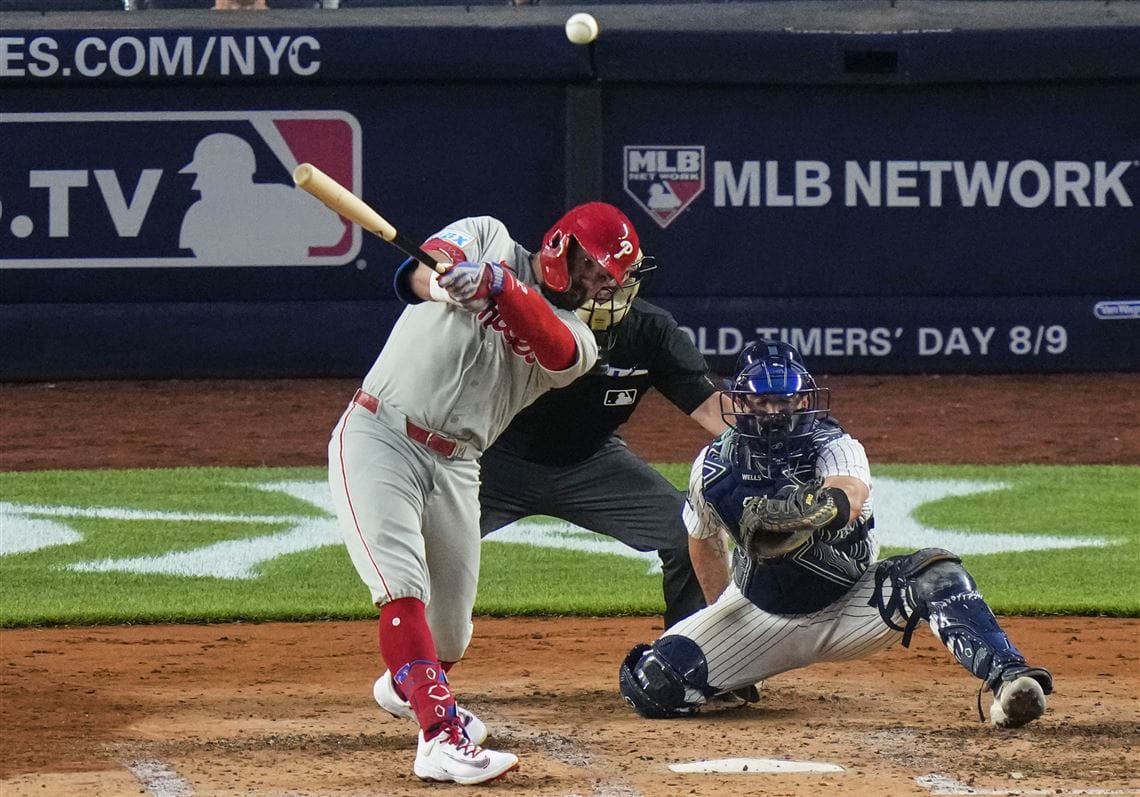
And so, after weeks of manufactured intrigue, the great Kyle Schwarber domino finally tumbled, landing precisely where everyone knew it would all along: back in Philadelphia, securing a five-year, $150 million contract. The official spin, disseminated through a highly compliant sports media, will tell you a few things. It will tell you that this deal signifies a serious commitment by the Philadelphia Phillies’ ownership to winning. It will paint a picture of Schwarber as a player who deeply appreciates the city and organization, a ‘homecoming’ narrative that suggests loyalty triumphs over mercenary motives. Because this deal also occurred during the Winter Meetings, the narrative further suggests that Schwarber’s signing has finally ‘unlocked’ a stalled market, creating momentum and allowing other free agents to sign as teams finalize their budgets and strategies. It’s a clean story. It’s neat, it’s tidy, and it sells tickets and ad revenue for the league. But like most things that look perfect on the surface, this narrative is built on a foundation of calculated half-truths designed to obscure the colder, strategic realities of modern professional sports.
The Strategic Lie: Manufactured Competition and Small-Market Props
But let’s peel back a layer and look at what actually happened here. The idea that a team like the Pittsburgh Pirates—or any small-market club, for that matter—was truly ‘in’ on a player like Kyle Schwarber, as some reports suggested during the pre-signing hype cycle, is not just naive; it is strategically manipulated fiction. The Winter Meetings are, in large part, a performative exercise in market manipulation. The ‘sources’ that leak information to reporters are not acting out of transparency; they are acting to apply pressure, inflate prices, or create artificial scarcity. When a large-market team wants to sign a specific player, they have a vested interest in creating a false sense of competition. The Pirates, in this scenario, were never a real suitor for Schwarber. They were a prop. Their name was used, likely by Schwarber’s agent, Scott Boras, to create leverage against the Phillies and justify the final price tag. Boras’s job is to extract maximum value, and a key tactic in doing that is to fabricate a bidding war, even if one side of the ‘war’ (the Pirates) is only armed with a popgun. The small-market team’s name gets used in headlines to give the impression of a vibrant, competitive league where every team has a shot, but the reality is that they are being used as pawns in a high-stakes negotiation where they have zero chance of winning. And because a $150 million contract for a 30-year-old designated hitter isn’t just a purchase; it’s a statement of financial dominance that dictates the terms of engagement for every other team in the league.
The Cold Reality: Market Reset and Financial Stratification
Because the true significance of this deal isn’t just in the number of years or the total value, but in what it does to the market’s perception of value for similar players. When a player like Schwarber signs for $150 million, it sets a new floor for power hitters in that age range. It forces every team that needs power to recalibrate its budget, essentially moving the goalposts further away from the small-market teams that were already struggling to keep up. The Phillies didn’t just sign Schwarber; they strategically priced him out of reach for anyone else who might have been genuinely interested in him at a slightly lower figure. And the small-market teams? They can only watch as the cost of doing business inflates once again. The idea that this deal ‘unblocks’ the market is only true for the other big-market teams. They now know the price range they have to play in. For small-market teams, however, it simply solidifies their fate: they will be forced to hunt for bargains, sign cheaper, riskier players, or rely on internal development, which is exactly how the system is designed to function. The stratification between the ‘haves’ and ‘have-nots’ becomes wider with every contract of this magnitude.
The Historical Precedent of Market Domination
But let’s look at the historical context here, because this isn’t new; it’s a repeating cycle. When large-market teams engage in aggressive spending, it creates a cascade effect that entrenches inequality. Look back at the early 2000s when contracts started to truly skyrocket with players like Alex Rodriguez and Derek Jeter. Those deals weren’t just about paying individual players; they were about creating new financial benchmarks that effectively eliminated small markets from competing for top-tier talent. The Schwarber contract, while smaller in scale than some historic agreements, serves a similar purpose in the modern era of analytics and a more flexible designated hitter rule. It establishes a clear market value for a specific archetype: the high-power, high-strikeout slugger whose primary value is derived from home runs. And by locking in that value at $150 million, the Phillies have essentially told the rest of the league, ‘If you want this type of production, you must pay our price.’ Small markets, like the Pirates, simply cannot, and their purported ‘interest’ in Schwarber was nothing more than an agent’s leverage play, designed to squeeze the last few dollars out of the Phillies.
The Strategic Implications for the Future of Small Markets
And so, what does this actually mean for the Pittsburgh Pirates, who were fleetingly mentioned in the run-up to this deal? It means they return to their real business: focusing on internal development and hoping to identify undervalued talent. The idea that they would spend $150 million on one player is laughable in a strategic context. Their business model is built around finding young players, developing them, and trading them away before they reach free agency and demand the kind of money that Schwarber just received. The Schwarber contract simply reinforces this reality. It clarifies the boundaries of competition. The Pirates, and teams like them, exist in a separate economy. They are not competing for the same players as the Phillies or Yankees; they are competing for prospects and minor league talent. This isn’t a failure of management by the Pirates; it’s a failure of the economic structure of Major League Baseball. The system is rigged to reward spending and punish fiscal constraint, ensuring that the same teams remain competitive year after year while the small markets struggle for relevancy. The fans, of course, are told a different story. They are told that their team is ‘trying,’ that they were ‘in the running’ for a big name, but the reality is that the outcome was predetermined long before the Winter Meetings began. The Schwarber deal isn’t a victory for free agency; it’s a stark reminder of who holds the power and who is just playing along for show.
The Final Verdict: A Calculated Move, Not a Spontaneous Celebration
Because ultimately, the Schwarber contract is not a celebration of baseball or a sentimental reunion. It is a calculated business decision. The Phillies determined that Schwarber’s production—his high home run count and ability to change a game with a single swing—is worth $30 million per year. They made a cold calculation that this specific skillset provides more value to their organization than other free agents or internal options. The ‘sources’ that report on these things are not interested in the true story; they are interested in creating drama and fueling the illusion of competition. The truth is much colder: the large-market teams dictate the terms of the market. They determine who gets paid, how much, and when. The small-market teams, like the Pirates, are merely collateral damage in this process, used as leverage points and then discarded when the final price is set. And because this cycle continues, the gap between the haves and have-nots grows ever larger, creating a league where only a handful of teams truly compete for championships, while the rest simply exist to provide a feeder system for the wealthy. The Schwarber deal is just another move in this high-stakes game of economic stratification, a game that small-market fans are continually asked to believe they have a chance of winning.