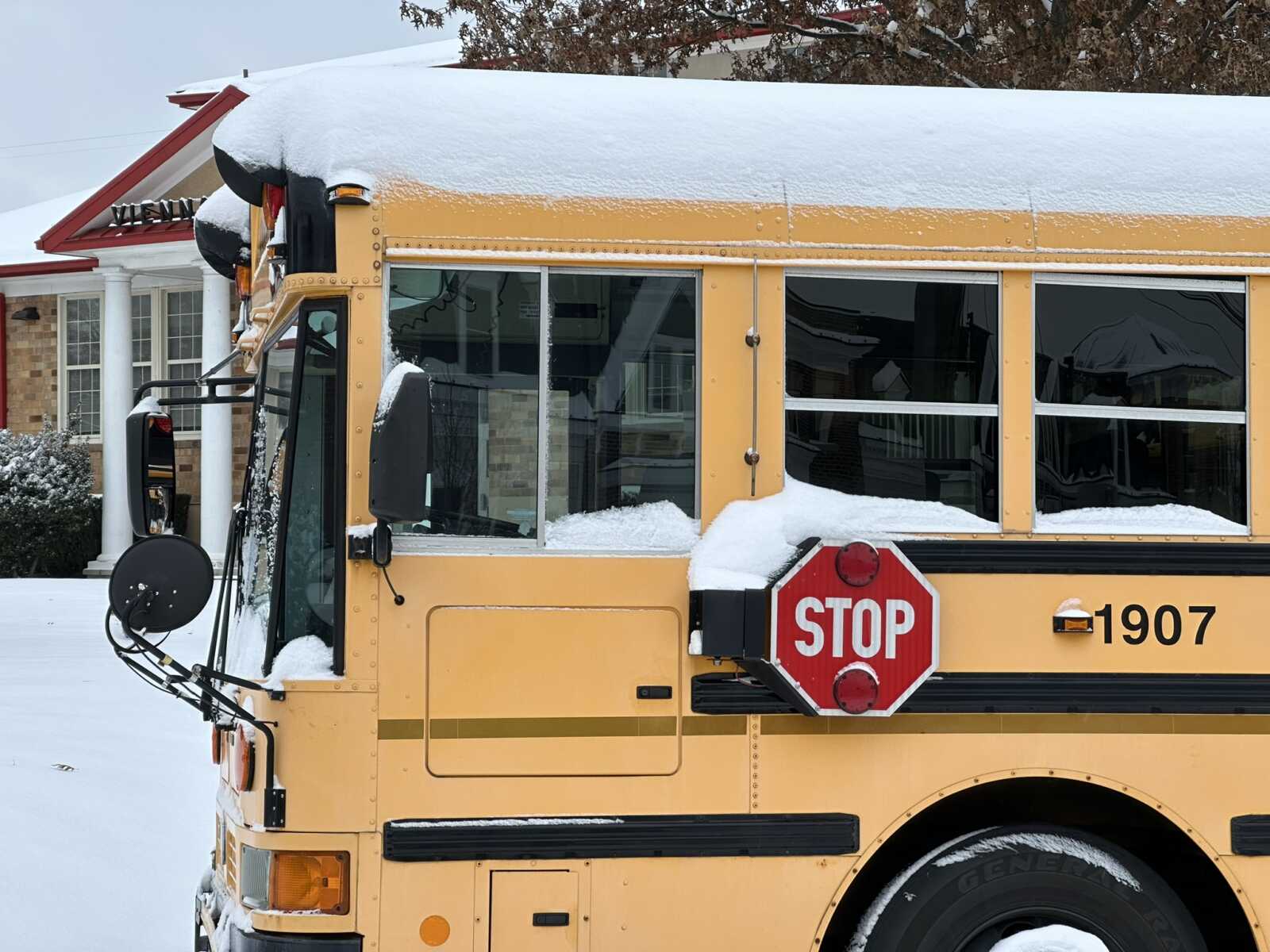
So a Few Flurries Grind the Nation’s Capital to a Screeching Halt? What’s the Real Story?
Let’s be brutally honest. You saw the headlines. Fairfax County. Arlington. Prince George’s. A coordinated, almost military-style wave of two-hour delays because a weather model—a glorified computer game—predicted some frozen water might fall from the sky. They call it caution. They call it safety. I call it a complete and utter abdication of responsibility, a pathetic display of bureaucratic cowardice that reveals the rotten core of our public institutions. This isn’t about protecting children. It’s about protecting pensions.
Cowardice.
Think about the mechanics of this charade. Some overpaid superintendent, who probably hasn’t driven on a slick road in a decade because they have a taxpayer-funded chauffeur, gets a call from their contracted, multi-million dollar private weather service. This isn’t your local news weatherman; this is a high-tech firm that has a vested interest in justifying its own existence by predicting doom. They whisper the magic words: “Winter Weather Advisory.” Immediately, the gears of the liability-avoidance machine start turning, a grotesque ballet of CYA emails and pre-written press releases, all designed to do one thing: push the decision off. The two-hour delay is the ultimate bureaucratic punt. It’s not a closure, so they don’t look too hysterical. But it’s not a normal day, so if one bus skids on a single patch of ice, they can wave their press release and scream, “See! We were cautious!”
The Weather Industrial Complex
This is a racket. A massive, profitable racket. We’ve allowed an entire industry to spring up whose sole purpose is to monetize fear. They sell school districts, municipalities, and corporations on subscription models for hyper-local forecasting, creating a dependency loop where administrators feel they *must* have this service to cover their backsides in court. And what’s the easiest way for that weather service to prove its value? By constantly raising the alarm. The incentive is never to be calm; it’s to be dramatic. A forecast of a clear, sunny day doesn’t justify a $100,000 annual contract. But a forecast of a “potential winter storm” with a 30% chance of an inch of slush? That’s money in the bank. It forces the hand of the risk-averse paper-pushers, and the whole system grinds to a halt based on a prediction that is, more often than not, dead wrong.
It’s a manufactured crisis sold to people who lack the spine to make a judgment call.
Who Really Pays the Price for This Two-Hour ‘Convenience’?
The superintendent gets to sleep in. The union reps celebrate a small victory for a slightly shorter workday. The administrators pat themselves on the back for their profound wisdom. But who cleans up the mess? It’s the single mother who works an hourly job as a cashier and now has to scramble, begging a neighbor or a family member to watch her kids for two hours because she can’t be late for her shift or she’ll be fired. It’s the father who has to burn a precious vacation day he was saving for a real family emergency, not this nonsense. It’s the small business owner whose employees are all calling in saying they’ll be late, throwing the entire day’s productivity into chaos. This isn’t a minor inconvenience; it’s a direct economic assault on the working families these school systems claim to serve.
Chaos.
The sheer arrogance of it is breathtaking. With a single email sent from the comfort of their warm homes, these officials detonate a logistical bomb in the lives of hundreds of thousands of people. They create a city-wide traffic jam as everyone’s commute is suddenly shifted by two hours. They force parents into a frantic, high-stakes game of childcare Tetris. And for what? So they can avoid the microscopic possibility of being named in a lawsuit. They are sacrificing the certainty of today’s hardship for the working class to mitigate the hypothetical risk of a future legal headache for themselves. It is the definition of elitism, a clear signal that the priorities of the bureaucracy are completely inverted from the needs of the public.
The Forgotten Child
And what about the children? The supposed beneficiaries of this grand safety plan? They lose two hours of instruction time. Two hours. It may not sound like much, but these hours add up over a school year filled with delays, early dismissals, and professional development days. We are in the midst of a historic educational crisis, with test scores plummeting and kids falling further and further behind, yet we treat instructional time as if it’s a disposable commodity. The message we send our children is that education is secondary to comfort, that learning can be casually tossed aside at the slightest hint of adversity. We are training a generation to be fragile. We are teaching them that the world must stop for them if things aren’t perfect. What happens when they graduate and find out that the real world doesn’t offer two-hour delays for a bad mood or a tough commute?
Isn’t This Just About Safety? Are You Saying We Should Put Kids in Danger?
That’s the strawman they always build. The classic emotional blackmail. “If you question our decision, you must want children to get hurt.” It’s a disgusting, manipulative tactic designed to shut down all legitimate criticism. Nobody wants to see a child injured. Nobody. But we have completely lost all sense of proportion, all sense of reasonable risk assessment. We live in a world where we put kids on buses every single day, a statistically more dangerous activity than being in a school during a terror attack. We allow them to play sports where concussions are a real risk. Life is filled with risk, and the job of adults—and public institutions—is not to eliminate all risk, which is impossible, but to manage it intelligently and to teach children resilience.
Resilience is dead.
What we have now is safetyism, a corrosive ideology that elevates the avoidance of all potential harm, no matter how remote, above all other values. A skinned knee on the playground becomes a potential lawsuit. A snowball fight becomes assault. And a forecast of flurries becomes a state of emergency. Our grandparents, who walked miles to school in actual blizzards, must be laughing from their graves. They built a country. We’re afraid to leave the house. This isn’t about a rational fear of 18-wheelers sliding on black ice; this is about an irrational fear of accountability. The county has fleets of salt trucks and plows. They have emergency plans. The infrastructure exists to handle minor weather events. The failure isn’t in the equipment; it’s in the leadership. It is a failure of nerve.
What Does This Say About the Unions and the Bureaucracy?
Follow the incentives. Who benefits most from a delay or closure? While parents are scrambling, the teachers’ unions are quietly pleased. It’s a shorter, easier day. The morning rush is gone. It’s a small but tangible perk, and in the world of collective bargaining, these small perks are fiercely protected. The unions have immense political power within these school districts, and no superintendent wants to pick a fight with them by being the one leader in the region who insists on opening on time. It’s easier to go along with the herd. If Fairfax delays, Arlington must delay. If Arlington delays, Prince George’s must delay. It’s a domino effect of mediocrity, driven by a desire to appease the powerful employee bloc rather than serve the families who are the actual customers.
This is institutional capture. The systems are no longer run for the benefit of the public; they are run for the convenience of those who work within them. The entire bureaucratic apparatus, from the superintendent’s office down to the department heads, is a self-licking ice cream cone. Their primary objective is self-preservation, budget expansion, and the avoidance of controversy. The actual education of children is a distant, secondary concern. This snow day farce is just one symptom of the deeper disease. We see it in bloated administrative budgets, in the obsession with jargon and initiatives over results, and in the utter lack of accountability when things go wrong.
The End Game: A Fragile Nation
So where does this all lead? It’s a slippery slope we are already halfway down. Today it’s a two-hour delay for an inch of snow. Tomorrow it will be a full-day closure for a forecast of rain. The year after, schools will move to permanent remote learning if the temperature drops below 40 degrees. We are systematically dismantling our society’s ability to function under even the slightest pressure. We are creating a nation of institutional and individual snowflakes, melting at the first sign of inconvenience.
This is how empires crumble. Not with a bang, but with an email announcing a two-hour delay. It starts with small concessions to fear and comfort, and it ends with a populace that is incapable of facing a real crisis because it has never been tested by a small one. The next time you see that alert flash on your phone, don’t just sigh and reschedule your morning. Get angry. Ask questions. Demand accountability. Because they aren’t just delaying the school day; they are delaying our children’s future and cheapening the very idea of a robust, resilient society. And that’s a price none of us can afford to pay.