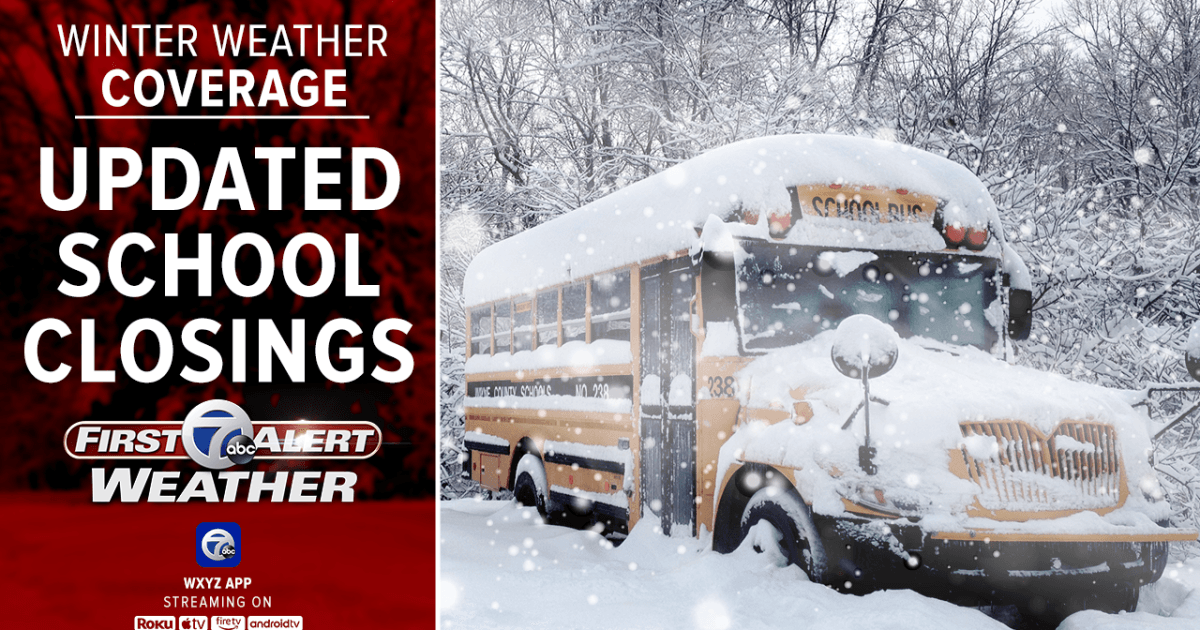
The Big Lie of the ‘Snow Day’
Let’s cut through the fluff and look at what’s really happening here. The headlines scream about schools closing across Metro Detroit and West Michigan—hundreds of them, apparently—because of a winter storm bringing snow and ice. We’re told this is for safety; we’re told this is because the roads are impassable or the buildings aren’t ready. But let’s be honest with ourselves, shall we? This isn’t just about a couple of inches of snow; this is about institutional cowardice and the insidious expansion of administrative power under the guise of public safety. When did we become so fragile? Our grandparents walked five miles uphill, both ways, in conditions that would now shut down a major city for a week. Now, a little bit of freezing rain and the whole system grinds to a halt. It’s not just incompetence; it’s deliberate engineering of public dependency.
The Erosion of Personal Responsibility
What we’re witnessing, in real-time, is the complete erosion of local control and personal responsibility. The centralized school bureaucracy, far removed from individual neighborhoods, makes blanket decisions based on the most extreme possible interpretation of a risk assessment. They don’t trust local principals or individual parents to make intelligent choices about whether their child should attend school. Instead, they issue a unilateral decree from on high, forcing everyone into compliance. This creates a culture where no one is allowed to think for themselves, where every decision is filtered through a layer of administrative risk management that values avoiding lawsuits over actually educating children. And here’s the kicker: The same administrators who justify closing the physical schools for a light snowfall are often the very ones who simultaneously insist on mandatory, low-quality virtual learning during the closure. They want to maintain control over the curriculum, over the daily schedule, over the flow of information, even when the physical building is inaccessible. It’s not about giving kids a break; it’s about ensuring the funding and the bureaucratic structure remain intact, regardless of the quality of education delivered.
The Financial Incentive of Failure
Now, let’s follow the money trail. School districts receive funding based on daily attendance, or in some cases, based on maintaining a certain number of instructional days per year. When a snow day occurs, they have to make up those days or risk losing funding. But the administrative state has found a loophole, a clever way to continue collecting funds while minimizing physical operational costs. Enter remote learning. The COVID-19 pandemic normalized remote learning as a viable substitute for in-person instruction. Now, a simple snowstorm, which historically would have been a true day off where parents scrambled for childcare, is transformed into a mandatory remote learning day. This is a crucial distinction. The district still receives its funding (or avoids having to make up the day later), while simultaneously saving on heating costs, cafeteria staff wages, transportation expenses, and general facility operations for the day. It’s a financial win for the bureaucracy, and a logistical nightmare for parents, particularly those who work in essential services or low-wage jobs where remote work isn’t an option. The administrators get to look responsible for prioritizing ‘safety’ while actually prioritizing their balance sheet, pulling the wool over everyone’s eyes in the process. This shift from a traditional ‘snow day’ to a mandatory ‘virtual learning day’ is perhaps the most significant indicator of the shift toward institutional control over educational resources.
The Slow Degradation of Infrastructure and Accountability
Let’s consider another angle: The quality of public infrastructure. The input data mentions a winter storm bringing snow, sleet, and freezing rain. Why are so many schools unprepared for this? A well-funded, efficient system should have contingency plans and resources in place to manage a foreseeable event like a winter storm in Michigan. Instead, we see widespread closures. This points to a deeper issue of resource mismanagement. Where does the money go? It doesn’t seem to be going toward ensuring that parking lots are plowed quickly, sidewalks are de-iced, or heating systems are robust enough to handle cold temperatures. Instead, large portions of budgets are often allocated to administrative overhead, bloated salaries for district leadership, and non-instructional programs. When a crisis hits, these districts—which have prioritized bureaucracy over physical maintenance—are forced to shut down. They then blame the weather, rather than admitting their own failure to allocate resources responsibly. The ‘safety’ excuse serves as a perfect shield against accountability. No one questions the motives when ‘safety’ is involved; they just accept the premise. It’s a masterful piece of spin. The core problem isn’t the snow; it’s the lack of accountability in how public funds are spent on infrastructure.
The Future of Education: A Digital Dystopia
Looking ahead, we must recognize that these frequent closures and the normalization of remote learning are not temporary measures; they are part of a long-term strategy for transforming education. The goal of this new educational model isn’t necessarily better learning outcomes; it’s about control and data collection. Every time a student logs into a remote platform, data is collected. Every keystroke, every assignment submitted, every interaction is tracked. This allows the administrative state to gather vast amounts of information on student performance, behavior, and demographics. The ultimate goal, as envisioned by those who seek centralized control, is a future where physical school buildings are obsolete, replaced by a universal digital curriculum that can be standardized and controlled from a single point. Snow days, in this context, serve as convenient training exercises for this new model. They habituate parents, students, and staff to the idea that physical presence is optional and that digital instruction is equivalent. This fundamentally changes the relationship between the community and its schools. It removes the local element, reduces parental influence, and empowers a remote bureaucracy to dictate educational standards based on metrics rather than on the individual needs of the child or the community.
A Cynical Conclusion on Control
So, when you see those headlines about school closings in Metro Detroit or anywhere else, don’t just sigh about the inconvenience of winter weather. Think about what’s really happening. The schools aren’t closing because a little snow makes it impossible to teach; they are closing because a risk-averse, financially motivated, and increasingly centralized administrative state has determined that the risk of a lawsuit (or the cost of operating) outweighs the benefit of in-person instruction. The ‘safety’ argument is a thin veneer covering a much more complex set of institutional failures and political calculations. We are sacrificing resilience and local autonomy in exchange for a false sense of security and administrative convenience. The snow day isn’t a gift; it’s a symptom of a much sicker system, more bureaucratic system that values control above all else.