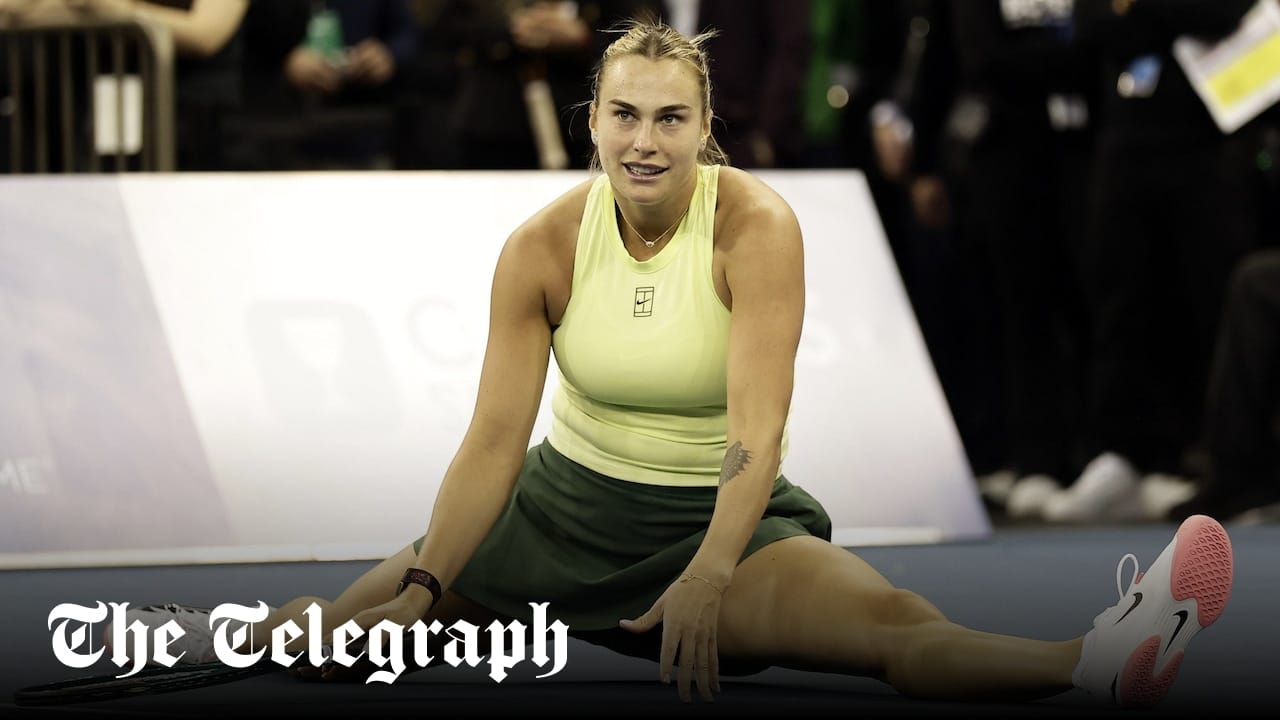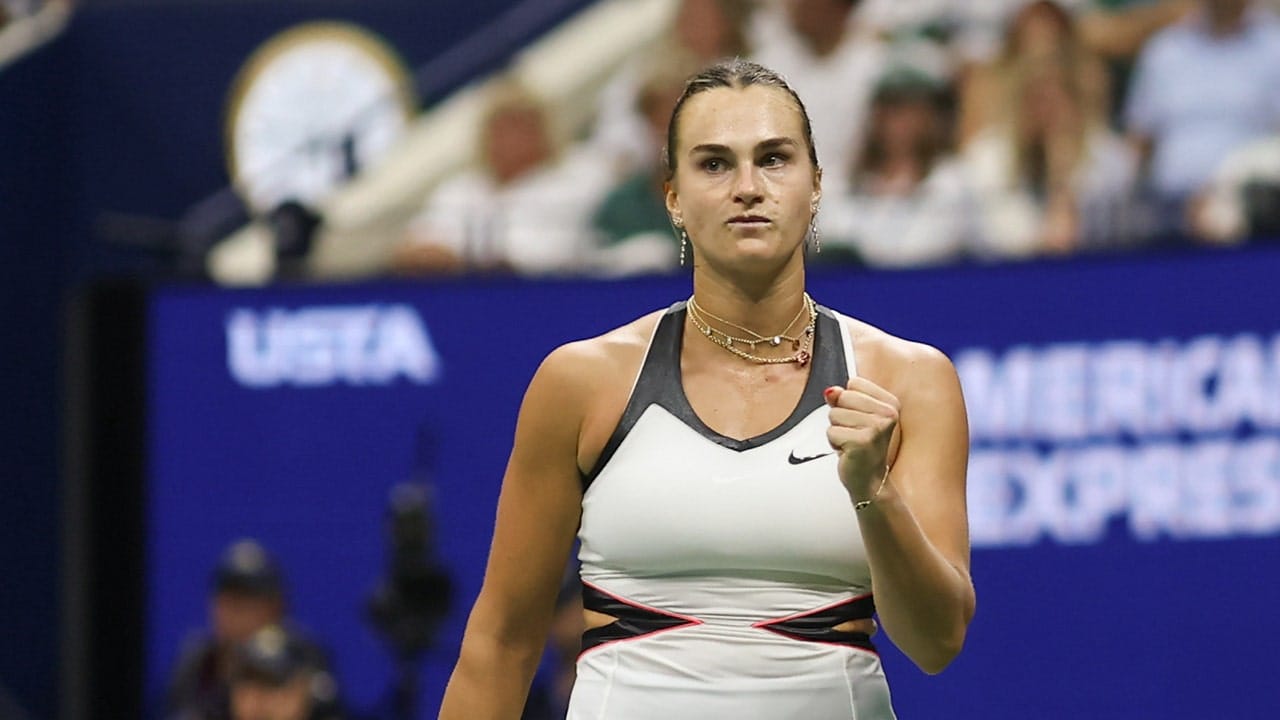
Sabalenka’s Whispers Turn into Shouts: The Trans Athlete Debate Explodes
It was always going to happen this way, wasn’t it? The silence was deafening, the fear palpable, but eventually, someone with enough clout and enough gumption was going to break ranks. Enter Aryna Sabalenka, a woman who, let’s be honest, has never been shy about speaking her mind, dropping a truth bomb that sent shockwaves through the corporate-controlled sports media machine. She said what a staggering number of elite female athletes whisper constantly in locker rooms and private messages but dare not say publicly for fear of being canceled and having their sponsorships vanish overnight: the idea that biological males should compete against biological females in women’s sports is fundamentally unfair.
The Unspoken Reality of the Locker Room
Let’s cut right through the political noise and get to the core of this. When Sabalenka says, “it’s just not fair to women,” she’s not talking about some abstract philosophical principle; she’s talking about the very real, very physical advantages that are inherent to male biology, advantages that persist even after hormone therapy. It’s an open secret in the athletic world. These athletes are not just complaining about a minor disadvantage; they are talking about a fundamental biological reality that makes fair competition impossible, and frankly, it’s about time someone in her position finally called a spade a spade. The ‘Battle of the Sexes’ match with Nick Kyrgios only highlights the obvious gap between male and female physiology that we’re supposed to pretend doesn’t exist.
‘t exist anymore, which is a frankly insane level of cognitive dissonance for anyone with eyes. It’s a fight for the integrity of women’s categories.
The Science They Don’t Want You to Hear
Let’s be very clear about what we are talking about here. The advantage conferred by male puberty isn’t something that can simply be ‘coached out’ or erased by a few years of hormone replacement therapy. We are discussing fundamental differences in skeletal structure, bone density, lung capacity, heart size, and, most crucially, muscle mass and tendon strength that develop during male adolescence. Research has shown that even after two years of hormone therapy, transgender women retain significant advantages in muscle mass and strength over cisgender women. The idea that this can be mitigated enough for fair competition is simply not supported by the hard, cold data. These advantages were earned during a period of development that female bodies simply don’t undergo. To pretend otherwise is to abandon scientific reality for political ideology.
The Political Pressure Cooker: Why No One Else Talks
Sabalenka’s comments, along with those from Kyrgios, are so explosive precisely because they break the corporate silence. The sports governing bodies, like the WTA, are terrified. They are caught between a vocal, highly organized activist base and the fundamental fairness of their own sport, and right now, the money from big corporate sponsors and the fear of social media backlash are winning out over integrity. Athletes who speak out risk being sidelined, having their endorsements pulled, and being labeled bigots. When a major champion finally speaks, it gives cover to countless others who have been biting their tongues for years. The whispered truth is that most professional female athletes agree with Sabalenka, but they are terrified of the consequences of saying so in public. The pressure to conform is intense, and the price of non-conformity is high.
The Hypocrisy of ‘Inclusion’
There’s a deep-seated hypocrisy here that needs to be examined. The entire purpose of creating separate categories for women in sports was to level the playing field, to ensure that females could compete against each other without being overwhelmed by the physical advantages of males. This wasn’t about exclusion; it was about protecting fairness and creating opportunities for women that Title IX (in the US) was designed to guarantee. By allowing biological males to compete, we are erasing the very categories that were created to protect women in the first place. The irony is staggering: those claiming to fight for inclusion are simultaneously destroying the historical gains made by second-wave feminists who demanded these very separate spaces. Sabalenka’s statement isn’t just about tennis; it’s about the erosion of women’s sports as a concept.
The Future of Women’s Sports: A ‘Safe Space’ or an Open Category?
Where do we go from here? The most likely outcome, if Sabalenka and others continue to push back, is a complete overhaul of how sports categories are defined. The current binary structure—men’s sports and women’s sports—is clearly insufficient for navigating this complex issue in a way that satisfies both inclusion and fairness. The discussion in back channels is already moving toward a three-category model: a protected women’s category (for biological females), an open category (for all other competitors), and potentially a separate men’s category. This would be a radical departure from tradition, but it’s becoming increasingly clear that the current model, which forces a false choice between fairness and inclusion, simply cannot hold. The corporate world and sports governing bodies are hoping this debate just dies down, but athletes like Sabalenka are making sure it doesn’t.
The ‘Insider’ View: Why Sabalenka Matters
Sabalenka isn’t just a voice; she’s a lightning rod. Her comments are significant not just because she’s a top player, but because she’s challenging the narrative from the inside. The whispers I hear from sources close to the tour indicate that this issue is a constant point of tension. The WTA and ATP are scrambling, trying to figure out how to manage the political fallout while maintaining a semblance of integrity. Sabalenka’s boldness could either mark the beginning of a genuine shift toward protecting women’s categories or result in a high-profile attempt to silence her. Either way, the debate has moved from the fringes to the center stage, and the corporate pressure cooker is about to explode.
The Final Serve: What Happens Next?
Sabalenka and Kyrgios are playing an exhibition match, which ironically highlights the biological gap, yet we’re supposed to ignore that gap when it suits a particular political narrative in women’s sports. This situation has reached a critical point where ignoring the biological reality is no longer feasible without destroying women’s sports entirely. The question isn’t whether trans women should be allowed to compete, but where they should compete in a way that preserves fairness for everyone. Sabalenka has started a necessary, albeit controversial, conversation that the sports world desperately needed to have, and it’s a conversation that will define the future of athletic competition for decades to come.
This isn’t just about tennis; it’s about the integrity of every single women’s sport, and Sabalenka has done a huge service by exposing the hypocrisy and fear that has kept this debate locked in the shadows for so long. The silence, finally, is broken.