Prosecutors Seek Death Penalty for Impeached South Korean President over Failed Insurrection Attempt
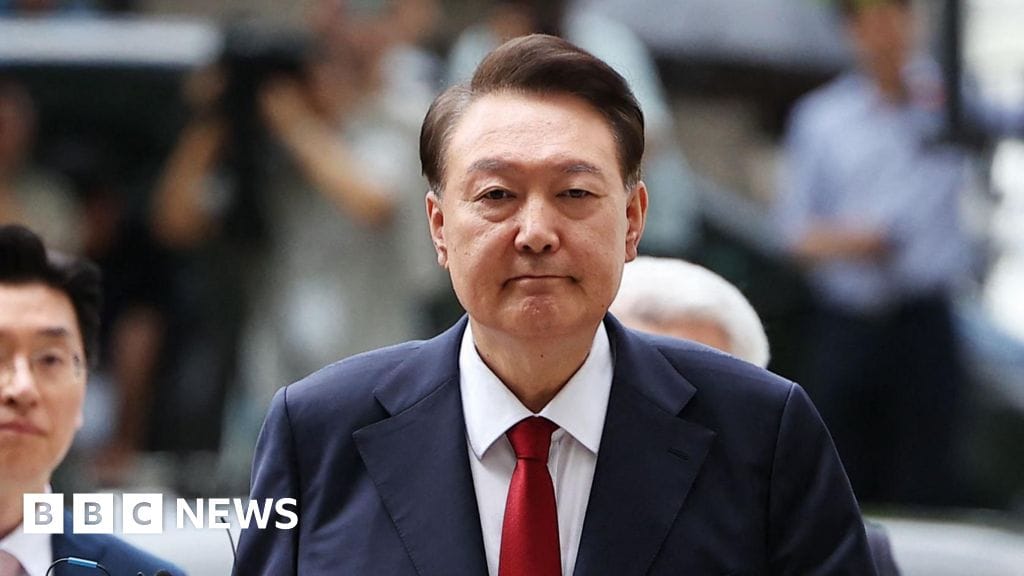
Prosecutors in South Korea have demanded the death penalty for impeached former President Yoon Suk Yeol. The charges stem from what officials describe as a short-lived insurrection attempt following his imposition of martial law in December 2024.
An independent counsel formally requested the capital sentence on rebellion charges. The move marks a dramatic escalation in the ongoing political turmoil that has gripped Seoul, placing a former head of state at risk of execution for charges of attempting to seize control of the government.
The Short-Lived Martial Law Decree
The core of the legal proceedings against Yoon revolves around his actions in late 2024. According to court filings and statements by prosecutors, Yoon attempted to implement a widespread martial law decree. While details of the specific actions taken under the decree are not explicitly provided in available information, it was characterized as a “short-lived imposition” by the independent counsel, suggesting a swift counter-action by political opponents and potentially the public.
The prosecutors’ decision to seek the death penalty indicates the profound severity of the charges. In South Korea’s legal code, rebellion charges (내란죄) are among the most serious crimes against the state, often reserved for high-level military or government figures attempting to overthrow the constitutional order. The request for capital punishment underscores the gravity with which the prosecution views the former president’s actions.
Political Fallout and Precedent
The demand for the death sentence for a former president is unprecedented in recent South Korean history, though the nation has a turbulent past with military dictatorships and political upheaval. South Korea’s political landscape has historically been marked by a cycle of political figures reaching the highest office only to face subsequent investigation, imprisonment, or exile. However, a death penalty request introduces a new level of judicial severity into this cycle.
Yoon Suk Yeol’s political career, which began less than two years prior to the events in question, has been marked by significant controversy and political battles. Having campaigned on an anti-corruption platform, his presidency was frequently embroiled in conflict with the opposition-controlled National Assembly, leading to deep political polarization.
While the country has seen previous presidents impeached or imprisoned—such as Park Geun-hye and Chun Doo-hwan—the current situation involving Yoon’s martial law decree has been framed differently by prosecutors as a direct challenge to democratic order rather than simply corruption or abuse of power. The independent counsel’s focus on “rebellion charges” rather than less severe political crimes demonstrates a determination to treat the incident as an existential threat to South Korea’s democratic institutions.
Historical Context of Martial Law in South Korea
To understand the gravity of the charges against Yoon, one must consider South Korea’s historical relationship with martial law. For decades following the Korean War, South Korea was governed by military regimes that frequently utilized martial law to suppress dissent and consolidate power. The most infamous example occurred in 1980 with the Gwangju Uprising, where military forces under General Chun Doo-hwan brutally suppressed pro-democracy protests.
This history has made martial law an intensely sensitive and charged issue in contemporary South Korean society. Any attempt by a political leader to impose martial law in the current era of robust democracy is viewed through the prism of past authoritarian abuses. The public’s memory of past military coups and subsequent violent crackdowns means that such actions are met with immediate resistance and profound legal consequences.
The current charges against Yoon evoke painful historical memories for many South Koreans, particularly those who lived through the periods of military rule. The prosecution’s decision to pursue the maximum penalty reflects this historical sensitivity and the imperative to protect democratic institutions from potential backsliding toward authoritarianism.
International Implications
The seeking of the death penalty for a former head of state sends shockwaves across the international community. South Korea, a key economic power and strategic ally of the United States, has prided itself on its transition from authoritarian rule to a thriving democracy. The current political instability challenges this narrative and raises questions about the long-term stability of its democratic processes.
International observers will carefully monitor the judicial proceedings. The outcome of this case will be seen as a bellwether for South Korea’s political health and its commitment to upholding democratic norms. A death sentence, particularly for a high-profile political figure, could provoke international debate on human rights and the rule of law within the country.
Ongoing Legal Process and Future Outlook
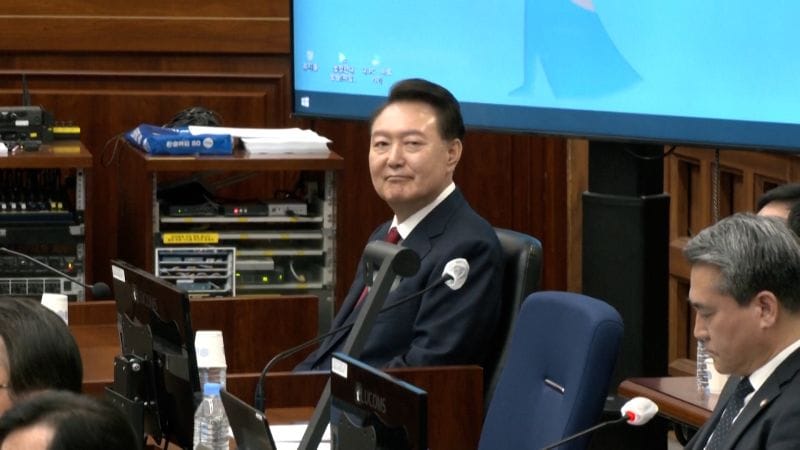
The independent counsel’s request for a death sentence initiates a complex and lengthy legal process. The verdict will ultimately be determined by a court, which will consider the evidence presented regarding the specific actions taken under the martial law decree. Given the high-profile nature of the case, the proceedings are expected to be intensely scrutinized both domestically and globally.
For South Korea, this trial represents a critical test of whether its democratic institutions can withstand internal challenges from high-level political figures. The legal system must balance accountability for potential abuses of power with ensuring due process for the defendant, regardless of their past position. The ultimate ruling will define the legacy of both Yoon Suk Yeol and South Korea’s modern democracy.