The Phantom Menace: Selling an Echo
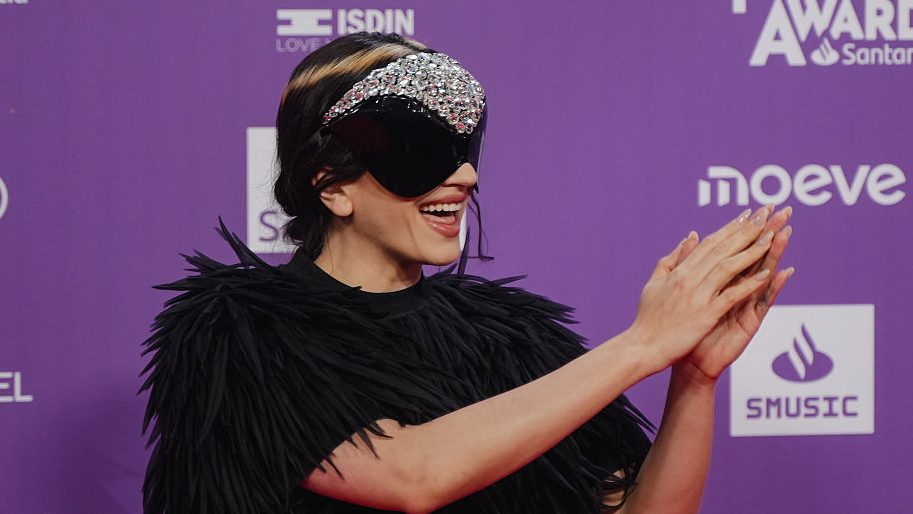
So, the press releases hit the wire. ROSALÍA Announces 2026 Tour. The ‘LUX’ World Tour. Dates are being dropped, venues like London’s O2 are being teased for two years from now, and the great digital marketing machine grinds to life, churning out excitement for… what exactly? An album that doesn’t exist. A sound nobody has heard. A concept that is, as of right now, nothing more than a four-letter word on a poster. And this isn’t some happy accident or a quirky artistic choice. No. This is the new playbook, a masterclass in financial engineering designed to separate you from your money on the promise of future art, and it’s one of the most cynical, predatory moves the music industry has perfected in the post-streaming era.
Because they’re not selling you a concert. They are selling you a financial instrument, an option on a future emotional experience. You are giving them an interest-free loan for two years based on nothing but brand loyalty. It’s a futures market for feelings. And while you’re holding onto a digital ticket that represents a hypothetical good time in 2026, they have your cash. They have millions, potentially hundreds of millions of dollars in the bank, earning interest, funding the very album and production you’ve pre-paid for. You are not a fan. You are the venture capitalist, except you get no equity. You get no say. You just get the privilege of handing over the cash first.
A Timeline of Calculated Deception
Let’s trace the breadcrumbs, because the timeline here is everything. It’s not a creative rollout; it’s a corporate strategy document come to life. First, you get the whispers. Vague social media posts. Then comes the coordinated ‘leak’ to major music publications, the ones who play ball. ‘Rosalía Announces…’ they all scream in unison. It’s presented as a gift to the fans, an exciting glimpse into the future. But look closer. The announcement for the ‘LUX Tour 2026’ arrives long before any single. Long before an album title was even solidified. Long before anything tangible. Why? Because the product being sold *is* the announcement itself. The product is the hype.
And then they drop the detail about her album ‘LUX’ not being on Spotify Wrapped 2025 as some kind of cute, ‘oops’ moment. The articles frame it as a funny little explainer for confused fans. ‘The truth is there’s an explanation — and an obvious one,’ they write, as if speaking to children. It’s not a cute factoid. It’s a calculated piece of marketing meant to reinforce the idea that this album is a monumental event, so far in the future that it exists outside our current timelines. It manufactures a sense of mystique while simultaneously normalizing the idea of paying for something that is, for all intents and purposes, imaginary. It’s gaslighting as a press strategy. You’re not confused; you’re just not thinking on the right timeline, peasant. Get with the program.
But the real genius is in the timing relative to the ticket sales. Announce the tour. Let the hype build for weeks, maybe months. Then, drop a single. Just one. Give the public a taste, just enough to validate the decision of those who already bought tickets and to create insane FOMO (Fear Of Missing Out) for those who haven’t. The song doesn’t even have to be the best on the album. It just has to be good enough to fuel the fire. By the time the full album is released, a huge portion of the tour is already sold out. The financial risk for the label, the promoter, and the artist has been completely eliminated. It has been transferred entirely to you, the fan. You paid for a concert based on the quality of ‘Motomami’ hoping ‘LUX’ will be just as good. It’s a gamble. And the house always wins.
The Unseen Hand of the Monopoly
You cannot talk about a major world tour in the 21st century without talking about the beast in the room: Ticketmaster and its parent company, Live Nation. This isn’t just a ticketing company. It is a vertically integrated monopoly that controls a shocking percentage of major venues, artist management, and concert promotion. When an artist like Rosalía tours, she isn’t just using their platform; she is deep inside their ecosystem. An ecosystem designed for one thing: maximum revenue extraction.
And this pre-album tour announcement strategy is their crown jewel. It allows them to leverage their entire apparatus with terrifying efficiency. First, the ‘artist presale.’ A joke. It’s a mechanism to harvest your data and create an illusion of scarcity. Then the ‘platinum tickets,’ where prices fluctuate based on demand in real-time, a practice they call ‘dynamic pricing’ but which is really just surge pricing for culture. It’s the same algorithm Uber uses to charge you three times as much in the rain. So when you see a ticket for a show two years away listed for $800, that isn’t a scalper. That is Ticketmaster. That is the official price, sanctioned by the artist’s team. They are the scalper.
Think about the sheer audacity. They are using their monopolistic power to create a high-pressure, high-stakes environment for a product that is purely conceptual. They are speculating on the future success of an unreleased album and charging you a premium for that speculation. And every fee, every surcharge, every ‘facility fee’ for a facility you won’t enter for 24 months, lines their pockets. The artist gets their cut, of course. They are complicit in the system. But the system itself is the true monster, a financial behemoth that has turned live music from a communal experience into a brutal exercise in market economics. You aren’t buying a ticket to see a musician you love. You are bidding against a hedge fund analyst in another city for a spot on the floor. It’s sick.
The Future is Now, and It’s Expensive
This isn’t just about Rosalía. She is merely the latest and one of the most effective users of a system that is rapidly becoming the industry standard. This is the new model. The days of an artist releasing a critically acclaimed album and then touring to support it are dying. That model carries risk. What if the album flops? The tour would be a financial disaster. No, the new way is to de-risk the entire process. Sell the tour first. Secure the bag. Then, and only then, deliver the art. The art has become secondary to the commerce. It is content to justify the transaction that has already occurred.
So what happens in 2026? Let’s speculate. The ‘LUX’ album comes out. Maybe it’s a masterpiece. Maybe it’s a disappointment. It almost doesn’t matter. The tour is already sold out. The money has been made. The machine has moved on to the next artist, the next two-year hype cycle. The fan who bought a ticket in 2024 is now locked in. If the album is bad, too bad. You already paid. If the show’s production is lackluster, too bad. You already paid. The incentive for quality control is diminished when the payment is received so far in advance. It’s a recipe for artistic stagnation, rewarding marketing savvy over musical genius.
Because what we are witnessing is the logical endpoint of the attention economy. It’s the transformation of fandom into a subscription service, where you pay upfront for the promise of future content. It’s a system that benefits the corporations, the promoters, and the top 1% of artists who are big enough to command this kind of blind loyalty. But for the average fan, it’s a raw deal. It asks for your money, your trust, and your patience, and in return, it offers a pre-packaged, financially optimized experience that has more in common with a stock market IPO than a rock and roll show. They built a beautiful cage and convinced us it was a stage.