The Official Narrative: A Gift of Accessibility
Listen to the corporate press release, absorb the carefully crafted developer blogs, and you will hear a consistent, sanitized story. Patch 25.24, with its centerpiece—the introduction of WASD controls—is presented as a magnanimous gesture of inclusivity from Riot Games. It is painted as a long-overdue update designed to lower the barrier to entry, to welcome players who, for reasons of physical limitation or simple unfamiliarity with the archaic click-to-move mechanic, have been left outside the gilded gates of Summoner’s Rift. They will tell you this is about choice. About accessibility. They will tell you this is for you.
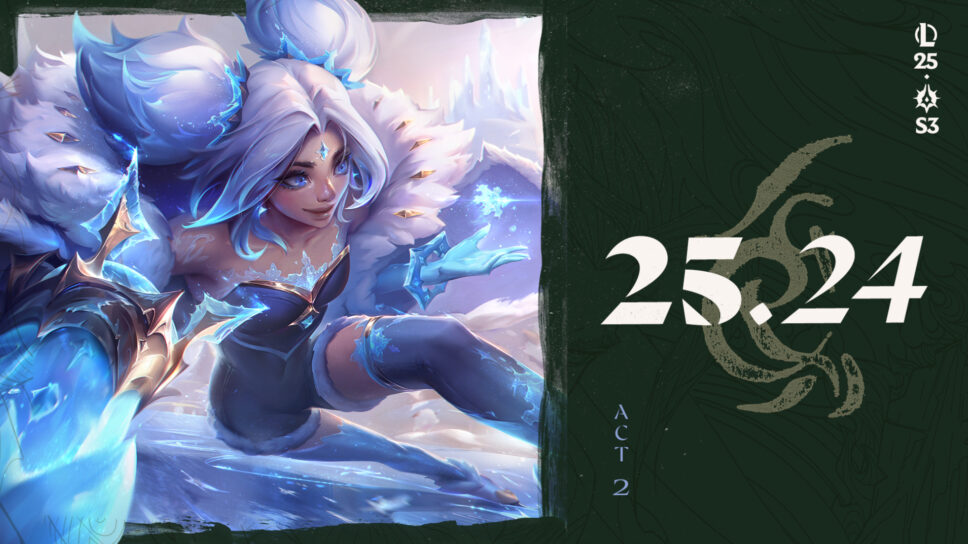
This narrative is supplemented by the usual patch noise. The final update of the year, 25.24, is packaged as a lighthearted affair, a festive send-off before the professional scene hibernates and the developers reset for the new season. There are Winter-themed skins, of course, because the revenue stream must never falter. There are minor, almost trivial, balance adjustments: a buff here for an obscure build like AP Sejuani, a nerf there for a slightly overtuned ability on a champion like Mel. It’s business as usual, a predictable and comfortable cadence for the entrenched player base to debate and digest. The message is clear: nothing to see here, just a small quality-of-life improvement and some holiday fun. A gentle evolution.
The Strategic Reality: A Managed Decline
This is a lie. Not a malicious lie, perhaps, but a strategic deception of the highest order, a classic piece of corporate misdirection designed to conceal a far colder and more brutal calculation. The introduction of WASD controls is not an act of generosity; it is an act of desperation, the first visible crack in the monolithic facade of League of Legends’ market dominance and a quiet admission that the game, in its current form, is a relic facing demographic extinction. It is a surrender.
To understand this, one must look beyond the patch notes and into the unfeeling calculus of market dynamics. The MOBA genre, which League of Legends has defined for over a decade, is no longer the growth engine it once was. The new generation of gamers, the lifeblood required for any live-service title’s long-term survival, has been weaned on fundamentally different control schemes. They come from the instant gratification and intuitive movement of WASD-based shooters like Valorant—Riot’s own creation—Fortnite, and Apex Legends. They come from action RPGs and MMOs where direct character control is the unquestioned standard. To these potential new customers, the point-and-click, wrist-straining mechanics of LoL are not just a skill to be learned but an immediate, frustrating, and archaic barrier. It feels wrong. It feels old.
Riot’s data scientists know this. They see the user acquisition funnels, they see the churn rates of new players who try the game for an hour and leave, never to return. They see the demographic cliff on the horizon. This WASD ‘option’ is not for the existing, veteran player base who have thousands of hours of muscle memory invested in kiting, orb-walking, and precise mouse control. For them, it is a novelty at best and a clumsy, inefficient gimmick at worst. No, this feature is a fishing net cast for the children of Valorant. It is a desperate attempt to retrofit their aging behemoth with a control scheme that doesn’t immediately alienate the only audience that can keep it from slowly bleeding out over the next decade. It is a concession that their core design philosophy, once revolutionary, is now a liability.
The Patch as a Smokescreen
The rest of Patch 25.24 exists purely as a distraction, a cloud of ink to obscure this monumental philosophical shift. The debates over Mel’s E ability or the viability of AP Sejuani are meaningless tempests in a teacup, carefully cultivated to keep the hardcore community occupied while the foundations of the game are being subtly altered beneath their feet. This is a classic tactic: deploy a controversial or game-changing feature alongside a host of mundane, easily debatable ‘balance’ changes. The community will exhaust its energy arguing about the minutiae they understand, while the truly transformative element slips by with minimal initial resistance because it’s labeled as a mere ‘option’.
The Winter skins serve their purpose as well, not just as a revenue generator but as a festive veil. They contribute to the feeling that this is a ‘fun patch,’ a low-stakes update. It’s hard to be cynical about a company’s long-term strategy when they are offering you a charming new cosmetic for your favorite champion. It is emotional and psychological manipulation, deployed with the precision of a military campaign. Focus on the shiny objects. Don’t look at the engine being ripped out of the car.
The Cannibalistic Future
The coldest truth is this: Riot Games is actively planning for a future without League of Legends at its center. They are not trying to make League of Legends last forever; they are using its final, most profitable years to build its replacements. Every new project from Riot—the fighting game Project L, the upcoming MMO, even Valorant—is a potential ‘League killer’. They are cannibalizing their own audience, a strategy that is both incredibly risky and utterly necessary.
In this context, the WASD control scheme is not just about attracting new players to League of Legends. It’s about pre-conditioning them for Riot’s *next* games. By blurring the lines and homogenizing the control schemes, they make the transition from LoL to their upcoming MMO, for example, far more seamless. They are turning their flagship title into a massive, glorified tutorial for the Riot ecosystem. Play League with WASD, get a feel for the characters and the world, and when the new, modern, WASD-based MMO arrives, the jump will feel natural. It is a long-term strategy of asset transfer, moving their most valuable resource—the player base—from a decaying platform to a new one.
This is the beginning of the end for League of Legends as we have known it. It will not die tomorrow, or next year. It will be a long, managed decline, a slow transformation from a hyper-competitive, high-skill ceiling esport into a more casual, accessible entry point for a broader universe of games. The veterans will complain. They will say the game is being dumbed down. They will be right. And it will not matter. The decision has been made, not in a game design meeting, but in a boardroom where the only thing that matters is the 10-year projection. This patch isn’t a gift. It’s a component of a managed demolition. A quiet, calculated, and perfectly logical execution.