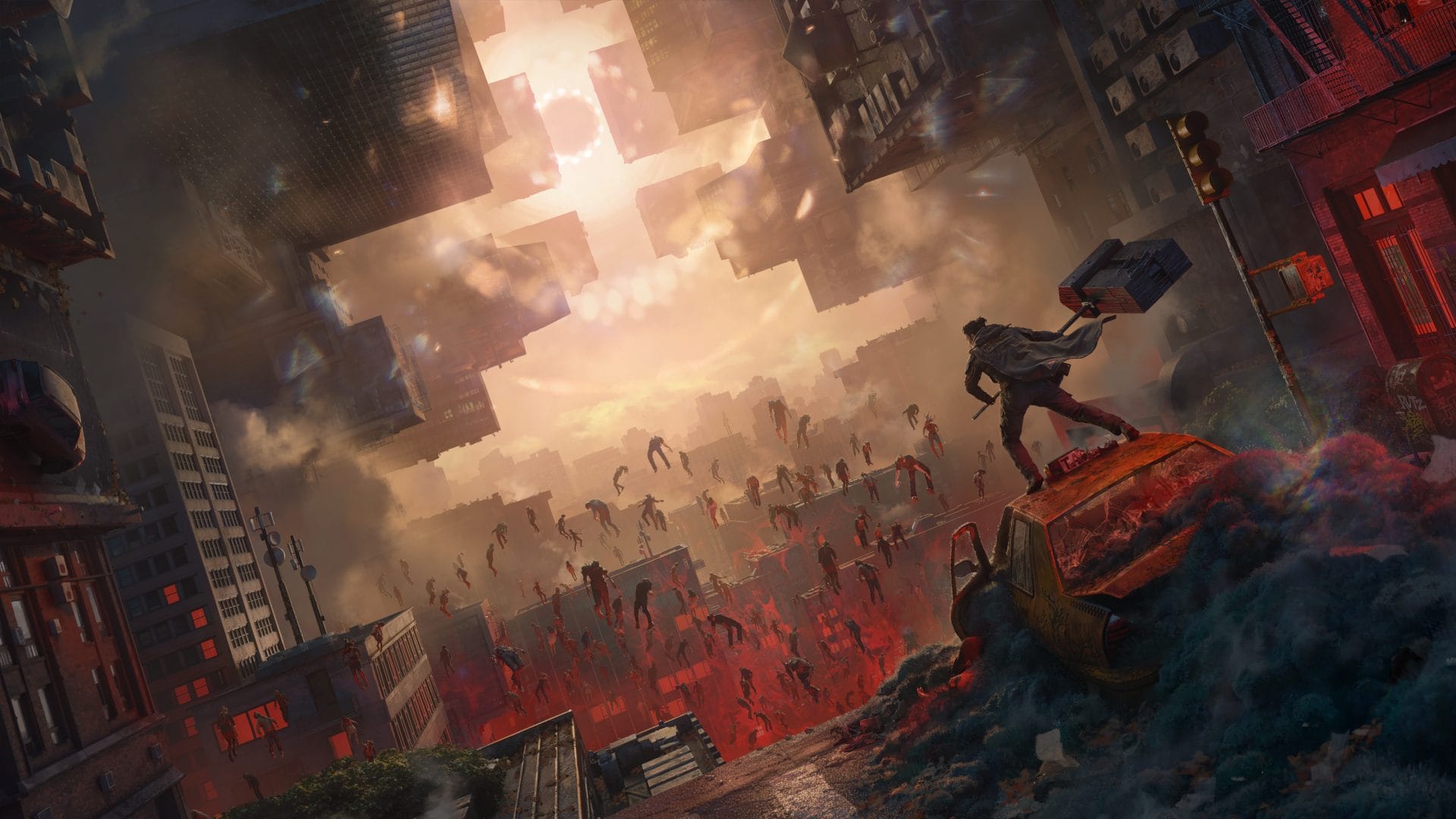
The Official Lie: A Creative New Chapter in the Control Universe
Remedy Entertainment, the studio behind beloved narrative experiences like *Max Payne* and *Alan Wake*, recently took center stage at The Game Awards 2025 to announce their highly anticipated sequel, *Control: Resonant*. The announcement, delivered with all the polished marketing jargon we’ve come to expect from these high-profile events, promised fans a return to the weird and wonderful world of the Oldest House, albeit with a new focus on the character Dylan Faden and a shift in gameplay mechanics to an “action-RPG framework”.
According to the official statements, the game expands on the foundation set by the original *Control* (a 2019 critical success) and will delve deeper into the paranormal crisis that began in the first game. The narrative focus on Dylan Faden, Jesse Faden’s brother and a powerful psychic with a volatile history (as seen in the first game’s DLC and *Alan Wake 2* cameos), suggests a fresh perspective on the events following the Hiss invasion. The developers hint at a more expansive world, new powers, and a release date sometime in 2026. This is the official line, the story they want us to believe, and it’s designed to generate maximum hype and secure pre-orders from a fanbase eager for the next entry in the Remedy Connected Universe (RCU).
The Strategic Pivot: Moving from Narrative Art to Live Service Product
If you’re a true fan of Remedy, you know the studio’s legacy is built on a specific type of game design: tightly focused, linear, and heavily narrative-driven, with a core loop centered on “cinematic action” rather than grind-heavy progression systems. The original *Control* certainly had some RPG elements (like mod slots and skill trees), but it was first and foremost a “Metroidvania” structure with a strong emphasis on story and environmental puzzles. The announcement of *Control: Resonant* as a full-blown “action-RPG framework” is not a simple creative evolution; it’s a strategic pivot toward a monetization model designed to maximize revenue over a longer period, fundamentally altering the experience from a single-player journey into a “product as a service”.
Let’s not kid ourselves about what “action-RPG framework” means in 2026. It means longer playtimes through artificial progression, more complex gear systems, battle passes, and potentially in-game store purchases for cosmetics or quality-of-life improvements (QOL). This shift isn’t about artistic expression; it’s about corporate calculus. Remedy, like many “prestige” studios before them, has realized that a single-player game, no matter how critically acclaimed (as *Alan Wake 2* was, in fairness), has a finite revenue ceiling. The true money is in keeping players engaged for months, a strategy that *Control’s* first iteration simply wasn’t built for. The new game, by focusing on Dylan Faden and potentially expanding the scope beyond Jesse’s personal story, creates the perfect entry point for new monetization vectors and live service elements, potentially justifying a higher price point or even a full live service model. It’s a calculated decision, designed to please investors by chasing the financial success of games like *Destiny* or *Genshin Impact* rather than prioritizing the narrative integrity that made *Control* unique.
The Truth: A Corporate Calculus for Shareholder Value
The timing of this announcement in late 2025 for a 2026 release also reveals the cynical strategic underpinnings of the decision, especially when considering the recent financial landscape of Remedy Entertainment. Remedy went public in 2017, and like any publicly traded company, they are under constant pressure to show quarterly growth and justify their market capitalization. While *Control* and *Alan Wake 2* were critical darlings (and *Alan Wake 2* was a sales success, though it wasn’t a runaway blockbuster), these successes need to be leveraged immediately to secure future investment and maintain shareholder confidence. The announcement of *Control: Resonant* serves as a crucial strategic anchor point in Remedy’s roadmap.
The move to an “action-RPG framework” also serves as a crucial “soft reboot” for the IP, allowing new players to jump in without needing a deep understanding of the labyrinthine lore from the previous titles. The choice to feature Dylan Faden as the protagonist, rather than Jesse Faden (who served as the primary protagonist in *Control* and had a significant role in *Alan Wake 2*), allows Remedy to present *Resonant* as a standalone experience. This strategic decision mitigates the risk of alienating potential new players by making them feel like they need to catch up on five years of complex RCU lore. It’s not just about a creative new story for Dylan; it’s about making the franchise more palatable to a broader market, specifically those who prefer the loop of an action-RPG over the tight narrative focus of a single-player adventure.
Furthermore, we cannot ignore the larger corporate ecosystem in which Remedy now operates. The company has strong ties to Tencent, which acquired a minority stake in Remedy, and Epic Games, which has heavily funded and published some of Remedy’s recent titles (notably *Alan Wake 2* and *Control*). These larger entities demand high returns on investment. The transition to an action-RPG model aligns perfectly with the current trend of “evergreen” monetization and live service models favored by these giants. The official announcement’s focus on “expanding the universe” and “new gameplay frameworks” masks a simple truth: the goal is to make a game that generates continuous revenue rather than just a one-time purchase. This shift is particularly striking for a studio that historically prided itself on cinematic storytelling.
The Potential Dilution of the Remedy DNA
The real question for fans isn’t whether *Control: Resonant* will be a good game, but whether it will be a good *Remedy* game. The essence of Remedy’s “DNA” lies in its unique blend of surreal narrative, compelling character studies (like Max Payne’s inner monologue or Alan Wake’s struggles with reality), and innovative “house style” cinematic action. The first *Control* succeeded because it balanced these elements perfectly. The Metroidvania structure, while allowing exploration, always funneled players back into the core mystery of the Oldest House. The focus was on discovery, environmental storytelling, and a tightly paced narrative.
The “action-RPG framework” threatens to dilute this core identity by prioritizing mechanics over meaning. When a game emphasizes long-term progression, loot cycles, and a continuous “grind,” the narrative often takes a back seat. The story becomes merely justification for the mechanical loop, rather than the core purpose of the experience. We’ve seen this happen countless times with franchises trying to chase market trends. The danger here is that *Control: Resonant* will lose the weird, intimate, and often unsettling atmosphere of the original in favor of a broader, more generic “loot and shoot” experience. It’s a risk Remedy is willing to take because the potential financial rewards far outweigh the creative cost in the eyes of their investors.
The announcement also strategically focuses on Dylan Faden, whose character arc in the first game concluded with a degree of ambiguity. While he represents a powerful vessel for new story possibilities, he also represents a significant departure from the established protagonist, Jesse Faden. This decision might be less about a creative desire to explore Dylan’s story and more about positioning a new character for potential future live service content or spin-offs. The “Remedy Connected Universe” (RCU) is less a singular creative vision and more a strategic umbrella under which multiple IP-extending projects (like *Control 2*, *Alan Wake 2*, and now *Control: Resonant*) can be developed simultaneously, effectively creating a content production pipeline for sustained revenue generation. This is a cold, hard look at the business reality. The game announcement isn’t a gift to fans; it’s a statement to the market that Remedy is a growing, sustainable, and profitable investment.
2026: The New Battleground for IP Milking
The 2026 release window places *Control: Resonant* squarely in a highly competitive market, likely alongside *Grand Theft Auto VI* and other major AAA titles. Remedy’s decision to announce early and secure pre-orders is a tactic to stake their claim and secure initial revenue before the market gets saturated. The “paranatural crisis” described in the announcement is essentially a narrative pretext for a shift in game design. They are selling the promise of a larger, more complex world with new enemies and abilities, but the real subtext here is that Remedy is moving away from the tight, focused design of *Control* (2019) toward a more commercially viable and potentially endless product. (It’s all about “content velocity” in the modern era, you see, a concept that completely contradicts the artistic process of a studio known for meticulous narrative.)
In conclusion, while the announcement of *Control: Resonant* may have excited many fans, a deeper analysis reveals a cynical strategic move by Remedy Entertainment to transition their successful intellectual property from a high-art, narrative experience into a high-revenue, live service product. The official lie is about a creative new chapter; the truth is about corporate calculus and justifying shareholder value. It remains to be seen whether this shift to an “action-RPG framework” will enhance the *Control* universe or simply dilute the creative vision that made Remedy unique in the first place, but given the current trajectory of the industry, placing bets on the latter seems like the safer option. (and a highly profitable one for Remedy’s bottom line).