THE CONSPIRACY OF INCOMPETUDE: HOW THE RED SOX FAILED VAGUHN GRISSOM AND CONFESSED TO ORGANIZATIONAL FAILURE
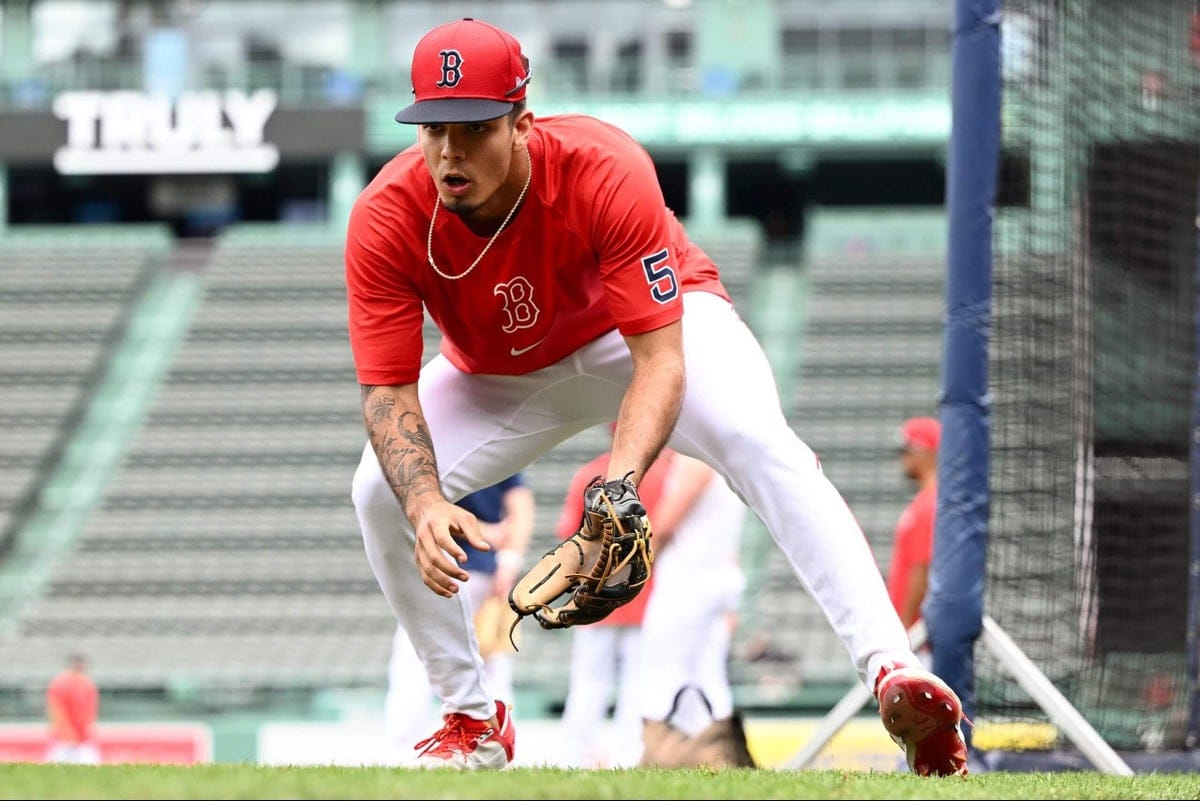
Let’s not mince words here. The trade that sent Vaughn Grissom to the Los Angeles Angels for Isaiah Jackson isn’t just a transaction; it’s a confession. It’s the Boston Red Sox organization, specifically Chief Baseball Officer Craig Breslow, holding up a white flag to the baseball world and admitting that the entire process of asset management has devolved into a glorified game of hot potato played by a roomful of people who don’t understand the rules. For years, this franchise has sold its fans on the promise of a ‘next-generation core,’ a ‘visionary rebuild,’ and a commitment to winning. The Grissom trade exposes that narrative as nothing more than a carefully crafted lie designed to placate a fanbase that has already been pushed to the brink of cynicism.
When the Red Sox acquired Vaughn Grissom, he was supposed to be the prize. He was the centerpiece of the trade that sent Chris Sale—a once dominant, if oft-injured, ace—to Atlanta. The Red Sox, in their infinite wisdom (or lack thereof), were supposed to turn Grissom, a promising young infielder with offensive upside, into a cornerstone of their future. He was, by all accounts, a blue-chip prospect who had fallen out of favor in Atlanta due to positional redundancy. The Red Sox saw an opportunity, a chance to buy low and sell high, or at least to acquire a cost-controlled asset for years to come. That was the official narrative, anyway. The reality, as we now know, was far more cynical.
The Grissom trade to the Angels for Jackson is being spun by some corners of the media as a necessary correction, a move to clean up the mess left by previous poor decisions. Let’s call that exactly what it is: bullshit designed to cover up a complete organizational failure. A good CBO makes decisions that stand the test of time, decisions that reflect a coherent strategy and a clear understanding of the team’s needs. A bad CBO makes trades like this one—trades that reek of desperation, trades that simply swap one unproven asset for another in hopes that no one notices the larger structural rot underneath. Breslow’s move to offload Grissom for Jackson is not a sign of genius; it’s a sign that he realized Grissom wasn’t going to fix the holes left by Sale, and he panicked. He’s trying to get ahead of the curve before Grissom’s value depreciates further, effectively admitting that the initial evaluation of Grissom as a valuable asset was wrong from the beginning.
THE TRADING CARD SCENARIO: A LACK OF COHERENT VISION
Think about what this means in practical terms. The Red Sox traded a veteran ace, Chris Sale, for a prospect (Grissom) and then, a mere few months later, traded that prospect for another prospect (Jackson). This isn’t a strategy; it’s a game of musical chairs where every player loses. It’s the equivalent of trading a twenty-dollar bill for a ten-dollar bill, then trading the ten-dollar bill for two five-dollar bills, and claiming you made a profit. The Red Sox are burning through valuable assets, cycling through young talent in a futile attempt to find something, anything, that sticks. The cycle is toxic. It creates instability, confuses the roster, and, most importantly, signals to potential free agents that this organization has absolutely no idea what it’s doing.
The Grissom situation highlights a more fundamental problem within the Red Sox organization: a complete lack of coherent vision. When Breslow first arrived, there was talk of establishing a ‘sustainable winning culture.’ But what exactly does that mean when you’re flipping assets like trading cards in a schoolyard? The Red Sox, under the ownership of Fenway Sports Group (FSG), have operated in a state of perpetual short-sightedness. They’re not building a long-term winner; they’re trying to manage public relations and maintain high revenues while simultaneously cutting costs behind the scenes. The Grissom trade is a perfect example of this. The organization can claim they’re ‘improving the farm system’ by acquiring Jackson, but in reality, they’re just swapping one question mark for another, hoping to find a lottery ticket that hits before the public demands accountability. It’s a classic shell game, folks, pure and simple, and we’re all supposed to pretend it’s good baseball strategy.
When you look at the history of FSG’s tenure, particularly since the 2018 championship, a disturbing pattern emerges: trade away established stars, claim a rebuild, acquire prospects, fail to develop those prospects, trade those prospects for other prospects, and repeat. The Grissom trade is just the latest iteration of this self-destructive loop. They sold Mookie Betts. They let Xander Bogaerts walk. They allowed key assets like Sale to depreciate in value before trading them for a fraction of what they were once worth. The Red Sox organization is fundamentally broken, not because of one bad trade, but because of a systemic failure to identify, develop, and retain talent. Grissom was just the next name on the chopping block in a long line of players who were failed by the Boston system.
THE OWNERSHIP PROBLEM: FSG’S SILENT SABOTAGE
The real culprit here isn’t Craig Breslow; he’s just the fall guy. The real culprit is Fenway Sports Group. Under FSG’s ownership, the Red Sox have become a profit-generating machine first, and a baseball team second. The focus has shifted from winning World Series trophies to maximizing revenue streams, expanding real estate holdings around Fenway Park, and investing in other sports franchises like Liverpool FC. The Red Sox are now a cog in a much larger machine, and their operational decisions reflect that. Why invest heavily in a top-tier free agent or retain a core player when you can spin a narrative of a rebuild, cut costs on player salaries, and still sell out Fenway Park? The fanbase, starved for a winner, will keep showing up, even as the product on the field deteriorates into mediocrity. It’s a brilliant business model, but a terrible baseball strategy, and Grissom’s departure is just another data point supporting this hypothesis.
The Grissom trade, therefore, serves as a direct indictment of FSG’s prioritization of profitability over performance. They’re essentially treating the Red Sox like a small market team, even though they have one of the highest valuations in all of Major League Baseball. The result? The Red Sox organization is constantly behind the curve, constantly scrambling to find value where other teams have already succeeded. While Breslow can claim that he’s ‘making corrections,’ the reality is that he’s forced to operate with one hand tied behind his back by ownership that refuses to spend like a major market contender. The Grissom trade isn’t a strategic maneuver; it’s a desperate attempt to rearrange the deck chairs on the Titanic while FSG counts the money in the lifeboats.
THE FUTURE IMPLICATIONS: THE CYCLE CONTINUES
Where does this leave the Red Sox? In exactly the same place they’ve been for the past five years: in organizational limbo. The acquisition of Isaiah Jackson might provide some future upside, but it doesn’t solve any of the immediate problems facing the team. The Red Sox still lack a clear direction, a reliable core, and a clear path back to contention. The Grissom trade simply kicks the can further down the road, replacing one question mark with another, and delaying the inevitable reckoning that is coming for this organization. The fanbase deserves better. They deserve an organization that is committed to winning, not one that is committed to maximizing profits while trading away promising young talent in a chaotic cycle of incompetence. The Grissom trade isn’t a step forward; it’s a sign that the Red Sox are still running in circles, lost in a wilderness of their own making. The Red Sox organization has fallen, and Grissom’s departure confirms that the fall is far from over. This is not a rebuilding project; it is a demolition in progress. It’s time to stop calling it anything else anything else.
What we are witnessing in Boston is a complete breakdown of the baseball operations department, from top to bottom. The Grissom trade is not an isolated incident; it is a symptom of a much deeper, more insidious disease. This is what happens when ownership prioritizes profits over winning, when they hire individuals who are more interested in self-preservation than in building a cohesive, successful team. The Red Sox are now the laughingstock of the league, and the Grissom trade serves as definitive proof that they have truly hit rock bottom. Don’t believe the hype about ‘correcting’ past mistakes; believe the evidence that shows a franchise in freefall. The Red Sox are a cautionary tale about how quickly a dynasty can crumble when avarice replaces ambition.