
They Did It Again. They Actually Did It.
Let the smoke clear. Let the corporate press releases written by soulless PR flacks fade into the digital ether. Let the shills on the team-owned sports networks tell you why this is actually a brilliant, 4D-chess move that you’re just too dumb to comprehend. When all that noise dies down, the truth remains, sitting there like a rock in your gut: the Boston Red Sox front office just ripped the heart out of this team’s future and sold it for spare parts. And they think you’re going to thank them for it.
This isn’t just a trade. This is a declaration of contempt for the fanbase.
A Smokescreen Named Sonny
Remember a few weeks ago? The champagne was popping, metaphorically of course, because this front office is too cheap to buy the real stuff. They nabbed Sonny Gray. A legitimate, solid starting pitcher. It felt like… something. A sign of life? A signal that maybe, just maybe, the bean counters in the executive suites remembered they were running a baseball team and not a hedge fund. We all thought it was the first step in a bold new direction, a commitment to finally putting a respectable product on the field after years of wandering in the wilderness of mediocrity. We were fools. It wasn’t the first step; it was the anesthetic. It was the shot of whiskey the back-alley doctor gives you before he amputates your leg with a rusty saw. They gave us one shiny toy to distract us while they were in the back room, sharpening the knife to cut out the one thing we had left to believe in: the future.
Did anyone really think that was the end of it? Did we truly believe one signing would satisfy their thirst for… whatever it is they’re trying to do? The silence that followed should have been a warning. It was the eerie calm before the storm.
The Knife Twists: A Five-Player Farce
Then the news trickled out, first as a whisper, then as a gut-wrenching headline: a five-player trade with the Pirates. The Pirates! A team that exists solely as a farm system for actual contenders. The words “five-player” are designed to sound impressive, to sound substantial. It’s a classic misdirection. A shell game played by con artists in expensive suits. They want you to see the quantity and ignore the utter lack of quality. They’re banking on you not looking too closely at the names. So let’s look. Let’s stare right into the abyss.
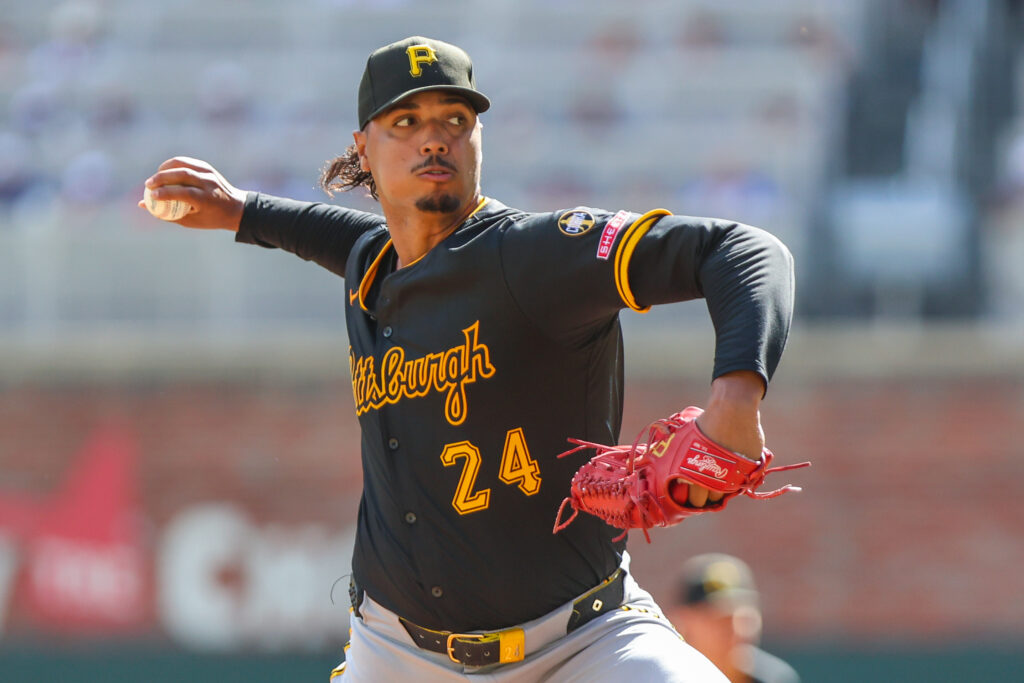
Boston gets Johan Oviedo, a pitcher whose primary skill is being… available. A guy who defines the term “back-end starter.” This is the centerpiece. This is who they gutted the farm for. Then you have the throw-ins, the guys whose names you’ll forget by next week: Tyler Samaniego and Adonys Guzman. Who are they? Are they even real? Or are they just names generated by an algorithm to make the trade summary look balanced on a spreadsheet? They are lottery tickets that have already been scratched off to reveal “Play Again.”
The True Cost: Goodbye, García
And what did we give up for this bounty of mediocrity? We gave up hope. We gave up García. The kid. The one prospect who had that spark, that connection with the fans that you can’t manufacture. He wasn’t just a name on a Top 100 list; he was the promise of tomorrow. He was the reason you’d check the box scores for the minor league affiliates. He was the guy you’d dream on during another miserable 10-2 loss in the middle of August. They traded away the feeling that something good was on the horizon. They also sent away Jesus Trav, another arm with potential. They basically handed the Pirates a chunk of our future for a guy who will, best case scenario, eat some innings before his inevitable trip to the Injured List.
This wasn’t a baseball trade. This was an asset liquidation. This was the cold, calculating work of a management team that sees players not as people, but as depreciating assets on a balance sheet. García’s value was at its peak, so they cashed him in. It’s the same soulless logic that leads to a company firing 10,000 people to make a stock price pop for three hours. It’s disgusting.
Who The Hell Is Johan Oviedo, Really?
Let’s not kid ourselves. The front office will parade Oviedo out there and talk about his “power sinker” or his “untapped potential.” It’s all nonsense. He’s a 26-year-old pitcher with a career ERA hovering in the mid-4s. That’s not an ace. That’s not a savior. That’s a guy. Just a guy. Are we supposed to be excited about a pitcher who gives up more hits than innings pitched? Are we supposed to believe that our magical pitching coaches are going to suddenly turn a journeyman into Cy Young? Why? What evidence have they given us that they can develop talent at the major league level? It’s a fantasy. A desperate lie they’re telling themselves and hoping we’re gullible enough to swallow.
They’ll point to a couple of good starts he had two years ago as proof of his ceiling. A ceiling? His ceiling is a third starter on a non-playoff team! And for that, we gave up a kid who could have been a franchise cornerstone for the next decade. This is baseball malpractice of the highest order. It’s a move born of either stunning incompetence or sheer, unadulterated arrogance.
The ‘Plan’ Is A Lie
So what is the grand plan here? What master strategy are we peons just too simple-minded to grasp? Is the goal to finish in fourth place forever? Is the goal to be just good enough to keep selling tickets but never good enough to actually have to pay luxury tax penalties? It’s a nauseating treadmill of mediocrity, and this trade is just another signal that the ownership has no intention of getting off it.
They’ll talk about “roster flexibility” and “acquiring controllable assets.” It’s the same tired corporate jargon they’ve been feeding us for years. It’s a smokescreen to hide the simple, ugly truth: they are cheap. They don’t want to pay what it costs to win. They would rather trade away a beloved, high-ceiling prospect for a cost-controlled, low-ceiling pitcher than ever have to write a big check to a superstar in free agency or, God forbid, pay García what he would be worth in a few years.
This isn’t about building a champion. It’s about maximizing profit margins. The Boston Red Sox have become nothing more than a line item in a billionaire’s portfolio, and we, the fans, are just the suckers who keep funding it.
A Broken Trust
The damage from this trade isn’t just in the standings next year. It’s much deeper than that. It’s the erosion of trust. Why should any of us invest our time, our money, and our emotion into following the minor leagues and getting excited about young players if we know the front office will just sell them off for a bucket of balls the second they get valuable? What is the point? They’ve killed the dream. They’ve told us, in no uncertain terms, that our loyalty is meaningless to them.
So now we’re left to watch Johan Oviedo pitch. And maybe he’ll be fine. Maybe he’ll be perfectly, forgettably mediocre. But every time he takes the mound, it will be a reminder of what we lost. It will be a monument to the day the front office decided that a little bit of short-term budget relief was more important than the long-term soul of the team. They made their choice. They chose the spreadsheet over the fans. And they should never, ever be forgiven for it.