The Calculated Risk of the Cup Opener
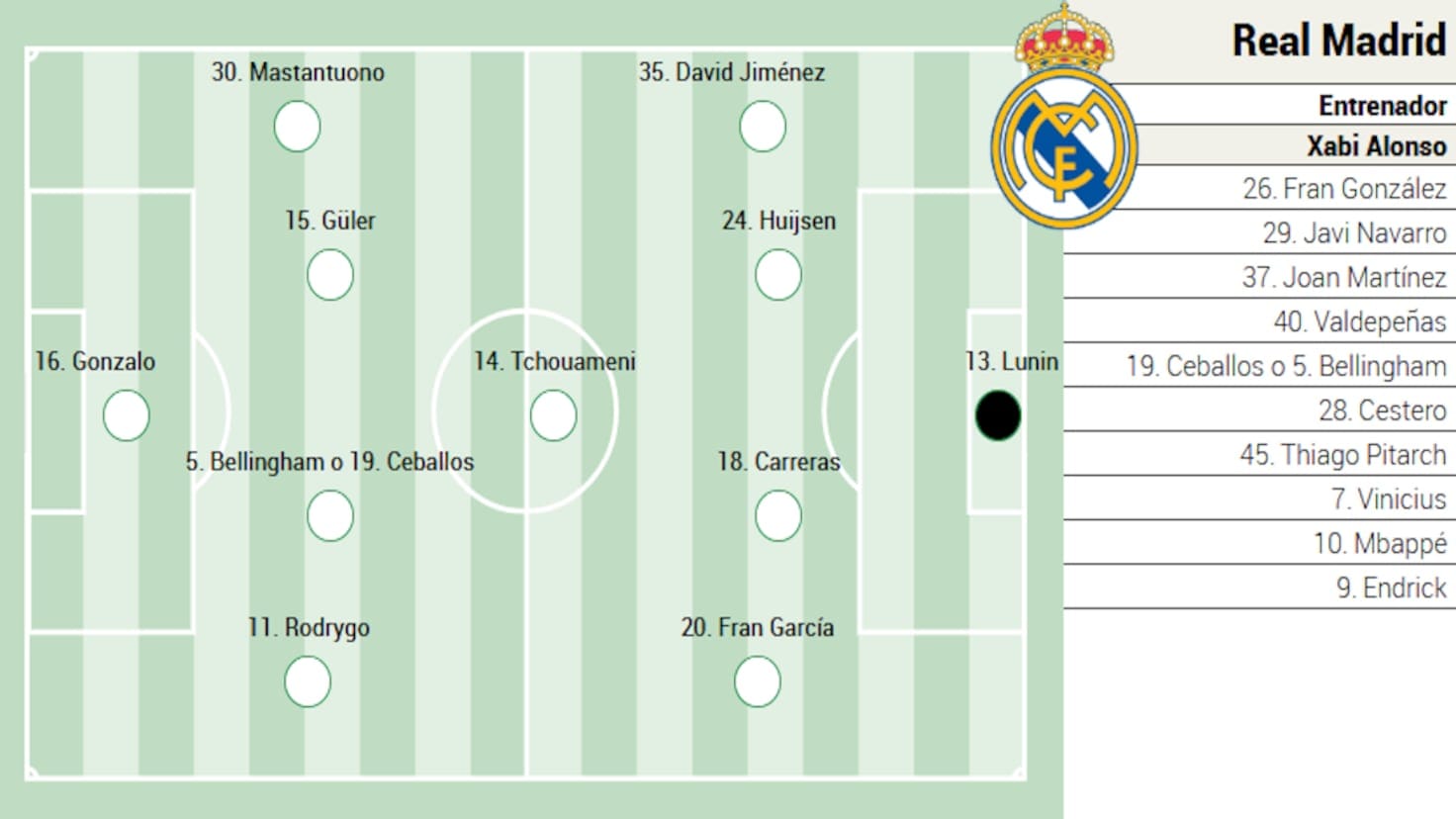
When Real Madrid faces Talavera in the Copa del Rey, it’s not just a football match; it’s a strategic calculation. The source data confirms the deployment of virtually the full arsenal—including Mbappé—against a team from Primera Federación. This isn’t a show of force; it’s a preemptive strike against complacency, or perhaps a demonstration of managerial insecurity. A cold strategist understands that the most significant risk in these early rounds is not losing, but underestimating the consequences of a winless scenario. The history of Real Madrid is littered with early Copa exits, often against significantly smaller opponents, which have resulted in managerial sackings and long-term reputational damage. This match is a test of Xabi Alonso’s ability to manage expectations and resources simultaneously, balancing a full squad’s fitness with the psychological imperative to avoid a PR disaster, especially when the club’s focus should be on higher-value objectives like La Liga and the Champions League. It seems Alonso has decided that the risk of playing key personnel for a short period outweighs the risk of fielding a second-string team that might stumble against determined, non-professional opposition, which makes perfect sense in the context of a high-stakes, high-pressure environment where media scrutiny is relentless.
The Mbappé Variable: A PR Ploy or Tactical Necessity?
The decision to include Kylian Mbappé in the squad for a trip to Talavera is perhaps the most intriguing element of Alonso’s strategy. It is highly unusual for a manager to risk his primary asset in a match where the outcome is practically predetermined by the disparity in resources and talent. The source data mentions Mbappé’s presence, indicating Alonso’s desire to ‘avoid scares.’ This suggests a fear of the unknown—the unpredictability of a low-stakes game where players from a lower division are given a once-in-a-lifetime opportunity to make history. However, there’s a different angle to consider: is this a calculated PR move, designed to appease the media and ensure a smooth, high-profile victory? Sending Mbappé creates a narrative of seriousness and commitment to all competitions, even if the primary goal is simply to avoid an upset. It’s a psychological tactic to ensure the lesser team does not gain confidence from a perceived lack of respect from the powerhouse. The question remains whether this decision truly aligns with optimal player management, especially when considering the sheer volume of high-intensity matches required for Real Madrid to secure all available titles this season. Risking an injury to a superstar in a non-essential match is a calculation that can easily backfire, regardless of the short-term benefit of a guaranteed win. It’s a high-stakes gamble on the part of the coaching staff, hoping that the reward of momentum outweighs the possibility of a catastrophic injury to a player who represents a significant portion of the club’s short-term future.
Alonso’s Resource Allocation Strategy: A Cold Assessment of Depth
The absence of players like Courtois, Fede, and Rüdiger from the squad is a clear indication that Alonso views this match primarily as a platform for roster optimization rather than a true test of strength. This is where the cold strategist’s logic truly shines. By resting key players in positions where adequate depth exists, Alonso mitigates the risk of overuse and fatigue. The data shows Mastantuono and Rodrygo are slated for key roles. This decision allows Alonso to kill two birds with one stone: first, giving crucial minutes to developing players or those needing match fitness, and second, ensuring the primary starters are fresh for upcoming league and Champions League fixtures. However, this strategy carries its own set of risks. A lack of cohesion among a mixed-squad lineup can lead to sloppy play, which, against a highly motivated underdog, can quickly spiral into a crisis. The challenge for Alonso isn’t just about winning, but about ensuring that the team structure remains functional even with significant rotation. The manager must strike a delicate balance between giving opportunities to the next generation and maintaining a level of quality that ensures no slip-ups occur. It’s a logistical challenge where the outcome of the match is less important than the long-term health and development of the squad.
The David vs. Goliath Narrative and Its Practical Implications
While the media loves to highlight the Cinderella story potential, a deeper analysis reveals a far more brutal reality for teams like Talavera. These matches are not about fair competition; they are about economic and structural disparity. For Talavera, this match represents a financial windfall, potentially providing a significant portion of their annual operating budget through ticket sales and media rights. This single game for them is equivalent to a full season’s worth of financial planning. For Real Madrid, it’s a routine obligation, an inconvenience in the schedule, and a necessary data point for managerial evaluation. The historical precedent shows that while these upsets occasionally happen, they almost never translate into long-term success for the smaller clubs involved; they merely create a fleeting moment of glory that is quickly forgotten once the major leagues resume their course. The cold strategist views this match as nothing more than a necessary step to reach the later stages of the competition, where the true value lies in a potential trophy and the associated financial rewards. It is important to remember that the objective for Real Madrid is not just to win, but to win efficiently and without unnecessary expenditure of energy or resources, which is a key principle of strategic management in-game management.
The Psychology of Complacency: A Managerial Nightmare
The true danger in matches against lower-division teams is not the technical skill of the opponent, but the psychological state of the favored team. Complacency is the silent killer in these scenarios. When a team of superstars (who are accustomed to performing in front of massive crowds against other elite players) faces a smaller, less professional opposition, the mental intensity often drops significantly. The players might subconsciously view the match as a formality, leading to sloppy passes, poor decision-making, and a general lack of urgency. This psychological trap is what managers fear most. Alonso’s decision to bring Mbappé and other key players suggests he is attempting to counteract this complacency by ensuring a minimum level of intensity and respect for the opposition. The manager must convince his players that this match, despite its low profile, carries the same significance as a Champions League fixture. Failure to do so can lead to a performance that, while resulting in a victory, still exposes tactical vulnerabilities that can be exploited by higher-quality opponents later in the season. The challenge for Alonso is to keep his team sharp and focused, avoiding the kind of mental vacation that has cost other major clubs dearly in the past.
Historical Context: The Copa del Rey Graveyard
Looking back at Real Madrid’s history in the Copa del Rey provides ample evidence of the dangers inherent in these early-round fixtures. The competition has long been a source of frustration for the club, with numerous upsets and near-misses against relatively unknown teams. The historical data shows that managers who have failed to navigate these early rounds have often seen their positions become untenable, regardless of their success in other competitions. The Copa del Rey, while often considered less prestigious than La Liga or the Champions League, holds significant weight in Spanish football culture, and an early exit can be a death sentence for a manager in the hot seat. This historical pressure forces Alonso to treat this match with extreme caution, even against an opponent that should, on paper, pose little threat. The cold reality is that the media and fans remember the upsets more vividly than the routine victories, and Alonso knows that a single moment of weakness in Talavera could define his early tenure at the club. This match against Talavera is not just about advancing; it’s about avoiding the historical trap that has swallowed managerial careers before.
Predictions and Implications: The Long Game for Alonso
Based on the strategic decisions outlined in the source data, a clear picture emerges of Alonso’s priorities for the season. The manager is clearly focused on achieving a treble, which necessitates careful resource management across all competitions. The choice to rest key defensive players while deploying high-value offensive assets suggests a calculated risk in the defensive line. The goal is to overwhelm the opponent offensively while minimizing the exposure of key defensive players to unnecessary risk. The long-term implication of this strategy is that Alonso prioritizes the Champions League and La Liga above all else, using the Copa del Rey as a testing ground for depth and a tool for maintaining momentum. However, this strategy carries the risk of a potential upset, which would severely compromise the team’s momentum and psychological state for the remainder of the season. The cold strategist predicts a professional, possibly high-scoring victory for Real Madrid, but warns that any signs of internal disorganization during the match will be scrutinized heavily, as they reveal potential flaws in Alonso’s long-term management strategy for a campaign that demands flawless execution across multiple fronts. This match against Talavera is merely the first piece in a complex puzzle that Alonso must solve to secure his legacy at the club.