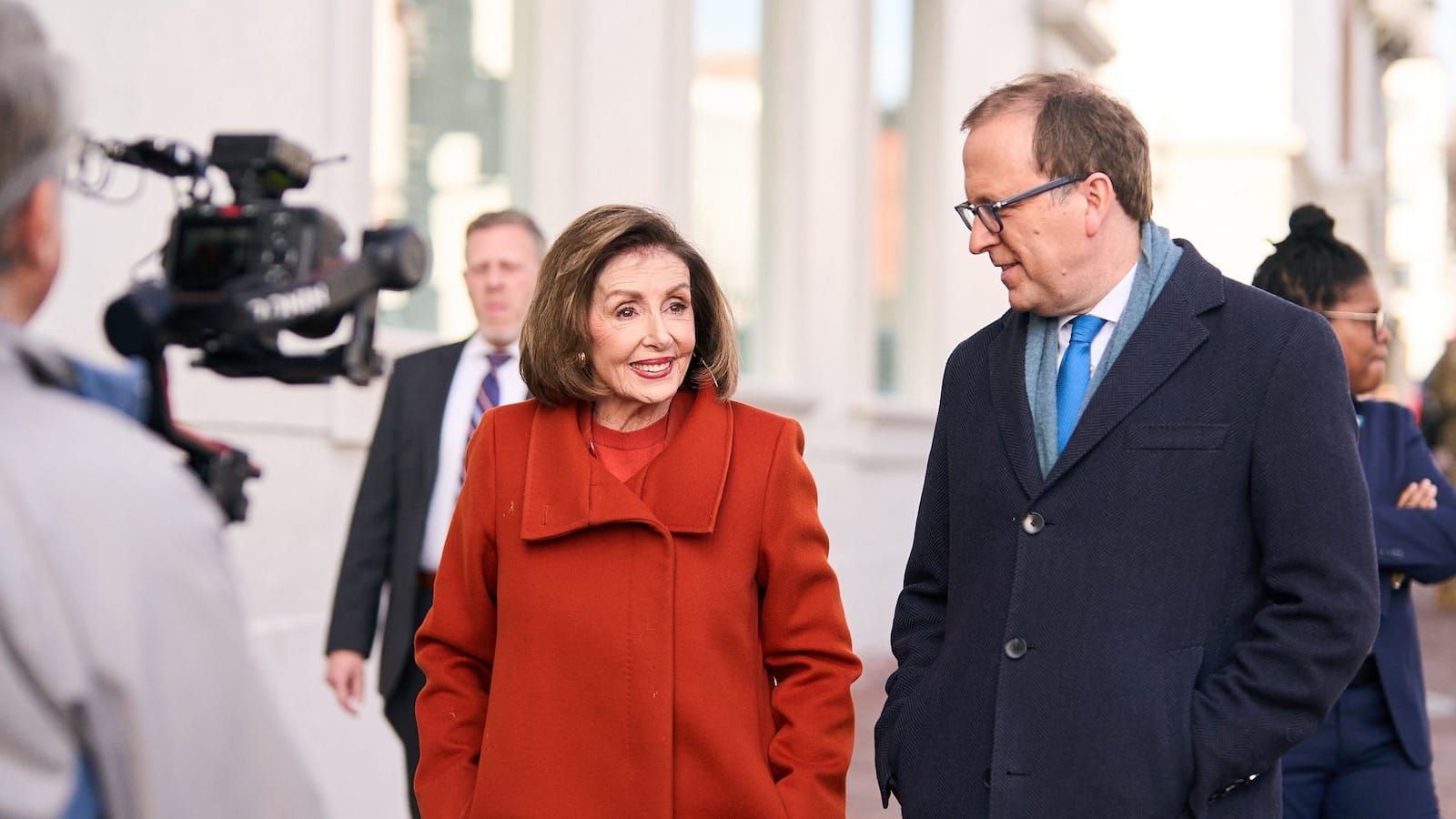
The Grand Dame’s Crystal Ball: Why Pelosi’s 2026 Prediction is Pure Political Choreography
Listen, when the former Speaker Emerita Nancy Pelosi, one of the most powerful and effective political operators in modern American history (and I mean that in the most cynical way possible, because her effectiveness primarily means securing the status quo for the elite class), sits down for a massive network interview to drop a ‘prediction’ about the House of Representatives flipping back to the Democrats in 2026, you shouldn’t be listening for insight into voter sentiment; you should be listening for a dictated memo from the entrenched political machine.
This isn’t analysis; it’s a talking point deployed to stabilize the donor class and reassure the activist base that the party leadership—the folks who have been running the show for thirty years—still have the magic touch, despite being repeatedly rejected by swaths of the electorate in recent cycles, a rejection that suggests a deep, foundational fracture in the American political landscape that absolutely cannot be fixed by merely kicking the can down the road another two years, which is the only strategy the establishment seems to have left in its dusty playbook. What a joke. The whole thing smells of legacy preservation.
Q: Why is Pelosi forecasting 2026 now, two years out, and what does it really tell us about the DNC strategy?
A: Look, the timing is no accident (it never is with these operators). When you have a career spanning decades, maneuvering the political swamp like a professional alligator handler, it stands to reason that any public declaration about future power dynamics isn’t a prophecy based on polling data but rather a calculated attempt to cement a narrative and maintain relevance, thereby ensuring the donors keep the coffers full (or at least keep paying attention to the existing establishment structures) for the next cycle, which frankly is the whole point of this entire media tour, right? Pure speculation. She’s trying to steer the ship from the dock.
This ‘26 prediction is less about grassroots momentum and more about institutional control. It serves multiple, self-serving functions. First, it minimizes the sting of the current minority status; ‘Don’t worry, kids, Mommy knows best, we’ll get the keys back soon.’ Second, and perhaps more importantly, it stifles any legitimate internal dissent or demand for fresh leadership. If Pelosi and her cohort publicly claim the future is already mapped out and successful, anyone calling for a radical shift in strategy or personnel is suddenly branded as either impatient or, worse, detrimental to the guaranteed victory. It’s a classic move: neutralize internal threats by promising future success that only the existing leadership can deliver. It’s a rigged game.
The Democratic Party, particularly at the leadership level exemplified by Pelosi, has consistently demonstrated an inability or unwillingness to truly grapple with the populist currents—left or right—that are reshaping American politics. They prefer the clean, predictable lines of suburban college-educated voters and rely heavily on identity politics to distract from fundamental economic stagnation that affects the working class, a stagnation which, let’s be honest, flourished under the very power structures that she helped maintain for decades, giving rise to the frustration that culminated in the events we are seeing now, like the rise of wildly unpredictable outsider candidates and the general collapse of institutional trust across the board. They just don’t get it. They never will.
The Jan. 6 Reflections: Control, Narrative, and The Power Play
Moving onto the reflection on January 6th, which is always a mandatory segment in any Pelosi interview—and let’s be clear, her perspective on that day is not just an eyewitness account but a cornerstone of her established legacy narrative (a narrative that casts her as the courageous defender of democracy against chaos), and while the events were undoubtedly serious, her interpretation is filtered through a prism of political self-interest that must be critically examined, especially when we consider the systemic security failures that occurred on her watch as Speaker. It’s a convenient amnesia.
The public record and subsequent political theater surrounding Jan. 6 have been overwhelmingly dominated by two things: focusing almost entirely on the actions of the protestors and positioning the established political class (the very people who were supposed to be protected) as heroic victims, while simultaneously glossing over or completely ignoring the massive institutional failures within the Capitol security apparatus, which, by all accounts, was fundamentally unprepared for the magnitude of the threat, despite ample public warnings, an unpreparedness that certainly deserves far more scrutiny than it ever received from those charged with investigating the matter (the committee that she largely appointed), because transparency seems to go right out the window when it threatens the narrative of those in power. It’s too neat. Where was the accountability for the security heads?
For the Populist Fighter, the story of Jan. 6 isn’t just about the individuals who broke windows; it’s about the vulnerability of the entire system when the establishment leadership becomes too complacent, too insulated, and too focused on internal squabbles to secure the very infrastructure of government, and Pelosi’s reflection rarely, if ever, entertains that level of self-criticism, instead preferring the high-ground, chest-pounding rhetoric of ‘defending democracy’ without addressing the root causes of the division and anger that she and her generation of politicians arguably helped foster. She’s a master manipulator of public opinion, framing chaos as an external assault rather than a symptom of deep internal malaise. The focus is always on the villain outside the gates, never the rot within the walls.
Q: Does reflecting on her career reveal why the working class feels alienated by the current Democratic Party leadership?
A: Absolutely. When Pelosi reflects on her career, she rightly highlights legislative successes (like the ACA or certain infrastructure packages), but what remains consistently unaddressed is the stark disconnect between her personal wealth accumulation and the economic fortunes of the average American voter she supposedly served, a disparity that crystallizes the populist rage simmering nationwide, regardless of party affiliation, because people see powerful figures entering public service relatively comfortable and leaving as multi-millionaires with real estate portfolios that dwarf entire small towns, raising legitimate, unanswerable questions about how that wealth was accrued while serving the public good, especially concerning stock trading activities that always seem to be exquisitely timed. It’s an optics disaster.
The populace is sick of career politicians who transition seamlessly from public office to lucrative corporate boards or speaking circuits, effectively monetizing decades of public service and connections (a clear signal that the system is designed to reward loyalty to the establishment, not sacrificial service to the citizenry), creating a permanent ruling class that is utterly insulated from the economic pain felt by their constituents. This phenomenon, which Pelosi personifies simply by the sheer scale of her financial success during her time in office, feeds directly into the notion that the government is merely a vehicle for elite enrichment, regardless of the party wearing the blue or red tie. They’re all the same color when you check their bank statements.
When she predicts a 2026 win, she’s not speaking to the truck drivers in Ohio or the factory workers in Pennsylvania; she is speaking to the investment bankers and the Beltway consultants who rely on the continuation of predictable, center-left governance to maintain their financial stability and access to the levers of power, cementing the notion that the Democratic Party, under this long-standing leadership, remains fundamentally a party of the elite coastal class, dedicated more to performative social issues than tackling the crushing cost of living or the outsourcing of industrial jobs. The working man is an afterthought.
This entire retrospective interview is, essentially, a prolonged victory lap for the establishment playbook, reminding everyone that even when they lose a little ground, the old guard never truly leaves the scene (they just change titles), ensuring that the next generation of leadership is carefully curated and controlled to prevent any true radical changes that might upset the cozy, lucrative arrangement that the entrenched political class has enjoyed for decades, which is precisely why the electorate continues to seek out disruptive, unconventional voices, regardless of how messy or chaotic those alternatives might seem to the very people currently lamenting the state of democracy. The people want a wrecking ball. Pelosi promises more wallpaper.
So, when you read headlines about her predictions or her reflections on legacy, remember this: she’s not just recounting history; she is actively attempting to write the script for the next two years, dictating who gets funding, who gets sidelined, and what the acceptable parameters of political debate will be, all from her position of immense, unelected influence (the kind of influence that transcends committee assignments and floor votes), demonstrating that true power in Washington often resides not in the office held today, but in the connections and capital amassed over a lifetime in the swamp. She’s giving it the old college try to keep control. And we the people need to reject that script entirely, because until the power brokers are removed, the system remains fundamentally broken and dedicated to preserving the wealth of the few over the needs of the many, ensuring that her ‘legacy’ continues to be defined by the widening gap between the rulers and the ruled. This long game of influence peddling, media spin, and legacy shaping is the real power structure, folks, and her interview is just another brick in that towering wall of establishment control, a wall that we must eventually tear down if we ever want true, populist reform in this country. Period. This is why the fight continues.