
The Myth of the Friendly Derby
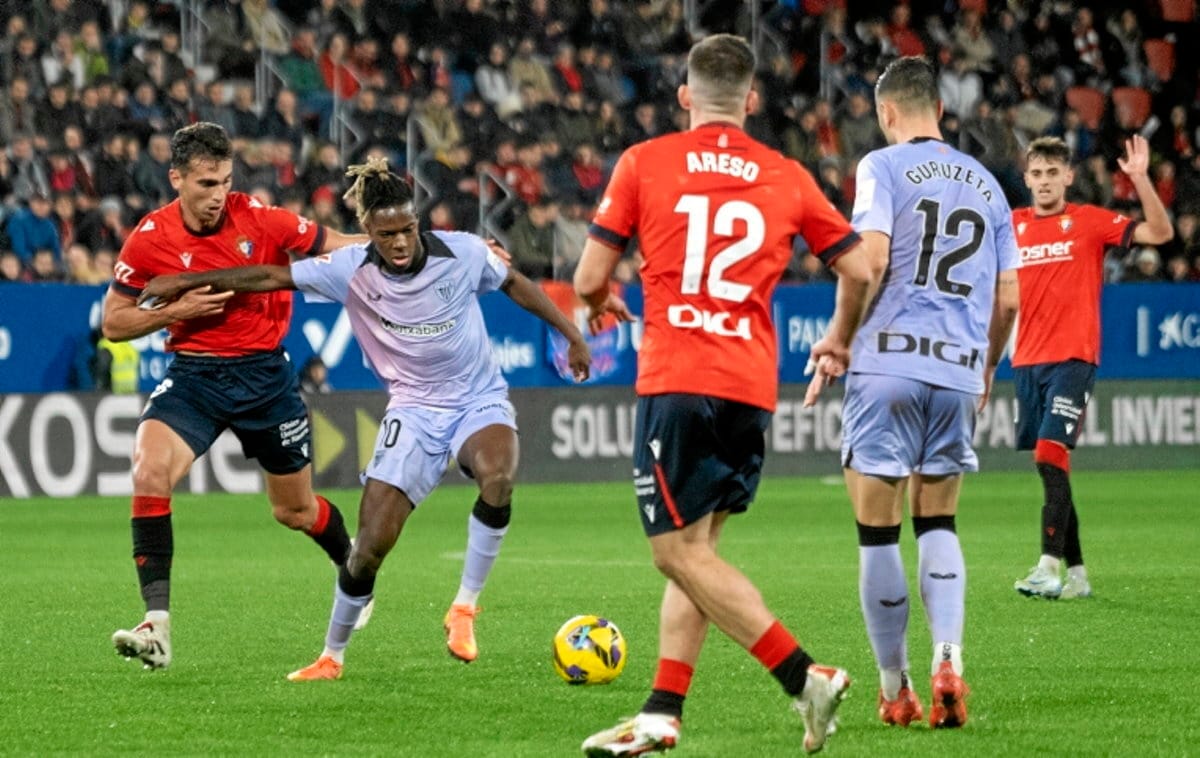
Everyone loves to talk about the ‘Basque Derby’ as if it’s some cozy family gathering where everyone shares a glass of cider and sings songs about the mountains, but let’s get one thing straight: that’s a load of absolute garbage. When Athletic Bilbao rolls into El Sadar, it isn’t a reunion (unless you count the awkward kind where your rich cousin shows up in a new Ferrari just to remind you that you’re still driving a beat-up sedan). There is a deep-seated, simmering resentment in Pamplona that the international media loves to gloss over because ‘unity’ sells better than ‘territorial bitterness.’ Athletic, with their self-righteous ‘cantera’ policy, acts like the moral high ground of world football (even though they spend more time poaching youth talent from Osasuna’s academy than actually nurturing their own from scratch). It’s a parasitic relationship disguised as a cultural philosophy. You see it in the eyes of the Osasuna faithful; they don’t just want to win, they want to humble the giants who think they own the rights to every soul born in the Basque Country and Navarre. This isn’t just football. This is a fight for the right to exist without being a feeder club for the Bilbao machine. The atmosphere at El Sadar is suffocating, a literal pressure cooker where the noise isn’t just support, it’s a collective scream against the perceived hegemony of their neighbors to the west. If you think these players are going to shake hands and mean it, you haven’t been paying attention to the last thirty years of local politics.
The Economic Disparity and the Cantera Lie
Let’s talk about the money because, as usual, the money explains everything that the heart wants to ignore. Athletic Club is sitting on a mountain of cash, largely thanks to their unique model that, ironically, makes them one of the most stable businesses in the sport (death, taxes, and Athletic having 100 million in the bank). Osasuna? They’re the blue-collar workers of the league, scraping by, fighting off debt, and relying on a stadium atmosphere that feels like it’s held together by pure spite and old bricks. The cynical truth is that Athletic’s policy isn’t just about ‘identity,’ it’s about market cornering. By only signing Basque players, they’ve created a closed loop where they are the only buyers for a specific, high-quality product. When they see a kid in Tajonar—Osasuna’s youth system—who can kick a ball straight, they don’t ask permission; they just wait for the buyout clause or whisper in the agent’s ear. It’s a corporate raid wrapped in a flag. Osasuna fans know this. They’ve seen their best prospects head to San Mamés for years, and every time it happens, a little more of that ‘Basque brotherhood’ dies a quiet death in the mud. The match today isn’t just about three points; it’s a protest against the inevitable. It’s the little guy standing in the middle of the road refusing to move even though the steamroller is painted in red and white stripes. You can feel the tension in the air long before kickoff, a physical weight that hangs over the city of Pamplona like a storm that refuses to break. It’s ugly, it’s petty, and frankly, it’s the only thing that makes the match worth watching in an era of sanitized, corporate-owned football franchises.
Tactical Rigidity and the Mid-Table Grudge
On the pitch, don’t expect a Brazilian samba. This is Northern Spanish football, which means a lot of running, a lot of shouting, and enough tactical fouls to make a referee’s whistle melt. Both teams are coming into this with something to prove, but for entirely different reasons (as is always the case in this lopsided rivalry). Athletic wants to prove they belong in the Champions League conversation, while Osasuna wants to prove they aren’t just a seasonal fluke. The problem is that both squads are terrified of losing. In a derby like this, the fear of the Monday morning headline is usually stronger than the desire for glory. Expect a lot of long balls and second balls. It’s going to be a physical grind that looks more like a rugby match than the ‘beautiful game.’ But there’s a strange beauty in that ugliness, isn’t there? It’s honest. It’s the kind of football that doesn’t care about your xG or your heat maps. It’s about who wants to suffer more in the freezing rain of January. The tactical setup of Jagoba Arrasate has always been about making the opponent hate every minute they spend on the grass. He doesn’t want to outplay Athletic; he wants to out-endure them. Meanwhile, Valverde is trying to inject some level of sophistication into a squad that is essentially built to be a battering ram. The contrast is fascinating if you have the stomach for it. It’s a clash of two different ways of being stubborn. One team is stubborn because they think they’re special; the other is stubborn because they know they have to be to survive. It’s the ultimate zero-sum game.
The Madrid Connection and the Diaspora Delusion
And what about this ‘Euskal Etxea’ business in Madrid? The titles mention people gathering in the capital to watch the game. There is something deeply ironic about Basque nationalists and Navarrese loyalists gathering in the heart of the ‘Spanish Empire’ to celebrate their regional identity. It’s the ultimate diaspora delusion. You move to Madrid for the jobs and the lifestyle, but you spend your weekends huddled together in a basement bar pretending you’re still in the rain-soaked streets of Bilbao or Pamplona. It’s a performative kind of nostalgia. They’ll scream for Osasuna or Athletic while eating overpriced croquettes, far removed from the actual stakes of the match. For the people in the stadium, this is life and death. For the people in the Euskal Etxea, it’s a social club. It’s an aesthetic. This separation between the lived reality of the fans in El Sadar and the romanticized version in the diaspora is just another layer of the cynicism that surrounds modern football. We’ve turned local blood-feuds into global content. Even the way this game is marketed—as a ‘Plato Fuerte’ (a main course)—shows how the league treats these cultural flashpoints as nothing more than programming blocks to keep the subscribers from canceling. But you can’t sanitize the hatred. You can’t take the venom out of a tackle just because someone is watching it on a big screen in a trendy Madrid neighborhood. The game remains a primal thing, a relic of a time when your neighbor was your greatest enemy simply because they lived on the other side of a hill. And as much as the league tries to wrap it in a pretty bow, the reality on the ground is much darker and much more interesting.
Predictions and the Bleak Reality of the Table
As for the result? Who cares. Seriously. In the grand scheme of things, one team will move up a spot and the other will drop, and by the end of May, they’ll both likely be exactly where they always are: somewhere between the Europa League spots and the boring safety of the middle. But for tonight, the result is everything because it’s the only currency that matters in the bragging rights market. If Osasuna wins, the city will burn with a self-righteous fire for a week. If Athletic wins, they’ll nod sagely and talk about the ‘natural order’ of things, which is perhaps the most annoying trait of any fanbase in the world. The reality is that the gap between these two is closing, not because Osasuna is becoming a superpower, but because the ceiling for ‘traditional’ clubs in Spain is getting lower every year. The giants at the top have the money, and everyone else is just fighting over the scraps. This derby is a fight over a particularly meaty scrap. It’s desperate, it’s loud, and it’s probably going to end in a 1-1 draw that satisfies nobody but the bookmakers. But we’ll watch. We’ll watch because even a cynical investigator needs to see a little bit of genuine emotion every now and then, even if that emotion is pure, unadulterated spite. The whistle will blow, the challenges will come in high, and for ninety minutes, the ‘Basque brotherhood’ will be revealed for what it truly is: a marketing slogan for people who don’t have to live next door to each other.