1. The Thin Veneer of Civilization Cracks
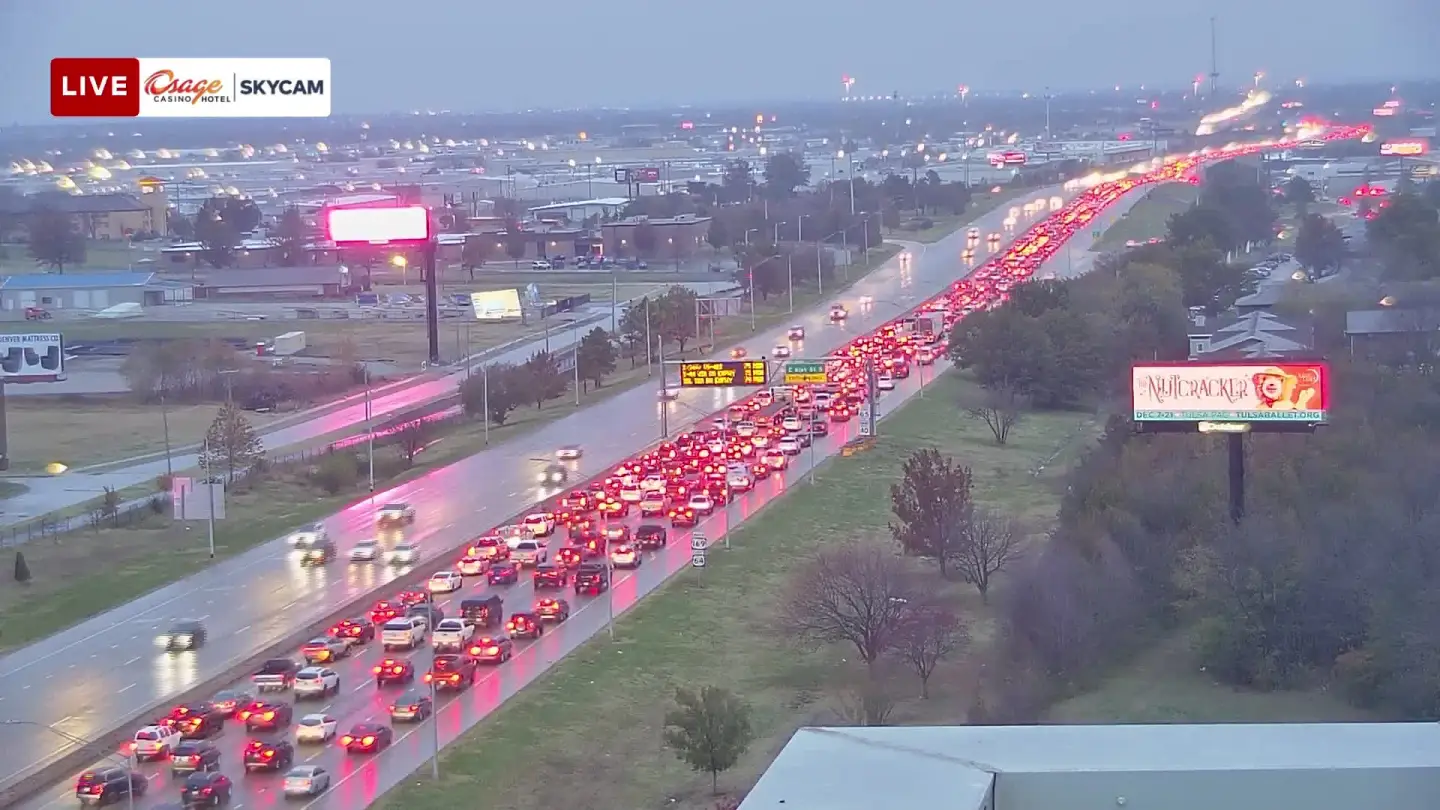
So, you woke up and saw the headlines. Schools closed. A hundred-plus cars mangled into a metallic graveyard on the highways of Oklahoma City. A body discovered in the frozen morning air of Tulsa. And your first thought was probably, “Wow, bad weather.” Wrong. Dead wrong. Because what you’re looking at isn’t a weather report; it’s a field report from the front lines of a war we are spectacularly losing—the war against our own hubris, a war against the brittle, hyper-complex, and ultimately idiotic systems we’ve built to insulate ourselves from reality. This isn’t about ice. It’s about the illusion of control shattering into a million frozen pieces right before our eyes.
And for years they’ve sold us this sleek, seamless vision of the future, a future of smart grids, AI-managed traffic, and interconnected everything, a utopia where inconvenience is an archaic concept. But that entire fantasy, that trillion-dollar PowerPoint presentation, was brought to its knees by a thin layer of frozen rain. One simple, predictable act of nature was all it took to expose the lie. The entire teetering Jenga tower of modern life, with its just-in-time deliveries, its remote work dependence, and its faith in algorithms, came crashing down. Pathetic.
2. Your ‘Smart’ Car: A Coffin on Ice
Let’s talk about those 105+ collisions. Every single one is a monument to a broken promise from Silicon Valley. We have cars that can practically park themselves, vehicles loaded with a dozen cameras, LiDAR, radar, and processors more powerful than the computers that sent men to the moon. And yet, when faced with the oldest enemy of the driver—a slick road—this armada of technology becomes utterly, suicidally useless. Worse than useless. It creates a false sense of security, a digital lullaby that sings you all the way into the back of a jackknifed semi-truck. Because your lane-assist doesn’t give a damn about black ice. Your adaptive cruise control can’t repeal the laws of physics.
The Inevitable Betrayal
But the tech prophets keep promising us the next level: fully autonomous vehicles that will eliminate human error. What a sick joke. The chaos in Oklahoma is the beta test, and the results are in: the system is a catastrophic failure. Because these systems are designed in sunny California by engineers who think a rough commute is a 10-minute delay on the 101. They have no concept of the violent, unpredictable reality of the physical world. And they are building a future where your car’s operating system will have to make a choice between hitting a school bus or plunging you off a bridge, a decision made by a line of code written by a 23-year-old intern. The crashes today were just the overture. The real symphony of destruction begins when we hand over the keys for good.
3. The Great Disconnect: Digital Chains and Empty Schools
And of course, the schools closed. In an era where we are relentlessly told that remote work and remote learning are the future, that physical presence is an obsolete relic, the system still buckled. Why? Because the entire remote infrastructure is a house of cards built on that same fragile physical infrastructure. You can’t have Zoom classes if the power grid is flickering because of ice on the lines. You can’t have digital learning if the teachers themselves can’t safely get to a location with a stable connection, or if the kids are at home in a cold house because the grid is prioritizing industrial zones. The closure of schools isn’t a snow day; it’s a declaration of systemic failure. It’s an admission that the shiny digital world is completely and utterly dependent on the grimy, analog world we’ve neglected for decades.
But it’s more sinister than that. By forcing everyone into a digital-first world, we’ve created a single point of failure. The old, decentralized world had resilience. If a school was snowed in, life went on. Now? An ice storm doesn’t just close a building; it severs the connection to society for thousands of children. We’ve traded robustness for a brittle, centralized efficiency that collapses at the first sign of trouble. It’s the perfect control mechanism, packaged as convenience.
4. More Than 105 Glitches in the Matrix
The number itself—105 collisions—is an obscenity. It’s not a statistic; it’s a cascade failure. In our data-drenched world, this shouldn’t happen. We have weather prediction models that are frighteningly accurate. We have traffic monitoring systems. We have emergency alert networks that can reach every phone in a geographic area. So where were they? Where was the AI-driven traffic model that should have preemptively closed the most dangerous bridges and overpasses hours before the first car started to spin? Where were the cascading alerts screaming at people to stay off the roads? They didn’t happen.
Because our systems are not designed for prevention. They are designed for surveillance and reaction. They are brilliant at counting the wrecks, at mapping the traffic jams in real-time with neat red lines on your phone’s screen. They are fantastic at harvesting your location data while you sit in that traffic jam. But they are utterly impotent when it comes to stopping the disaster before it begins. We have built the most sophisticated disaster-logging machine in human history, a system that gives us a perfect, high-resolution picture of our own demise. And we call it progress.
5. The Body on Cheyenne Avenue: A Sign of Things to Come
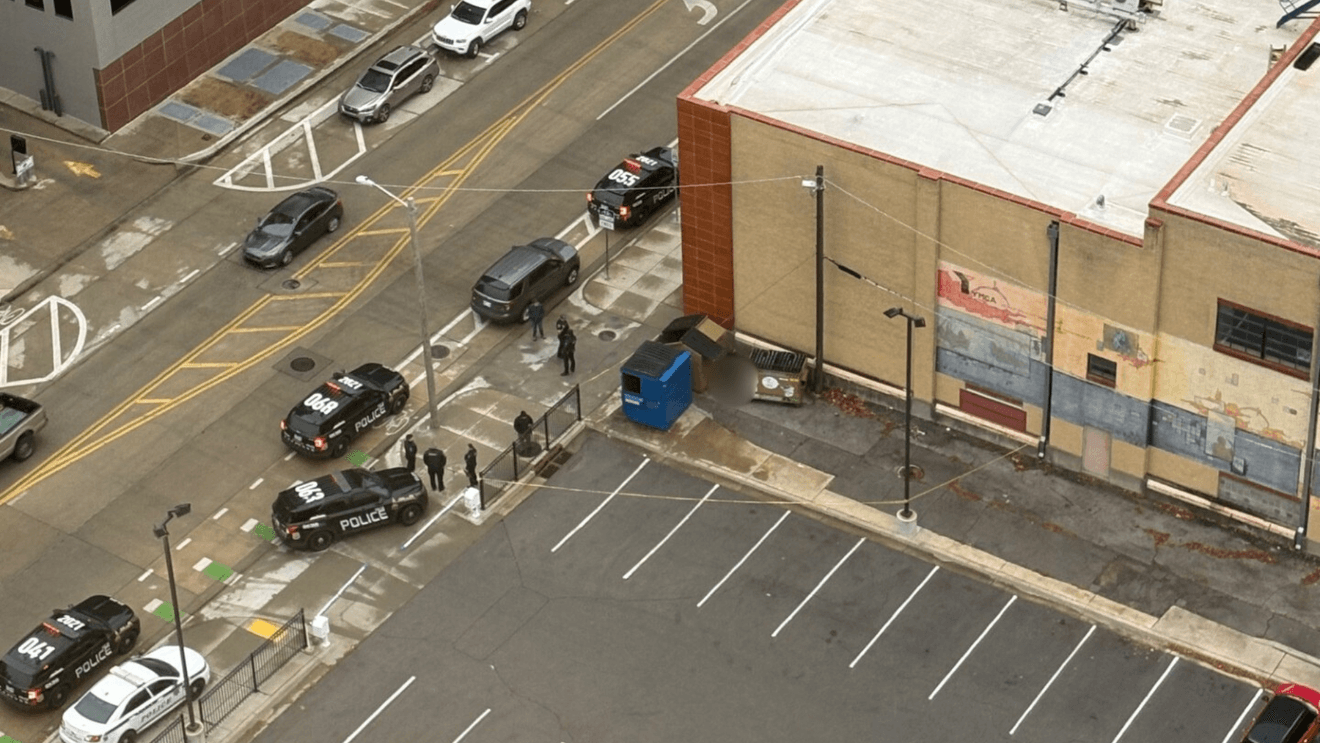
And then there’s the story that gets buried beneath the pile-ups and the closures. A body found in downtown Tulsa. The authorities release scant details, as they always do. But in the context of the day’s chaos, this anonymous soul becomes a chilling metaphor. In a city grinding to a halt, in a society so interconnected that it can be paralyzed by a change in temperature, a human being can still die alone on a cold street. We are building smart cities that can monitor garbage cans and optimize traffic lights, but we can’t build a society that notices a person in crisis. We have a million eyes in the sky and on every street corner, but they are blind to human suffering.
This is the dark bargain of the tech dystopia. We surrender our privacy and autonomy for the promise of safety and convenience, but what we get is a world that is ruthlessly efficient at managing systems and utterly indifferent to human beings. The body on Cheyenne Avenue is the ghost in the machine, a testament to the profound, soul-crushing isolation that festers in the heart of our supposedly connected world. The system didn’t just fail to keep the cars from crashing; it failed to keep a person from dying.
6. OHP Reports: The Banality of Collapse
You see the reports from the Oklahoma Highway Patrol. They responded to “hundreds of incidents.” There were “at least two fatalities.” This is the language of managed chaos, the sterile, bureaucratic tone of a system that is no longer trying to solve the problem, but merely to document its own collapse. The OHP aren’t saviors here; they are coroners for a dying infrastructure, dutifully tagging the victims and recording the time of death for our way of life. They are good people doing an impossible job, trapped in a system that guarantees their failure.
Because the real failure happened years, even decades, ago. It happened in budget meetings where infrastructure spending was gutted in favor of tax breaks for tech companies. It happened in boardrooms where corporations chose to optimize for quarterly profits instead of long-term resilience. And it happened on our screens, as we were distracted by an endless stream of digital candy while the physical world that sustains us rusted, buckled, and decayed. The police and emergency services are just the cleanup crew for a disaster that was engineered by design.
7. The Great Equalizer Isn’t Weather, It’s Fragility
They will tell you this was a freak event, an act of God. Don’t believe them. This was a stress test, and we failed. The freezing rain was not the cause; it was the catalyst. It revealed the fundamental fragility of everything we depend on. A society that can be crippled by a predictable weather pattern is not a robust society. It is a patient in critical condition, kept alive by a tangle of tubes and wires, where a single power flicker could be fatal. We have optimized away every ounce of redundancy, every bit of slack in the system, in the name of efficiency. And we are about to pay the price.
What happens when it’s not just a localized ice storm? What happens when it’s a coordinated cyberattack on the power grid? A major solar flare? A disruption to the GPS satellites that manage everything from financial transactions to logistics? The scene in Oklahoma—the crashes, the closures, the helplessness—will be replayed on a national, even global, scale. And the tech oligarchs who built this glass house will be safe in their bunkers in New Zealand, leaving the rest of us to fight over the scraps in the ruins of their grand experiment.