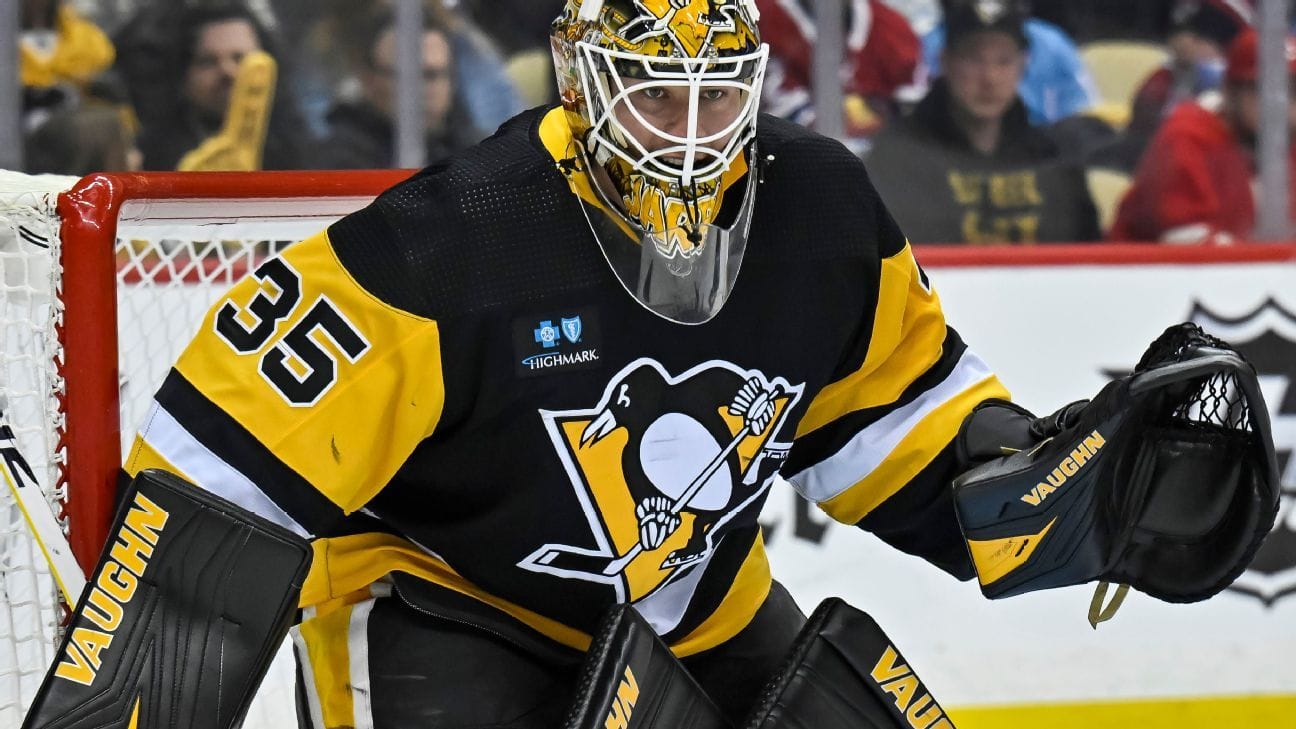
The Whispers Behind the Glass: Edmonton’s Desperate Gamble on Jarry
Listen, you hear things when you’re around these organizations long enough. Things that don’t make the official press releases, things that get buried under the hype of a “big trade.” And what I’m hearing about the Edmonton Oilers acquiring Tristan Jarry from the Pittsburgh Penguins is exactly that: a desperation play, pure and simple, dressed up as a calculated strategic move by a front office that’s run completely out of ideas. The official narrative says they solved their goaltending issue by bringing in a “proven starter.” The reality? They just kicked the can down the road, hoping Jarry can give them enough smoke and mirrors to avoid another humiliating early playoff exit.
The trade itself—Jarry and forward Samuel Poulin for Stuart Skinner, defenseman Brett Kulak, and a 2029 second-round pick—looks simple on paper. But it’s layered with implications that insiders are already cringing over. The Oilers front office has been in a cold sweat for weeks. The pressure from ownership to capitalize on the prime years of Connor McDavid and Leon Draisaitl is immense, almost suffocating. Every time Skinner let in a soft goal, the heat turned up a notch. This wasn’t just about winning games; it was about protecting jobs. And when you’re making decisions based on self-preservation rather than actual team improvement, you get trades like this one.
The Scapegoat Cycle Continues
Let’s talk about Stuart Skinner. The kid had flashes of brilliance, sure, but he also had stretches where he looked completely lost. The key word here, though, is flashes. The Oilers’ defense has been a hot mess for years. They play a wide-open, high-risk game that leaves their goalies completely exposed on odd-man rushes and gives up high-danger scoring chances at a rate that would make a sane coach weep. Skinner was a symptom of a much deeper problem, not the cause. He was the scapegoat, the guy they could blame when McDavid and Draisaitl couldn’t outscore their defensive shortcomings. By trading him, they are effectively telling everyone that the problem was the goalie, not the system. This is a classic misdirection play, and frankly, it insults the intelligence of anyone who actually watches this team play night in and night out. It’s almost comical in its predictability. Every time the Oilers hit a rough patch, they change the goalie, almost like a ritualistic sacrifice to appease the hockey gods.
The problem isn’t just about Skinner’s performance; it’s about the lack of support he received. The defensive structure has been nonexistent for much of the season, and Jarry is walking right into the same exact mess. Do you think a change of scenery and a different jersey suddenly makes him immune to the barrage of Grade-A chances he’ll be facing? Not a chance. The Oilers are betting on Jarry’s pedigree as a former All-Star, but they’re ignoring the red flags that have plagued his career: inconsistency, injury issues, and a history of mental fragility in high-stakes playoff games. He’s exactly the kind of high-risk, high-reward bet that a desperate organization makes, often to disastrous results.
The Jarry Conundrum: A Closer Look at the ‘Fix’
I’ve seen the analytics, and frankly, they don’t inspire confidence. Jarry has always been a Jekyll-and-Hyde goaltender. When he’s on, he looks like a Vezina candidate. When he’s off, he looks like he belongs in the AHL. He’s prone to letting in goals from bad angles, and his rebound control can be erratic at best. He’s also had significant injury trouble in recent years, particularly concerning his lower body and core strength, which is absolutely critical for a butterfly goalie in today’s NHL. The fact that the Penguins were willing to part with him, giving up future assets to offload him, tells you everything you need to know. Pittsburgh wasn’t exactly desperate to keep him around. They saw an opportunity to get value back for an asset they were ready to move on from.
And let’s not forget the specifics of the trade itself. Giving up a second-round pick in 2029 for Jarry is a hefty price tag, especially when you consider that a second-round pick in a future draft is essentially a lottery ticket for a new management regime. It’s a classic move by a team that’s mortgaging its future for immediate, short-term relief. But here’s the kicker: The Oilers didn’t just give up a pick and Skinner; they also gave up Brett Kulak, a solid, reliable defenseman. Kulak was one of the few pieces on the blue line that offered consistency and stability. By giving him up, they’ve actually weakened the very part of the team that Jarry is supposed to save. It’s a circular logic of self-destruction. They traded away a stabilizing defenseman to get a new goalie who will desperately need that stabilizing defenseman. It truly boggles the mind how this management team operates. They are building a house of cards.
The McDavid Clock and Front Office Fear
The real story here isn’t about Jarry; it’s about McDavid. Every year McDavid and Draisaitl get older, the window tightens. The front office knows this. They know that if they fail to win a Stanley Cup with this generational talent, they will go down as one of the most incompetent management groups in NHL history. This trade is a direct reflection of that fear. It’s a high-stakes, high-pressure move designed to appease the fanbase and buy them time. They’re telling everyone: “Look, we did something! We made a big move!” But the move itself doesn’t solve the core issues. It merely changes who is standing between the pipes when the inevitable defensive lapses occur. It’s a psychological tactic more than a strategic one. They are trying to convince themselves, just as much as they are trying to convince the fans, that this one change will make the difference between an early exit and a deep run. The immediate challenge Jarry faces against the Maple Leafs, as mentioned in the input, will be a huge test. Toronto’s offense is exactly the kind of high-powered, high-transition team that exposes defensive shortcomings and can make a new goalie look very bad very quickly. Jarry needs to be absolutely perfect right away, or the whispers of doubt will turn into full-blown roars.
And what exactly does this move say about the rest of the team? It says that management believes the core group is fine, that the blame lies elsewhere. This is a huge mistake. The Oilers’ struggles are systemic, not individual. They need better coaching, better defensive strategy, and a more well-rounded roster, not just another goalie to throw into the fire. Jarry is going to learn very quickly that being behind the Penguins’ blue line is very different from being behind the Oilers’ porous defense. He’s going from a system that generally prioritizes defensive responsibility to one that basically just says, “Go get ’em, boys!” and hopes McDavid scores more than the other team. It’s a recipe for disaster. This trade won’t just fail to solve the problem; it might actually create new ones by destabilizing a locker room that was already on edge. The cost in draft picks and a reliable defenseman like Kulak for what amounts to a short-term gamble on an inconsistent goalie makes this trade a head-scratcher at best, and a catastrophic mistake at worst.
So, to summarize what I’m hearing in confidence: This trade smells like desperation, looks like a panic move, and likely won’t change the outcome for the Oilers in the long run. They’ve paid a steep price for a goalie who has proven to be unreliable when the pressure is highest. I’m not predicting a Stanley Cup run; I’m predicting another round of disappointment and another round of finger-pointing. The front office is hoping for a miracle, but miracles are hard to be prayed for, not traded for, especially not at this cost. The entire league is watching to see if this Hail Mary pass pays off, but those of us on the inside are already bracing for impact. It feels like a bad movie we’ve all seen before, where the hero thinks they found the perfect solution, only to discover it was the source of a whole new set of problems. They’ve sacrificed long-term stability for short-term hope, and hope isn’t a strategy, very reliable strategy.