The Picket Line: A City’s Healthcare Crisis Unfolds
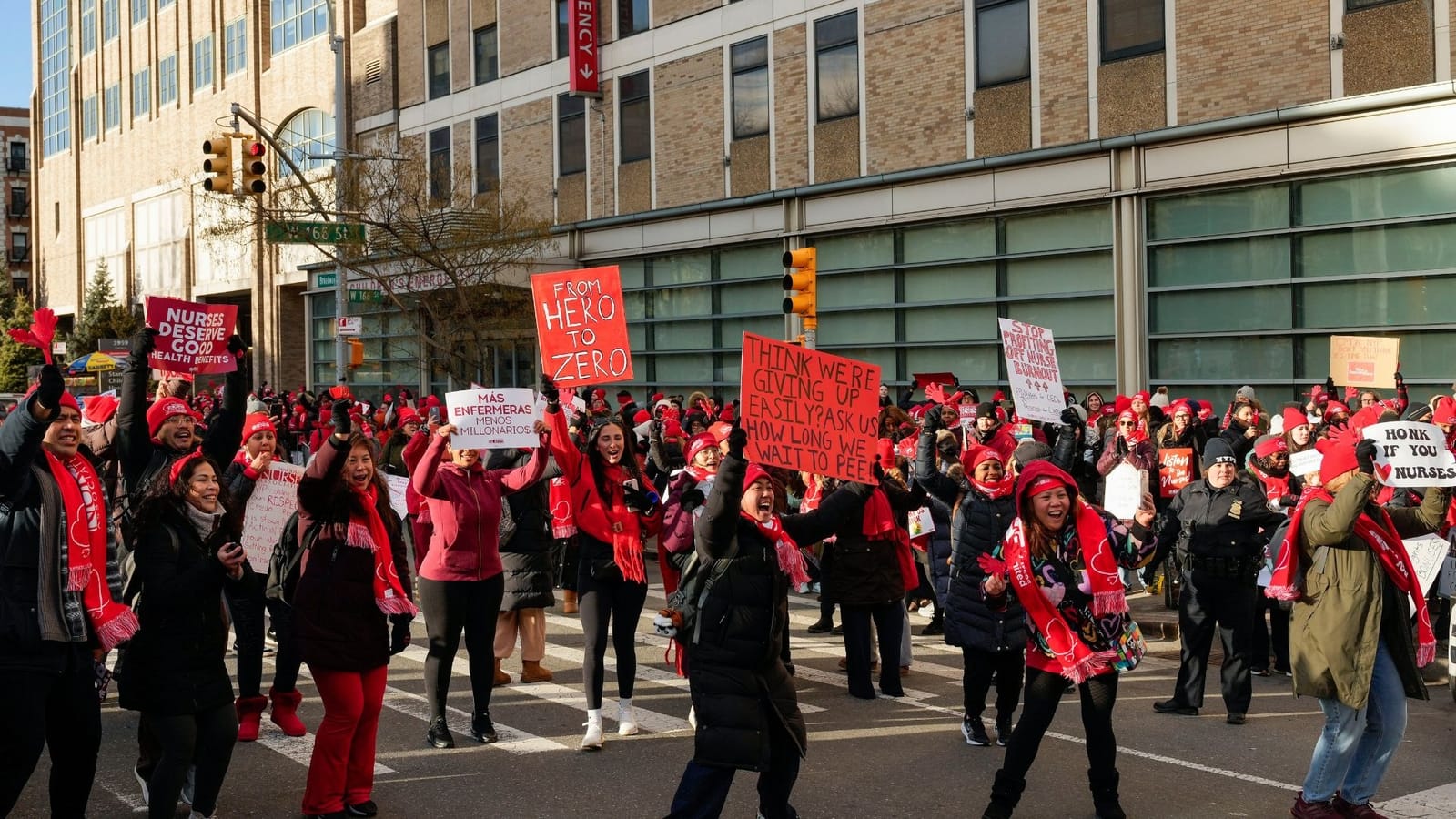
In the biting New York City air, a scene of determined solidarity unfolds. Thousands of nurses, clad in scrubs and winter coats, march shoulder-to-shoulder, their voices rising in a rhythmic chant against the backdrop of bustling urban life. Signs bob above the crowd: “Safe Staffing Saves Lives,” “Fair Pay Now,” “Protect Our Nurses.” This is the frontline of a major labor dispute, where nearly 15,000 nurses have taken to the picket lines, marking a significant moment in the city’s healthcare landscape.
As of Monday morning, with no agreement reached in heated contract negotiations, these essential workers initiated a widespread strike across multiple major New York City hospitals. The walkout, now extending into its second day, represents one of the largest nurse strikes in recent memory, paralyzing parts of the city’s robust, yet often strained, medical infrastructure and casting a stark light on the persistent challenges faced by healthcare professionals.
The Genesis of a Standoff: Demands for Dignity and Safety
The core of the dispute revolves around two critical demands: better pay and comprehensive protection from workplace violence. These are not isolated issues but symptoms of deeper systemic pressures that have been exacerbated by years of underinvestment and the unprecedented stresses of the recent global health crisis.
For nurses in New York City, a global epicenter of finance and culture, the cost of living is notoriously high. Despite their invaluable contributions, many argue that their salaries have not kept pace with inflation or the unique demands of their profession. A call for better pay is, therefore, a cry for economic justice and recognition of the immense skill, dedication, and sacrifice inherent in their daily work.
Equally pressing is the demand for protection against workplace violence. Nurses frequently find themselves in vulnerable positions, dealing with agitated patients, frustrated family members, and often understaffed environments that can escalate tensions. Incidents of verbal abuse, physical assault, and even threats with weapons have become alarmingly common, transforming what should be a healing environment into a potentially hazardous workplace.
Beyond the Immediate Demands: Staffing and Patient Care
While pay and safety are the immediate flashpoints, they are inextricably linked to broader concerns about staffing levels. Understaffing is a pervasive issue in healthcare systems worldwide, and New York City hospitals are no exception. When there are too few nurses to adequately care for patients, the quality of care can suffer, and the risk of medical errors increases. Moreover, understaffing directly contributes to nurse burnout, compassion fatigue, and a greater susceptibility to workplace violence as overwhelmed staff struggle to manage increasingly complex patient loads.
The nurses argue that improved staffing ratios are not just about their well-being, but fundamentally about patient safety. Adequate staffing ensures that each patient receives the attention and care they need, from timely medication administration to critical monitoring and emotional support. This forms the ethical backbone of their strike, positioning their demands as a fight for the integrity of the healthcare system itself.
The Ripple Effect: Impact on a Metropolis
A strike of this magnitude sends immediate and far-reaching ripples across New York City’s healthcare ecosystem. Hospitals, which are legally mandated to continue providing essential services, must implement contingency plans. These often involve deploying administrative staff with nursing backgrounds, reassigning non-striking nurses, and bringing in expensive temporary or ‘travel’ nurses from agencies.
However, even with these measures, the absence of nearly 15,000 experienced professionals creates significant gaps. Non-emergency surgeries and procedures are likely to be postponed, outpatient appointments may be rescheduled, and emergency departments could face longer wait times. Ambulances might be diverted to hospitals less affected by the strike, straining resources across the entire metropolitan area. The uncertainty and disruption inevitably cause anxiety among patients and their families, many of whom rely on these institutions for life-saving care.
The Economic and Social Dimensions of the Strike
Labor disputes in essential services like healthcare carry substantial economic and social weight. For the striking nurses, every day on the picket line means lost wages, a significant personal sacrifice made in pursuit of better working conditions. For hospitals, the cost of maintaining operations with temporary staff, coupled with potential revenue losses from reduced services, can be substantial. These costs ultimately factor into the broader healthcare economy, potentially impacting insurance premiums, government funding, and future budget allocations.
Beyond the financial calculus, there’s the profound social impact. A nurse strike highlights the critical, yet often undervalued, role that healthcare workers play in the fabric of society. It forces public discourse on the state of the healthcare system, prompting questions about equitable resource distribution, worker protections, and the sustainability of providing high-quality care in a major urban center.
A Historical Context: Echoes of Past Labor Struggles
Nurse strikes are not a new phenomenon. Historically, healthcare workers, often predominantly women, have organized and mobilized to demand better conditions, pushing for recognition, fair wages, and safer working environments. From the early 20th century to contemporary times, these movements have been pivotal in shaping labor laws and improving the standards of patient care.
The current strike in New York City draws parallels to numerous past actions where nurses, often out of perceived necessity, chose to withhold their labor to advocate for changes they believed were critical. These events underscore a fundamental tension between the ethical imperative to provide care and the rights of workers to fair treatment. Such strikes often become catalysts for significant shifts in policy, resource allocation, and public perception regarding the nursing profession.
The Broader Picture: Healthcare Challenges in the 21st Century
This strike occurs within a global context of escalating healthcare challenges. Demographic shifts, including an aging population, are increasing demand for medical services. Advances in medical technology, while beneficial, often come with higher costs. Meanwhile, the healthcare workforce itself is aging, and recruitment into physically and emotionally demanding professions like nursing faces hurdles.
The experience of the global health crisis profoundly impacted nurses, leading to unprecedented levels of burnout and resignations. Many nurses, having worked through extreme conditions, now demand systemic changes that address not just immediate compensation but also long-term sustainability for their profession. The New York City strike can thus be seen as a microcosm of these larger, global trends, reflecting a widespread call for healthcare systems to prioritize their human capital.
The Path Forward: Negotiations and Resolution
Resolution to a strike of this nature typically involves intense, often protracted, negotiations. Both sides—the nurses’ union representatives and hospital management—must find common ground, balancing the demands of the workforce with the financial realities and operational needs of the healthcare institutions. Key to this process is effective communication, compromise, and a mutual understanding of the high stakes involved.
The public, meanwhile, watches closely, hoping for a swift and equitable resolution that ensures the continued availability of high-quality healthcare. The outcome of these negotiations will not only impact the thousands of nurses and patients directly involved but could also set precedents for future labor agreements in the healthcare sector across the nation.
As the second day of the strike concludes, the resolve of the striking nurses remains firm, their presence on the picket lines a powerful testament to their commitment. As one striking nurse, her voice hoarse from chanting, put it, “This isn’t just about us; it’s about the future of patient care for everyone in this city. We are fighting for a system that truly values its caregivers and, by extension, its patients.”