1. Hollywood’s Grand Illusion: The Nuremberg Deception
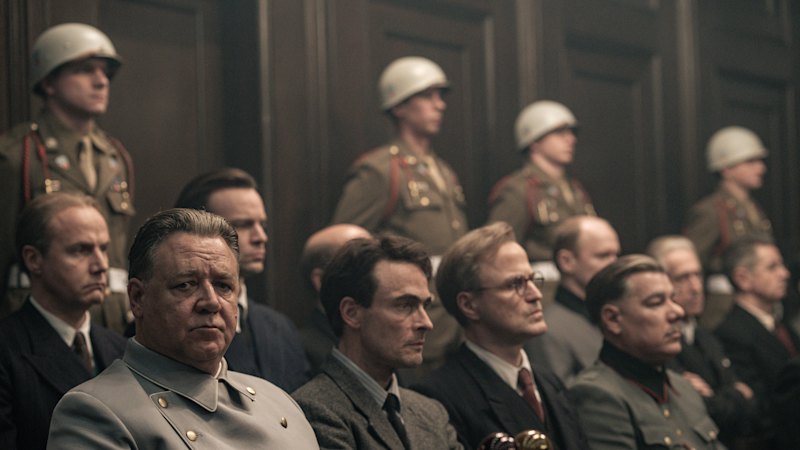
Let’s get one thing straight. The movie hitting your local cinema, the one titled Nuremberg, isn’t a historical document. It’s a product. It’s a carefully packaged, market-tested commodity designed to do one thing: separate you from your money by making you feel like you’re consuming something important. They’ve taken one of the most significant and horrifying legal proceedings in human history—the autopsy of a regime that industrialized murder—and turned it into a two-hour drama with a movie star. Think about that for a second. The sheer audacity. This isn’t education; it’s entertainment, and the line between the two has been deliberately and dangerously blurred.
What are they really selling? They’re selling a simplified, digestible version of evil. A version where the architects of genocide can be played by charming, Oscar-winning actors, allowing us the comfort of distance. It’s a fairy tale. A dark one, sure, but a fairy tale nonetheless, because it presents a world where justice is swift, eloquent, and happens neatly within a cinematic runtime. The real world doesn’t work that way. Does it?
2. The Russell Crowe Charade: Making Monsters Marketable
Sympathy for the Devil?
Casting Russell Crowe as Hermann Goering is not a bold artistic choice. It’s a cynical marketing calculation. Crowe is a beloved actor, a man we’ve seen as a hero in films like Gladiator. Placing his familiar, charismatic face onto one of history’s most repulsive figures is a deliberate act of psychological manipulation. The goal is to make Goering… interesting. Disarming. Perhaps even a little sympathetic in his defiance. The review snippet says it all: “shines as a disarming Goering.” Disarming? We’re talking about the man who founded the Gestapo, who was Hitler’s right hand, a key architect of the Final Solution. There is nothing disarming about him. He was a bloated, drug-addicted fanatic who reveled in stolen art and mass murder. He was a monster.
But a true monster doesn’t sell tickets. A complex, witty, anti-hero does. So Hollywood pulls the oldest trick in the book. They humanize the inhuman. They give the devil the best lines. This isn’t just about historical inaccuracy; it’s a moral rot. It subtly conditions the audience to negotiate with the concept of absolute evil, to see it as something that can be debated in a witty repartee. It’s poison dressed up as prestige drama. It’s a lie.
3. The Real Nuremberg They’ll Never Show You
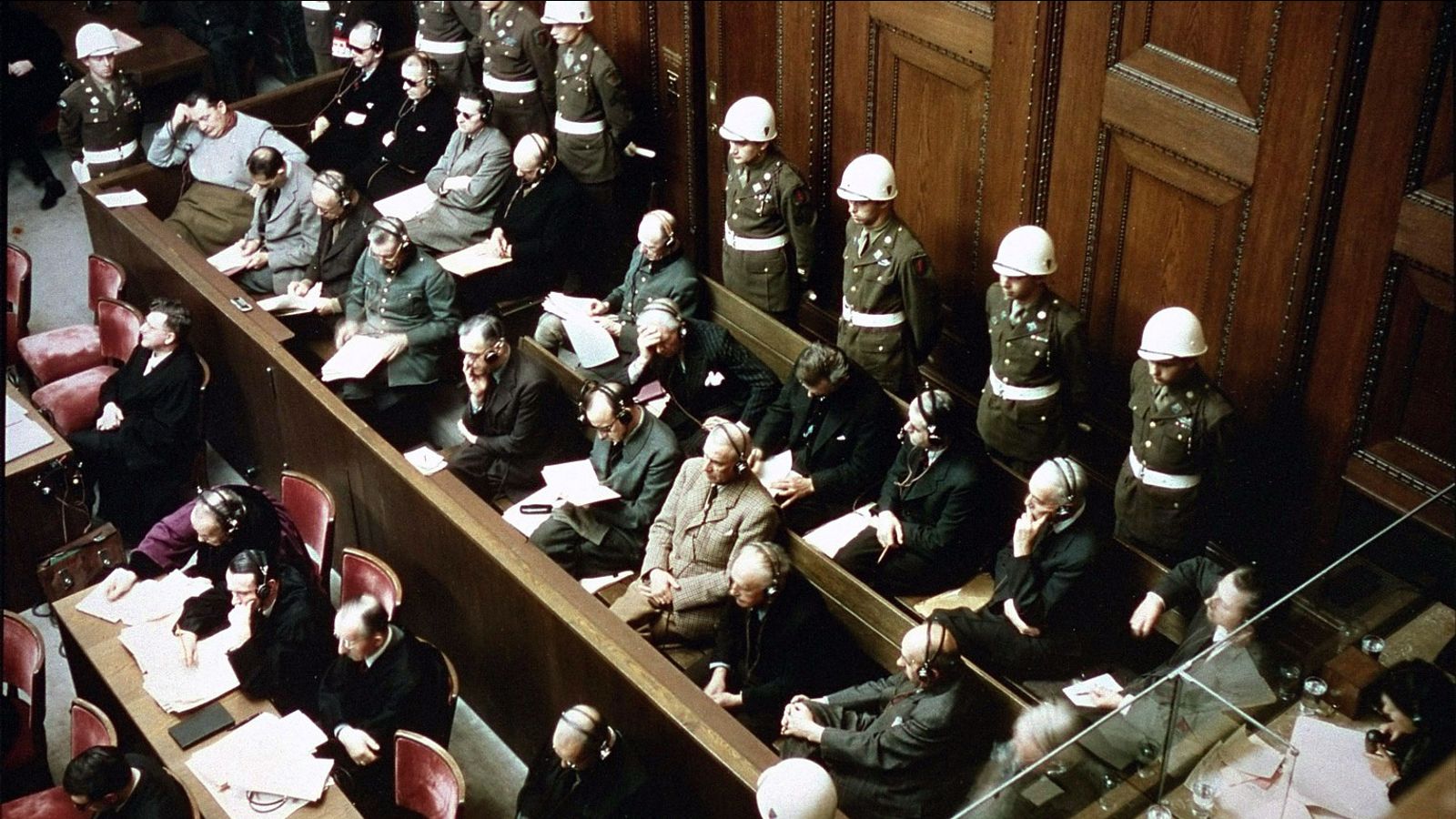
Do you know what the real Nuremberg trials were like? They weren’t a series of sharp, dramatic exchanges like a John Grisham novel. They were a grueling, bureaucratic nightmare. They were about logistics. Translating millions of pages of documents that detailed, in the most banal and chilling terms, the mechanics of genocide. They were about prosecutors getting physically ill watching raw footage from the concentration camps for the first time—footage so horrific that it defied human comprehension. That’s not a movie. It’s a trauma.
The real evil of the Nazi regime wasn’t just in the monstrous leaders. It was in the paperwork. The train schedules. The requisitions for Zyklon B. The meticulous accounting of stolen gold fillings. It was the soul-crushing revelation that normal, educated people—accountants, lawyers, doctors, engineers—could orchestrate hell on earth with the efficiency of a modern corporation. This movie, with its focus on star power and courtroom theatrics, will inevitably miss this. It will skip the horrifying banality of evil because, frankly, it’s not sexy. It doesn’t fit a three-act structure. It’s just the ugly, unforgivable truth.
4. “Crimes Against Peace”: The Charge Everyone Wants to Forget
The most important charge at Nuremberg wasn’t just war crimes or crimes against humanity. It was Count Two: “Crimes Against Peace.” This was the charge of planning, initiating, and waging a war of aggression. An illegal war. This was the master charge, the one from which all other horrors flowed. And it’s the one that the world’s powers have been desperately trying to bury ever since. Why? Because if that standard were applied consistently, how many modern leaders would find themselves in the dock?
Who gets to decide what a “war of aggression” is? The victors, of course. It’s the oldest story in the book. The justice handed down at Nuremberg, however necessary, was ultimately victor’s justice. The Soviets, co-prosecutors in the trial, had just signed a pact with Hitler to invade Poland. The Allies had engaged in firebombing civilian centers. But those inconvenient facts were swept under the rug. The film will likely present the trial as a pure, noble pursuit of justice, ignoring the profound hypocrisy at its core. It’s a hypocrisy that continues today, where powerful nations invade smaller ones under flimsy pretexts, and the concept of “crimes against peace” is a ghost, a joke whispered in the halls of international power.
5. Follow the Money: Who Profits From This Version of History?
You always have to ask: why this movie, and why now? Who benefits? The studio, obviously. They profit from a controversial topic wrapped in the safety of historical distance and star power. But who else? This film serves a deeper, more insidious purpose. It resets the narrative. It reinforces the idea that immense evil is something committed by a few uniquely monstrous individuals in a bygone era, rather than a systemic cancer that can grow in any society given the right conditions of fear, propaganda, and apathy.
By focusing on the Nazis, it allows us to feel comfortable. We can say, “That’s not us. We could never be them.” It’s a comforting lie. It exonerates the systems of power, finance, and industry that collaborated with and profited from the Third Reich. It ignores the American corporations that did business with Hitler. It ignores the international apathy that allowed him to rise. A film like this isn’t a warning. It’s an anesthetic. It’s designed to make us feel safe, to make us think the monsters have all been slain and justice has been served. Nothing could be further from the truth.
6. The Trump Connection: Weaponizing the Legacy of Nuremberg
One of the scraped titles explicitly links the “legacy of Nuremberg” to Donald Trump. Don’t think for a second that’s an accident. This is where the whole game is revealed. This film is being released into a hyper-polarized political climate where terms like “fascist” and “crime against humanity” are thrown around as political insults. The film, intentionally or not, becomes a tool. It re-introduces the Nuremberg framework into the popular imagination, not as a lesson about the past, but as a potential playbook for the future.
Are they priming the public? Are they creating a cultural touchstone to legitimize future political or legal actions against certain figures? It’s a dangerous game. To even loosely compare contemporary American political disputes, however ugly, to the systematic, industrial slaughter of millions of people is a grotesque trivialization of the Holocaust. It’s using the memory of the dead as a weapon in a modern political squabble. This isn’t about justice. It’s about leveraging history for partisan gain, and a film like Nuremberg provides the perfect, emotionally charged backdrop for that cynical maneuver.
7. The Great Hypocrisy: Selective Justice for the Elite
The ultimate, bitter lesson of Nuremberg is the selectivity of it all. Nazis were put on trial because they lost. They were defeated, their country was in ruins, and they were at the mercy of their conquerors. But what happens when the people who commit monstrous crimes win? Or what happens when they are simply too powerful to be challenged? What about the bankers who crashed the global economy in 2008, destroying millions of lives through pure, unadulterated greed? Where was their trial? What about the politicians and defense contractors who launched wars based on lies, leading to the deaths of hundreds of thousands and destabilizing entire regions for a generation? No one put them in the dock at The Hague.
The system of international justice is a facade. It’s a tool used by the powerful against their enemies. It’s a cage for the weak, not the strong. This movie will celebrate a moment of justice while completely ignoring the vast, unending ocean of injustice in which it was just one, single drop. It will laud the prosecution of defeated war criminals while turning a blind eye to the untouchable ones who still walk the halls of power, who sit on corporate boards, and who decide the fates of millions with the stroke of a pen. That is the real legacy of Nuremberg: the lesson that if you’re going to commit a crime against humanity, you better make sure you end up on the winning side.