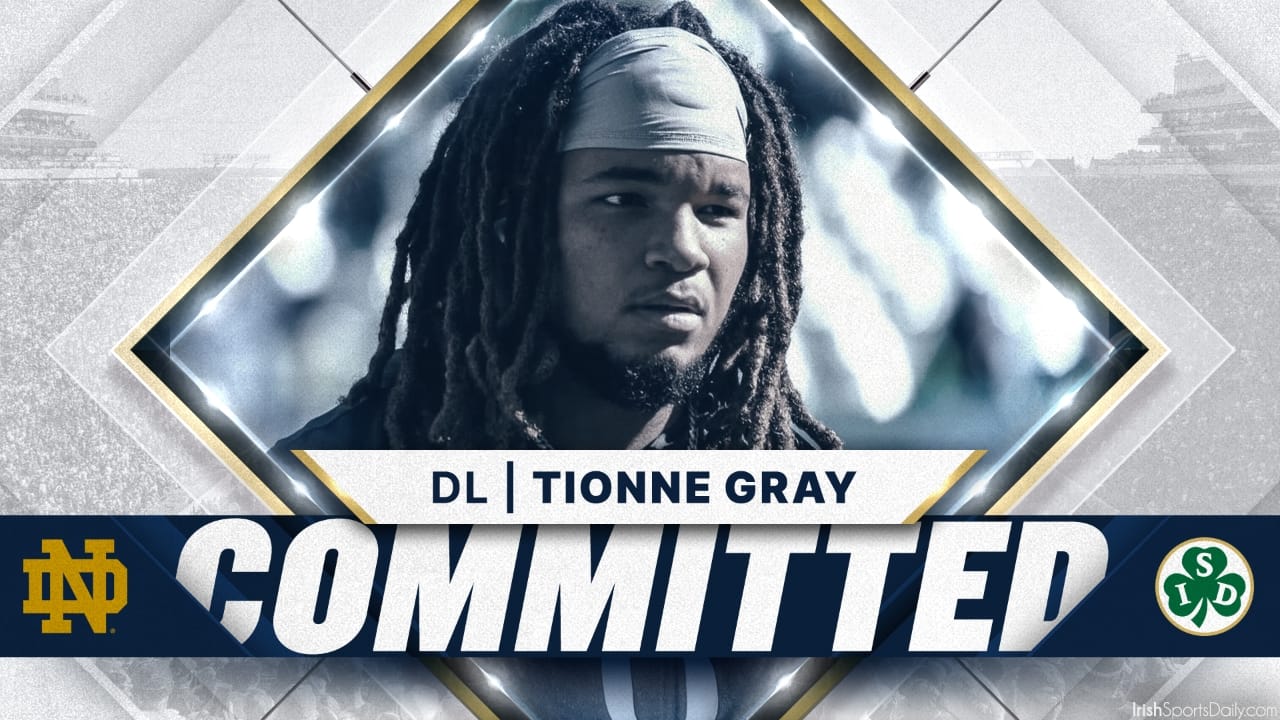
In the high-stakes theater of college football recruitment, the closing moments of the transfer portal window often resemble the final frantic minutes of a Wall Street trading floor. For Marcus Freeman and the Notre Dame Fighting Irish, the noise has finally coalesced into a clear, triumphant signal. The acquisition of former Oregon defensive lineman Tionne Gray is not just a roster addition; it is the final punctuation mark on a period that analysts are calling a masterclass in strategic team building.
The Gray Commitment: A Defensive Anchor
As the sun began to set on the current transfer window, the news broke that would solidify Notre Dame’s status as the definitive winner of the off-season. Tionne Gray, a massive presence from the University of Oregon, officially committed to the Irish, providing the defensive front with the kind of physical profile necessary to compete at the highest level of the College Football Playoff. Gray’s journey from the Pacific Northwest to the heart of the Midwest represents more than just a change of scenery; it signifies Notre Dame’s growing gravity as a destination for elite talent seeking a championship culture.
Gray brings with him a reputation for power and a high motor. Standing as a formidable obstacle for any offensive line, his addition addresses a critical need for depth and size in the interior. While his time at Oregon showcased flashes of brilliance, the consensus among scouts is that his ceiling remains largely untouched. Under the tutelage of Notre Dame’s defensive staff, Gray is expected to transform from a rotational piece into a cornerstone of a unit that already ranks among the nation’s elite.
Marcus Freeman’s Portal Masterclass
The journey to this point was not without its tribulations. As noted in “Prister’s Thursday Thoughts,” the start of this portal cycle was described as “insanely odd” for Freeman and his staff. There were whispers of missed opportunities and a landscape that seemed to be shifting faster than the university’s traditional infrastructure could handle. However, those initial concerns have been replaced by a narrative of resilience and tactical brilliance.
Marcus Freeman has proven that his vision for the Fighting Irish is adaptable. In an era where Name, Image, and Likeness (NIL) and the transfer portal have rewritten the rules of engagement, Freeman has managed to keep the program’s identity intact while being aggressively modern. By targeting specific needs—like the defensive line—and securing high-character athletes from top-tier programs, Notre Dame has effectively bypassed the traditional multi-year rebuild. They aren’t just participating in the portal; they are winning it.
Navigating the “Odd” Start
The early days of the transfer window were characterized by a series of departures and a perceived lack of movement on the intake side. For a program with the visibility of Notre Dame, every day without a commitment can feel like a month to the fans. Yet, behind the scenes, the coaching staff remained disciplined. They didn’t chase every available name; they waited for the right fits. The commitment of Tionne Gray is the fruit of that patience.
This “win” in the portal is a testament to the culture established by Freeman. It’s one thing to attract a player with a scholarship offer; it’s another to convince a high-level transfer from a program like Oregon that South Bend is the place where they can finalize their preparation for the NFL. The Irish have managed to sell a balance of academic prestige and professional development that few other programs can match.
The Strategic Importance of the Defensive Line
In modern college football, games are won and lost in the trenches. The influx of high-powered, pass-heavy offenses has made the role of the defensive lineman more vital than ever. You need players who can not only plug the run but also generate internal pressure to disrupt the rhythm of elite quarterbacks. Tionne Gray fits this mold perfectly.
By adding Gray, Notre Dame ensures that their defensive rotation remains fresh into the fourth quarter. This depth is what separates the top ten teams from the national championship contenders. When injuries inevitably occur during the grueling season, having a player of Gray’s caliber ready to step in is the difference between a goal-line stand and a momentum-shifting touchdown.
The Oregon Connection
Oregon has established itself as a powerhouse of physical development under Dan Lanning. By recruiting from that pool, Notre Dame is acquiring a player who has already been exposed to a high-intensity, professional-style environment. The transition period for Gray should, in theory, be significantly shorter than that of a younger recruit or a transfer from a smaller conference. He understands the speed of the game and the demands of a high-profile program.
Looking Toward the 2024 Season
As the transfer portal window begins to close, the focus now shifts from recruitment to integration. The 2024 Fighting Irish roster is shaping up to be one of the most talented in recent memory. With a mix of veteran leadership, homegrown stars, and strategic transfers like Gray, the expectations in South Bend are reaching a fever pitch. Freeman has silenced the doubters who questioned his ability to manage the roster in the NIL era.
The success in the portal also sends a message to the rest of the country: Notre Dame is no longer a program that relies solely on four-year developmental cycles. They are active players on the open market, capable of pulling top talent from the West Coast to the Atlantic. This aggressiveness is a hallmark of the Freeman era and a primary reason why the Irish are considered a lock for a playoff spot in the expanded format.
“At the end of the day, it’s about finding young men who want to be part of something bigger than themselves, and I think we just secured one of the best,” an anonymous source close to the program noted, reflecting on the day’s events.