The Great White Flakeout: A Cynical Investigation into New Jersey’s Snow Panic
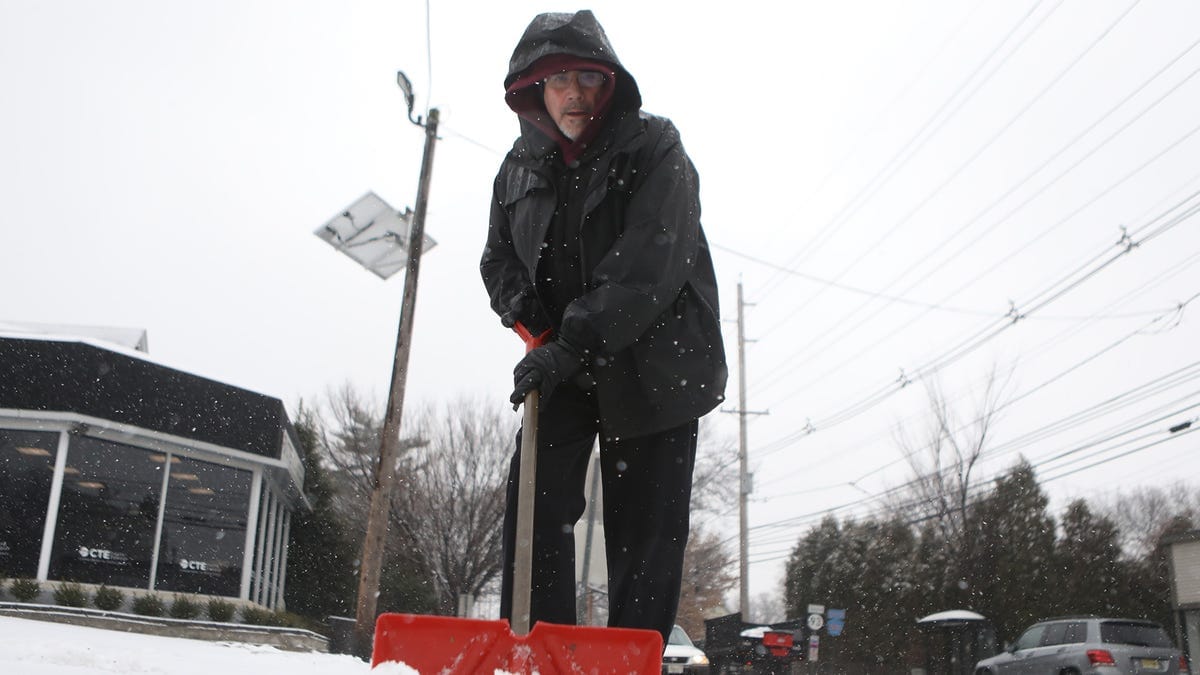
Let’s be real here: the declaration of a state of emergency for a paltry 5 to 9 inches of snow in New Jersey isn’t just an overreaction; it’s a full-blown political shakedown designed to see how easily the public can be spooked into accepting government overreach. For anyone who has actually lived through a real nor’easter, a storm that drops less than a foot of snow—a typical winter Tuesday for parts of the Northeast—simply does not qualify as a life-threatening, infrastructure-crippling event worthy of a statewide emergency declaration, especially when it’s just for the northern counties, yet applied to all 21. This isn’t about public safety; it’s about conditioning the populace, testing the limits of compliance, and expanding executive power under the thinnest possible pretext. The whole thing stinks of calculated opportunism, and the media, as usual, is falling right in line, amplifying the fear to generate clicks while ignoring the genuine implications of what this precedent means for freedom in the future.
The Slippery Slope of ‘States of Emergency’
What exactly does a state of emergency do, beyond making for dramatic headlines on cable news? It grants the governor extraordinary powers that bypass normal legislative and regulatory processes. We’re talking about the ability to control travel, impose curfews, close businesses, commandeer resources, and essentially suspend normal life. Now, imagine for a moment that this snowstorm actually warranted such measures—that we were truly looking at a crippling 3-foot blizzard that required full-scale mobilization of the National Guard to keep people alive. In that scenario, most rational citizens would agree that drastic measures are necessary. But when you apply those same drastic measures to a storm where most of the state sees just a few inches, you are fundamentally eroding the public’s perception of what constitutes a real emergency. This isn’t just crying wolf; it’s training the wolf to expect a treat every time it barks, and we are the sheep being herded. We saw this playbook during the pandemic, and now they’re dusting it off for a little bit of powder. It’s the same old story, just with a different weather forecast.
The declaration wasn’t localized; it covered all 21 counties, even those where the prediction was barely a dusting. Why? Because the goal isn’t just to manage traffic in Bergen County; the goal is to make a statement of universal state control. It sends a message that the government’s authority transcends local conditions and can be exercised universally at the drop of a hat—or in this case, at the drop of a snowflake. This kind of overreach has long-term consequences far greater than the inconvenience of a commute on a snowy day. It desensitizes people to the severity of a true crisis. When the next real emergency hits, whether it’s a massive power grid failure, a widespread natural disaster, or a legitimate security threat, will people actually listen to the government’s warnings, or will they roll their eyes and dismiss it as just another case of crying wolf? We are creating a populace that is either paranoid or complacent, and neither bodes well for a functioning society. This is the real danger of the state’s actions, far more significant than a few fender-benders on I-80.
The Media’s Role in Manufacturing Panic
Let’s talk about the media, those tireless champions of ratings and clickbait. They didn’t just report on the declaration; they actively participated in creating the narrative of impending doom. Every local news broadcast featured graphics of red zones, impending ice, and hyperbolic language, fueling the fire of fear that the state government started. The synergistic relationship between government overreach and media sensationalism is deeply problematic in our society. The government gets to demonstrate strength and control, and the media gets to sell advertising space to people stocking up on bread and milk. It’s a perfect feedback loop where reality takes a backseat to theatrical performance. The titles alone tell you everything you need to know: ‘Major snowstorm to thump state,’ ‘When is it going to snow and how much in NJ? All your storm prep info.’ It frames a completely normal winter event as something apocalyptic. What happened to basic reporting? Where did the critical analysis go? Instead of questioning why a governor would shut down an entire state for 5 inches of snow, they simply repeat the press release verbatim, adding in dramatic music and footage of snowplows that haven’t even been deployed yet. The media has completely lost its investigative edge; it’s become a stenographer for power, not a watchdog for the people.
Historical Precedents vs. Current Reality
To really understand how ridiculous this situation is, you only have to look back at New Jersey’s weather history. We’re talking about a state that has endured blizzards like the Great Blizzard of 1888, where snowdrifts reached heights of 40 feet, paralyzing the entire region for days. Or the Blizzard of 1996, which dropped over 30 inches in some areas, shutting down major cities for over a week. These events truly warranted the term ‘state of emergency.’ The March 2018 Nor’easter, for example, dropped heavy, wet snow that brought down power lines across the state, leaving hundreds of thousands without electricity and necessitating emergency action. When you compare those historical events—actual, devastating, life-altering blizzards—to the current forecast of 5 to 9 inches, the disparity is staggering. The government is using the same language and invoking the same powers for an event that is a fraction of the severity. It’s like calling a stubbed toe a compound fracture; the terminology simply doesn’t fit the reality, and the overreaction only diminishes the weight of the words for future, truly critical situations.
The argument that ‘it’s better to be safe than sorry’ holds some weight, but only when applied judiciously. When safety becomes the sole justification for suspending normal life, it becomes a tool of control, not protection. The slippery slope of ‘safetyism’ suggests that any perceived risk justifies total government intervention. This snowstorm is the latest example of that logic. By normalizing extreme measures for minor inconveniences, we are teaching the public that their freedoms are contingent on a clear weather forecast, and that any perceived threat to comfort is enough to warrant state-mandated shutdowns. This isn’t just about a snowy Friday; it’s about setting a precedent for future policy and public behavior.
The Long-Term Consequences of Desensitization
Think about the long game here. If a state of emergency is declared for a minor snowstorm, what happens when a truly catastrophic event occurs? Will people still pay attention? The constant cycle of manufactured crises leads to widespread apathy. When every minor inconvenience is treated as an existential threat, people stop taking real threats seriously. This desensitization is exactly what those in power want. They want a populace that either panics at every turn, thus eagerly accepting government intervention, or a populace that completely tunes out, making it easier for them to operate without scrutiny. It’s a win-win for authoritarian overreach.
Furthermore, this also has real economic implications. Small businesses in New Jersey that rely on weekend or Friday traffic suffer losses every time a state of emergency is declared, even if the storm doesn’t materialize as predicted. The government, in its infinite wisdom, offers no compensation for these losses; they simply declare it a necessary precaution. We are asking small businesses, many of whom are still recovering from previous shutdowns, to absorb the financial hit for what amounts to a bureaucratic overreaction. This is not governance; this is bureaucratic ineptitude disguised as decisive action. The only ones who benefit from this panic are those in power, who get to flex their muscles, and the big-box stores, whose sales of supplies skyrocket during a manufactured panic-storm-that-wasn’t.
A Look Ahead: The ‘New Normal’ of Political Paternalism
So, where does this leave us? We are entering an era of political paternalism where the state decides what is ‘safe’ for us, even if it contradicts common sense or real-world experience. The snowstorm in New Jersey isn’t just about the weather; it’s a microcosm of a larger societal shift. It’s about a government that views its citizens not as autonomous individuals capable of making their own risk assessments, but as helpless children who must be protected at all costs—even from 5 inches of snow. This trend towards over-governance under the guise of safety is a dangerous path. It diminishes personal responsibility and empowers the state to dictate every aspect of daily life. The next time you see a ‘state of emergency’ declared for a minor weather event, don’t just grab a shovel; grab a pen and start questioning why your government thinks you’re incapable of handling a little inconvenience. Because in reality, they aren’t worried about the snow; they’re worried about losing control.