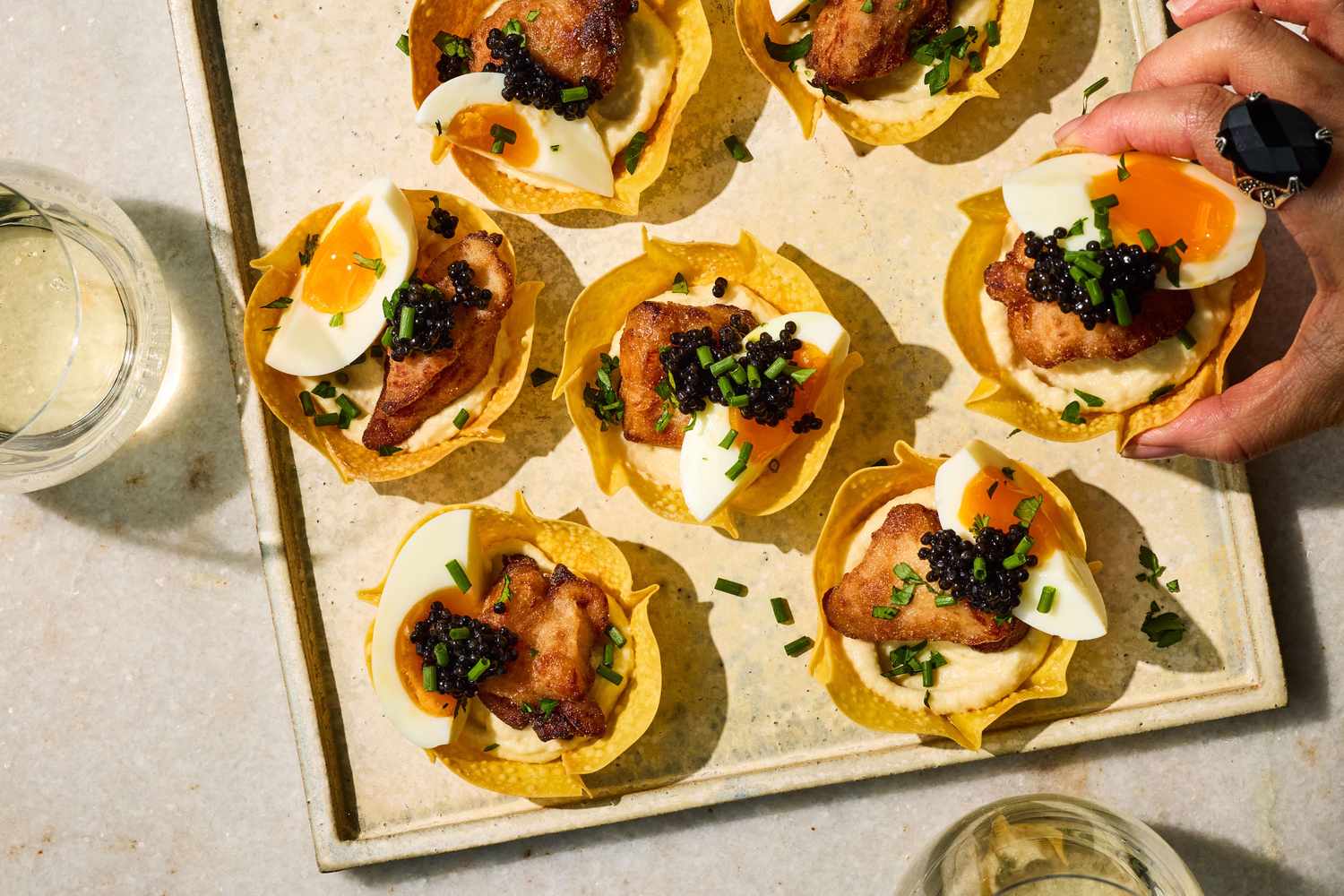
The Great Appetizer Illusion: More Than Just Nibblers on New Year’s Eve
And so, another year ends, ushering in the predictable deluge of articles, listicles, and aspirational social media posts all screaming about one thing: appetizers. Because, let’s be real, New Year’s Eve isn’t really about profound reflection or setting meaningful intentions, is it? But it’s certainly about a seemingly endless parade of tiny, often-fried, always-photogenic bites that supposedly ‘keep the party going.’ They call them ‘apps’ for short, a term that ironically reflects their superficial, almost digital, nature in our increasingly detached celebrations.
But what if this pervasive culture of the New Year’s Eve appetizer is actually a giant smoke screen? Because, you know, it’s rarely just about the food. It’s a meticulously crafted illusion, a collective societal distraction from the awkward silence of introspection that inevitably descends as one year bleeds into the next. And to truly deconstruct this phenomenon, we’ve got to dig deeper than just a recipe for pigs in a blanket.
The Historical Disappearing Act: When Did We Stop Eating Real Meals?
Because if you think about it, there was a time, not so long ago, when a celebration, even a New Year’s celebration, involved a proper meal. A sit-down affair. A main course. People actually gathered around a table with plates and cutlery, conversing, perhaps even arguing, but certainly not just ‘grazing.’ But somewhere along the line, the substantial gave way to the superficial. The meal fragmented.
And this wasn’t some organic evolution of taste, not really. It was a gradual erosion, spurred by a confluence of social and commercial pressures. The mid-20th century saw the rise of convenience foods, the democratization of entertaining, and a subtle shift in what it meant to be a ‘good host.’ Suddenly, providing a dazzling array of easily consumable finger foods became the benchmark. But, you know, it’s almost like we traded substance for perceived effort, didn’t we?
Because the main course demands attention, a commitment from guests to sit, to engage. Appetizers? They encourage movement, mingling, a transient interaction that mirrors our modern, fragmented social lives. They’re perfect for the era of short attention spans. But that doesn’t make them inherently better; it just makes them more convenient for our collective neuroses.
Psychology of the Nibble: The Illusion of Abundance and Control
And let’s get into the psychology of it all, because that’s where the real juice is. The ’12 bites,’ ’15 apps,’ ’24 party-perfect’ rhetoric from media outlets isn’t just about giving options. It’s about instilling a false sense of abundance, a notion that ‘more choices’ equates to ‘better party.’ But frequently, it just means more waste, more stress for the host, and a strange, almost manic energy among guests as they flit from one mini-quiche to another.
Because offering a multitude of small dishes gives the host a sense of control without the heavy lifting of a perfectly executed main meal. It minimizes potential criticism. If one dish isn’t a hit, who cares? There are eleven more. But this also creates an environment of perpetual dissatisfaction, a subconscious chase for the ‘perfect bite’ that’s never quite found. And, you know, it’s a bit like scrolling through social media, isn’t it? Endless options, fleeting satisfaction.
And this extends to the guests too. The freedom to ‘graze’ allows individuals to avoid the commitment of a shared meal experience. You can pick, choose, retreat. It’s entertaining on your own terms, a self-curated culinary journey within a collective event. But does this foster genuine connection? Or does it merely facilitate a polite, superficial engagement, where the food becomes the focal point, rather than the people?
The Mercenary Media Machine: Capitalizing on Our Anxieties
But we can’t talk about the appetizer obsession without talking about who benefits. Because it’s a multi-billion dollar industry, folks. Food publications, glossy magazines, celebrity chefs, even your local supermarket – they’re all complicit in pushing this narrative. They don’t just *report* on the trend; they *create* it, year after year, with relentless enthusiasm.
And why wouldn’t they? Recipes for appetizers are quick hits. They’re visually appealing. They promise ‘easy entertaining’ and ‘party success’ with minimal effort, playing directly into our desire for perfection without the associated struggle. But every ingredient bought, every specialized gadget, every last-minute trip to the gourmet store, lines someone’s pockets. And, you know, your New Year’s anxieties are big business.
Because this isn’t about feeding people efficiently or deliciously. This is about a commercial ecosystem thriving on the pressure to perform, to impress, to create an ‘Instagrammable’ celebration. The content isn’t truly about helping you cook; it’s about selling you an idealized lifestyle, one meticulously curated bite at a time. And frankly, it’s a bit exhausting, isn’t it?
The Folly of Frenetic Feasting: Environmental and Health Reckonings
And let’s not sidestep the very real implications beyond the social sphere. Because all these ‘party-perfect’ appetizers often come with a hidden cost. Think about the sheer volume of single-use items, the plastic toothpicks, the mini-dishes, the disposable platters. The food waste alone from a single New Year’s Eve bash can be staggering. But, you know, we just sort of gloss over that, don’t we?
Because the emphasis on variety and abundance inherently encourages overconsumption and, tragically, over-waste. Ingredients are often bought in excess, small portions mean many dishes, and the leftovers from dozens of tiny items are harder to consolidate and reuse than those from a single, cohesive meal. And the environmental footprint of this frenetic feasting is far from negligible. But who’s counting when the bubbly’s flowing?
And let’s be honest about the health aspect. While ‘small bites’ *sound* light, they’re frequently calorie-dense, often fried, and loaded with refined ingredients. The illusion of control over portion sizes is shattered when you’re indiscriminately grazing for hours. It’s a dietary free-for-all, masquerading as sophisticated snacking. But it’s still just endless eating, isn’t it?
The Future of the Finger Food Empire: A Crumbling Reign?
But will this appetizer tyranny last forever? And, you know, one has to wonder. As people increasingly crave authenticity, sustainability, and genuine connection, will the pendulum swing back? Will we tire of the performative charade and return to the simple elegance of a shared meal?
Because there are whispers of a counter-culture, a rejection of the superficial. Some hosts are opting for quality over quantity, a single, perfectly executed dish that fosters conversation rather than endless plate-juggling. Others are embracing potlucks, sharing the burden and celebrating community. But the grip of the appetizer industrial complex is strong, make no mistake.
And yet, one can hope. Perhaps a future New Year’s Eve will see fewer frantic searches for ’30-minute crowd-pleasers’ and more focus on the crowd itself. Perhaps the focus will shift from what we consume to how we connect. But until then, we’re likely stuck in this endless cycle of small bites, aren’t we? And that’s the real conundrum of our modern celebrations. Because it’s not about the food; it’s about what we’re desperately trying not to face.