1. The Sound of the Barrel Being Scraped
Let’s all take a moment of silence. Not for a fallen character or a cancelled show, but for the last flickering ember of originality in the cold, dark halls of a CBS boardroom. It has been extinguished. In its place, we get ‘NCIS: Origins,’ a show that nobody asked for, exploring the backstory of a character from a spin-off that most people vaguely remember was on television. This isn’t just scraping the bottom of the barrel; this is taking a sandblaster to the barrel’s rusted-out remains and trying to sell the dust as artisanal storytelling.
The announcement that Shea Buckner will be playing a young Dwayne Pride, the character made famous by the inimitable Scott Bakula in *NCIS: New Orleans*, was met with the kind of thunderous applause you’d typically hear in a library. Or a morgue. The decision to greenlight this prequel feels less like a bold creative choice and more like a corporate mandate generated by an algorithm that identified “NCIS” and “nostalgia” as profitable keywords, spat out a script, and then promptly short-circuited. They are strip-mining our memories for profit, and we are just letting it happen. Why?
2. The Sacrificial Lamb: Who is Shea Buckner?
No offense to Shea Buckner. He seems like a perfectly capable actor. He was in “Only Murders in the Building,” which is more than I can say for most of the people I know. But he has been handed a poisoned chalice, a role that sets him up for nothing but failure and endless, soul-crushing comparisons to a beloved genre icon. He’s the guy they hired to play a young Harrison Ford in that Han Solo movie. Remember him? Exactly.
Buckner is now tasked with embodying the “essence” of a young Dwayne Pride, which presumably means he has to master a specific brand of folksy charm mixed with steely determination while looking vaguely like Scott Bakula might have in 1991 if you squint really, really hard. It’s an impossible job. He’s not just an actor; he’s a placeholder, a human special effect meant to trick our brains into feeling a flicker of the affection we had for the original. A ghost. Good luck, kid. You’re gonna need it.
The Unwinnable Game
Every line he delivers will be scrutinized, every mannerism compared. If he imitates Bakula too closely, he’s a cheap impersonator. If he tries to make the character his own, he’s disrespecting the source material. It’s a classic Catch-22, a no-win scenario designed by executives who think that a character is just a collection of traits on a spreadsheet rather than the lightning-in-a-bottle alchemy of an actor and a script meeting at the perfect moment. It’s a tragedy, really.
3. The Ghost in the Machine: Scott Bakula’s Shadow
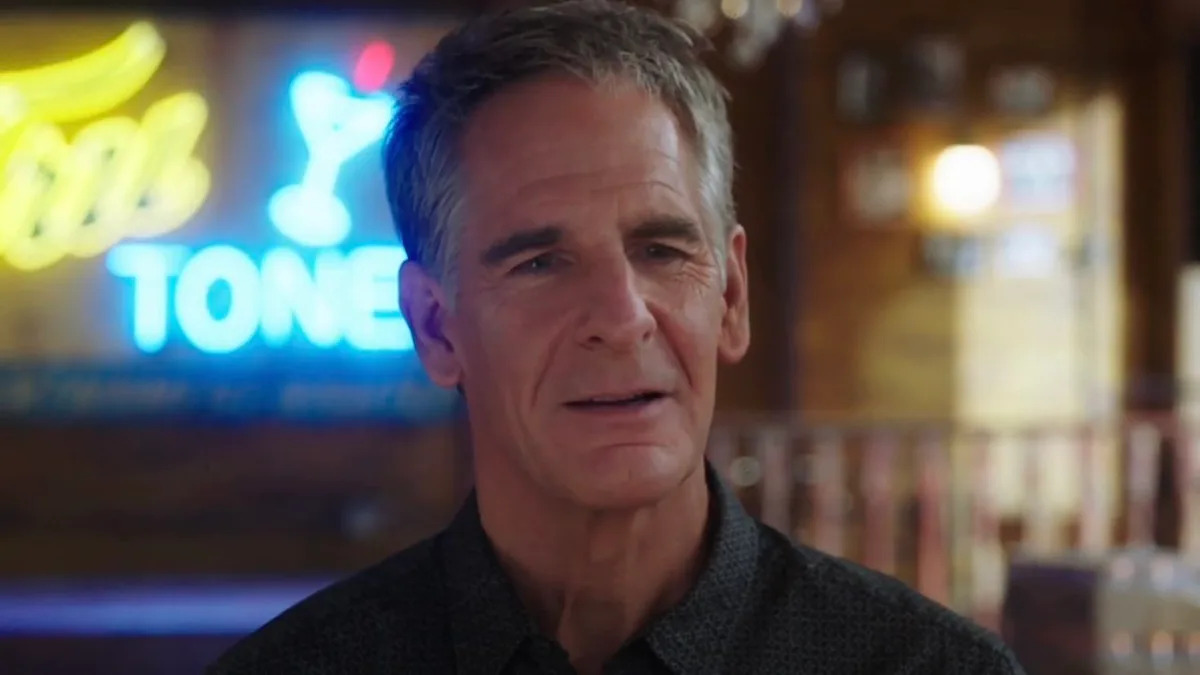
You cannot talk about Dwayne Pride without talking about Scott Bakula. The man is a legend. He’s Sam Beckett from *Quantum Leap*. He’s Captain Archer from *Star Trek: Enterprise*. He brought a warmth and gravitas to his roles that made you feel like you knew the guy. His Dwayne Pride was the heart of *NCIS: New Orleans*, a comforting presence in a world of procedural chaos.
So now we have a prequel that exists entirely in his shadow. It’s a monument to his performance, but one he isn’t even in. It’s like throwing a birthday party for someone who’s not invited. Every scene will carry the phantom weight of Bakula’s absence, and the showrunners know it. That’s the entire point. They are selling you the memory of Scott Bakula, hoping you won’t notice the genuine article is missing. It’s a cynical, ghoulish business model, and frankly, it’s working.
4. The NCIS Perpetual Motion Machine
The NCIS franchise is less a television series and more a self-sustaining ecosystem of militaristic crime-solving. It’s a hydra. You cancel one, two more pop up in its place: *NCIS: Los Angeles*, *NCIS: Hawai’i*, *NCIS: Sydney*. Now *NCIS: Origins*. Where does it end? Are we prepared for *NCIS: Des Moines*? Or *NCIS: International Space Station*? They will continue to churn these out until the sun consumes the Earth, because they are safe. They are predictable. They are the beige wallpaper of television.
This isn’t entertainment; it’s content manufacturing. Each show follows the same rigid formula: a bizarrely specific crime, a team of quirky but brilliant agents, a red herring, a dramatic reveal in an interrogation room, and a final scene where the team shares a lighthearted beer. It’s a paint-by-numbers approach to storytelling that has been so successful it has effectively lobotomized a huge chunk of the viewing public. People don’t watch NCIS because it’s good; they watch it because it’s *on*. It’s familiar. It’s comfortable. It’s the television equivalent of a warm bowl of oatmeal, and *Origins* is just them promising a slightly different, younger-looking bowl of the exact same oatmeal.
5. De-Aging vs. Recasting: A Sophie’s Choice of Creative Cowardice
Hollywood is currently having a very public, very awkward midlife crisis, and it’s playing out in its obsession with the past. The two main symptoms are digital de-aging and recasting, and both are terrifying in their own unique ways. On one hand, you have the uncanny valley horror of a de-aged Harrison Ford or Robert De Niro, a waxy, dead-eyed puppet mouthing words while its digital skin stretches unnaturally. Nightmare fuel.
On the other hand, you have the *NCIS: Origins* approach: just hire a new, younger model. This avoids the creepy CGI, but it introduces a new problem—a fundamental disconnect. It’s not the same person. It’s an actor *pretending* to be a younger version of another actor’s character. Both paths are an admission of defeat. Both scream, “We have no new stories to tell, so we’re going to perform a clumsy digital or biological puppet show with your childhood heroes.” It is a bleak choice between two different flavors of creative bankruptcy.
6. What Does ‘Origins’ Even Mean Anymore?
The origin story used to be something special. *Batman Begins*. *Casino Royale*. These were films that re-contextualized a character, that gave them depth and meaning. Now, “Origins” is just a marketing buzzword slapped onto a project to signal that it requires no prior knowledge and will feature a lot of clumsy foreshadowing. We’ll get to see the “first time” Pride met Gibbs, or the “first time” he wore his signature jacket, or the “first time” he developed a taste for a specific brand of coffee. It is the lowest form of fan service.
It’s not about telling a compelling story of a young man’s journey. It’s about filling in blanks that nobody cared about. It’s narrative caulking, plugging imaginary holes in a story to create a seamless, uninteresting product. We don’t need to see how the sausage is made, especially when we already know the sausage is just okay. The mystery is almost always more interesting than the explanation, a lesson the content-churning overlords have tragically failed to learn.
7. The ‘Fed Five’: Assembling a Team of Tropes
The news also mentions that this casting will help “round out the Fed Five,” which is the most sterile, corporate-speak name for a team of protagonists I have ever heard. You can already picture them. There’s the young, hot-headed maverick (Pride, probably). The by-the-book stick-in-the-mud who will eventually learn to loosen up. The quirky tech genius who can hack anything. The tough-as-nails female agent who has to prove herself in a man’s world. And the wise, grizzled mentor figure. Did I miss anything?
It’s a pre-packaged ensemble, an Ikea flat-pack of character development. They’re not creating characters; they’re filling slots. This isn’t a team; it’s a focus-grouped collection of archetypes designed for maximum demographic appeal and minimum creative risk. They will have predictable conflicts and equally predictable resolutions, all while solving crimes in a way that is just plausible enough to not be considered fantasy. Yawn.
8. My Grim, Inevitable Prediction
Here’s how this plays out. *NCIS: Origins* will premiere to decent, but not spectacular, numbers, fueled by morbid curiosity and the residual goodwill of the franchise name. The critics will call it uninspired but harmless. The fans will be divided, with endless online wars erupting between those who think Buckner is a disgrace and those who think he’s “doing his best.” The show will chug along for two, maybe three seasons, never quite becoming a breakout hit but doing just well enough to justify its existence. Then, one quiet Tuesday, CBS will announce its cancellation, and it will vanish from the cultural consciousness as if it never existed. And a few months later, they’ll announce *NCIS: Mars*, and the whole godforsaken cycle will begin anew. It is the flat circle of television mediocrity.
9. So, Should You Even Bother?
Look, are you a person who finds the hum of a refrigerator deeply compelling? Do you consider unbuttered toast to be a bit too spicy? Is your favorite color beige? If you answered yes to any of these questions, then my God, *NCIS: Origins* might just be the most thrilling television event of your lifetime. You should absolutely watch it.
For everyone else, it’s a hard pass. It represents everything wrong with modern entertainment: risk-averse, nostalgia-baiting, creatively bankrupt, and utterly soulless. It’s a product, not a story. A time-waster, not an experience. There is so much good television out there, so many original voices and daring narratives. Do yourself a favor and watch one of those instead. Let this empty echo of a once-decent show fade into the obscurity it so richly deserves. Don’t encourage them.