A Journey on Foot: Monks’ Walk for Peace Reaches Charlotte
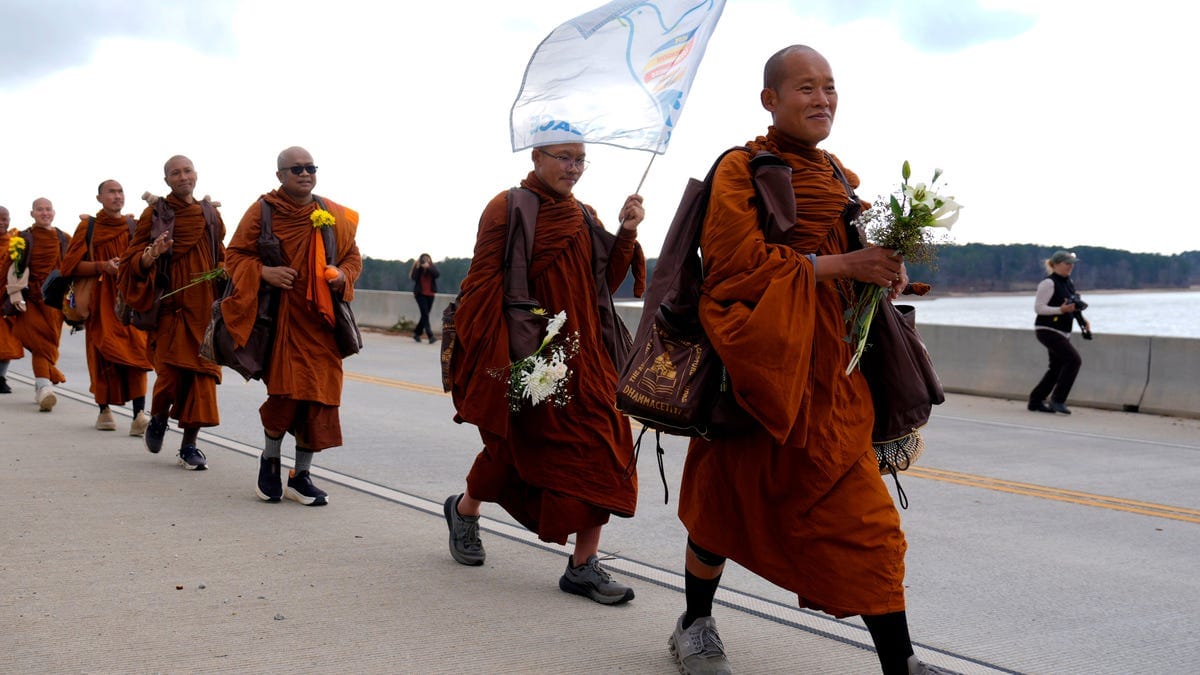
In a world defined by fast-paced communication and constant motion, a group of nearly two dozen Buddhist monks embarked on a journey that deliberately defied the modern urge for speed. Their mission was simple, yet profound: a “Walk for Peace” spanning 2,300 miles across the United States. This arduous pilgrimage, which began in Texas and culminated in Washington, D.C., was a testament to the power of deliberate action and unwavering commitment to a cause larger than individual comfort.
The journey, undertaken by monks primarily associated with the Huong Pagoda, was not merely a physical challenge; it was a public act of meditation and resilience. The monks’ presence, clad in traditional robes and moving slowly along American highways, served as a living embodiment of the principles they aimed to share: mindfulness, compassion, and the pursuit of internal and external peace.
The physical undertaking itself was significant. A 2,300-mile walk demands physical and mental endurance. For 120 days, the monks maintained a steady pace, traversing diverse landscapes and weather conditions. The public engagement along the route transformed the walk from a private spiritual exercise into a communal event, drawing attention to a message of unity and nonviolence.
The Significance of the Walk: From Texas to Washington, D.C.
The route chosen for the Walk for Peace was carefully planned to symbolize a journey from the heartland of America to its political center. Starting in Texas, the monks aimed to conclude their journey at the White House in Washington, D.C., creating a powerful visual metaphor of carrying the message of peace directly to the nation’s capital.
The walk captured the public’s imagination, not just for its physical difficulty, but for the stark contrast it presented against the backdrop of contemporary American life. In a society often grappling with polarization and conflict, the sight of monks walking for peace offered a moment of quiet reflection and hope. Their journey reminded many that change, like a long walk, requires patience and perseverance.
The monks’ journey highlights a deep philosophical concept within many Buddhist traditions: that peace must be cultivated through personal practice and then extended outward to the world. The act of walking itself becomes a form of meditation, a deliberate and mindful practice of presence and non-attachment. By engaging in this practice publicly, the monks invited others to consider the same principles.
The Role of Walking Meditation (Kinhin)
While the goal of the journey was external (peace for the world), the method was internal. The practice of walking meditation, or *Kinhin*, is central to many Buddhist traditions. It involves bringing full attention to the physical act of walking, synchronizing breath and movement. This practice helps to stabilize the mind and cultivate mindfulness, even amidst external distractions or discomfort.
During the 2,300-mile walk, each step taken by the monks was a form of *Kinhin*. This transforms a simple act into a spiritual discipline. The monks carried this practice along busy highways and through small towns, demonstrating how mindfulness can be integrated into everyday life, regardless of environment.
The choice to walk rather than use modern transportation reinforces the idea that the journey itself holds as much spiritual significance as the destination. It is through the physical effort and sustained practice of walking that inner peace is found and projected outward. The endurance required for the 120-day trek reflects the long-term commitment needed to achieve lasting peace in society.
A Moment in Charlotte: The Midpoint and the Community Response
The Walk for Peace garnered widespread attention as it progressed across the country, with communities along the route offering support and hospitality. One significant milestone was the arrival in Charlotte, North Carolina, which occurred roughly halfway through the 120-day journey. The monks reached Charlotte on Wednesday, January 14, marking a key point in their pilgrimage.
The reception in Charlotte underscored the public’s fascination with the journey. News outlets reported on the specific route and timing, allowing local residents to witness the procession. The monks’ arrival provided an opportunity for the community to engage directly with the message of peace and to offer support to the weary travelers.
The monks’ decision to pass through major cities like Charlotte demonstrated their commitment to engaging with diverse communities across the U.S. This engagement was essential for amplifying their message. The act of walking through these urban centers brought a quiet, contemplative presence to areas often characterized by high-speed movement and daily stress.
Aloka the Peace Dog: A Member of the Pilgrimage
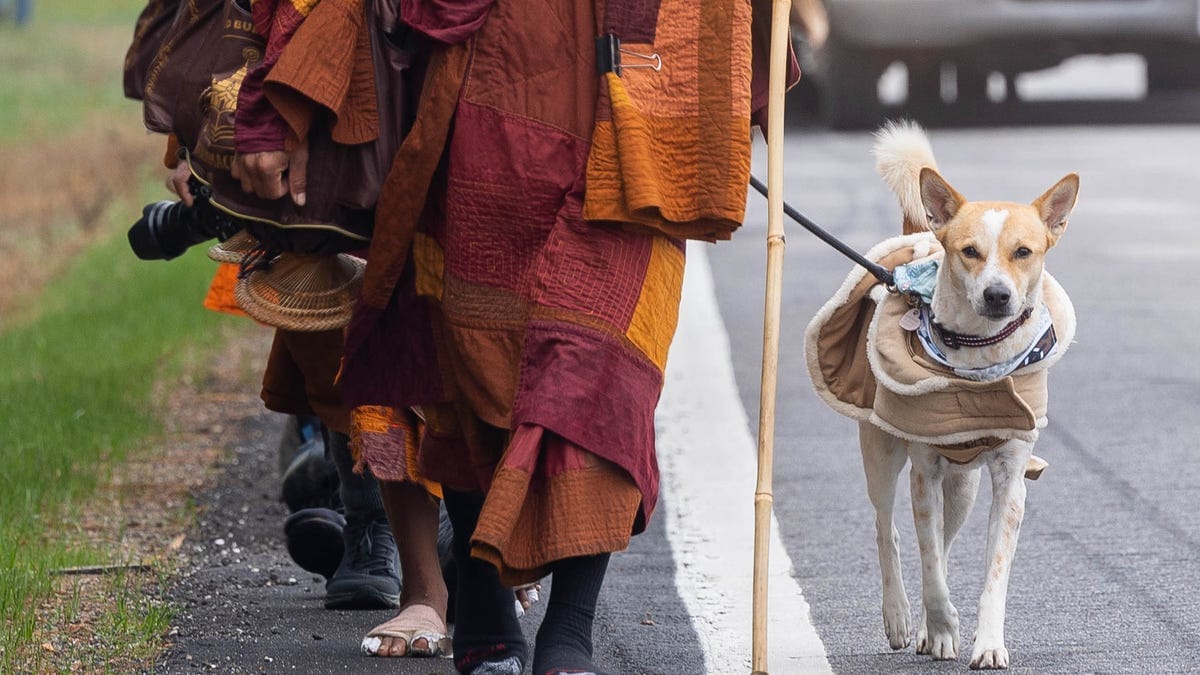
Adding a unique human element to the journey was Aloka, a dog who accompanied the monks. Aloka, affectionately known as the “Peace Dog,” became a symbol of loyalty and companionship throughout the challenging pilgrimage. The presence of an animal companion highlighted the universality of compassion and the interconnectedness of all living beings, a central tenet of Buddhism.
Aloka’s journey, however, faced an obstacle. On Monday, January 12, just before the monks reached Charlotte, Aloka underwent surgery to repair an old injury. The surgery forced Aloka to pause his participation in the walk temporarily. The community’s concern for Aloka and updates on his recovery became part of the larger narrative, demonstrating the emotional investment people had in the group’s journey.
The incident with Aloka underscores the practical challenges and unexpected setbacks that occur during a long-distance walk. It also served to humanize the monks, showing their care and compassion not only for people but for the animals in their care. The focus on Aloka highlighted the idea that all sentient beings are deserving of care and kindness.
The Broader Impact: Peace Walks and Social Change
The monks’ walk follows a long tradition of peace marches and pilgrimages throughout history. From Mahatma Gandhi’s Salt March to Martin Luther King Jr.’s march from Selma to Montgomery, walking has served as a powerful tool for social and political change. The physical act of marching demonstrates determination and sacrifice, creating a visual spectacle that forces public and media attention.
While the monks’ walk was fundamentally spiritual, its impact was distinctly social. By moving slowly through the American landscape, they disrupted the ordinary flow of life and provided a moment for reflection. Their message of peace resonated with individuals from diverse backgrounds, offering a counter-narrative to the conflicts that often dominate news cycles.
The journey’s end at the White House symbolized the monks’ desire to influence policy and promote peace at the highest levels. Their nonviolent approach, emphasizing mindfulness and compassion, contrasted sharply with traditional forms of political protest, offering a different path forward for addressing societal challenges.
Sustaining the Message: Beyond the Walk
The 120-day pilgrimage, while significant in length, is ultimately just one part of a continuous commitment to peace. The monks’ journey serves as a powerful reminder that peace is not an abstract concept or a political goal to be achieved quickly. It is, instead, a daily practice of mindfulness, kindness, and resilience.
The walk in itself may have concluded, but its message endures through the communities visited and the individuals touched by the monks’ dedication. The journey encourages people to consider how they can incorporate principles of peace and compassion into their own lives, even without embarking on a 2,300-mile walk of their own.
The monks’ resilience in completing the demanding journey offers inspiration for individuals facing personal challenges. The sustained effort over 120 days demonstrates that long-term goals are achievable through consistent, mindful action. The Walk for Peace ultimately served as a living example of a spiritual path made manifest in the physical world.
As one observer reflected, “Peace isn’t something you can simply talk about; it’s something you have to walk toward, step by step, for as long as it takes.”