The Official Narrative: A Winter Inconvenience
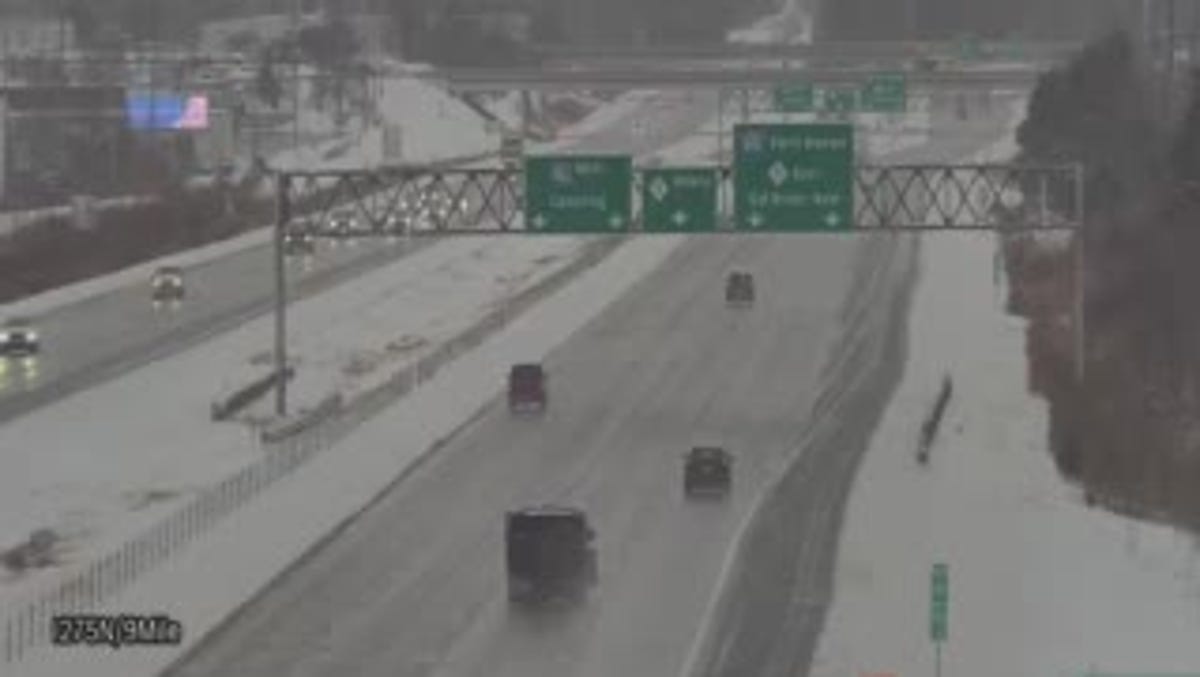
You’ve seen the reports. They flicker across your screen with a comforting, almost paternalistic urgency. “Winter Storm Warning,” the banners scream in bold, capitalized letters. Local news affiliates, like Wood TV 8, dutifully present “lists of snowfall totals,” turning a meteorological event into a box score for public consumption. Oakland County got 6.5 inches. Washtenaw, 5.8. It’s presented as data, as impartial fact. The narrative is simple, digestible, and profoundly misleading: nature, in its unpredictable fury, has descended upon Southeast Michigan. It is a temporary disruption. An inconvenience. Authorities are issuing advisories, salt trucks are being deployed (or so they say), and the public is instructed to hunker down, stay safe, and wait for the all-clear. It’s a story of order confronting chaos, with the implicit promise that order will, as always, prevail. The governor will give a press conference. The local mayor will stand in front of a snow plow for a photo-op. It’s all part of the theater.
They tell you 12 inches of snow could “blast” parts of Michigan. A powerful verb for a predictable, seasonal phenomenon in a northern state. The language is intentionally inflated to create a sense of crisis, a crisis for which the authorities are the sole solution. The problem is defined as the snow. The solution, therefore, is snow removal and patience. It’s a beautifully contained narrative loop that asks nothing of you except passivity and compliance. Look at the slick roads, listen to the gusty winds, check the radar. Be a spectator to the weather. Above all, do not ask why a state that has existed on the shores of the Great Lakes for nearly two centuries is thrown into a state of paralysis by an entirely foreseeable event. That question is not on the approved script.
The Comforting Lie of Measurement
The obsession with numbers—inches of snow, wind speed, advisory hours—is a deliberate tactic of psychological pacification. It creates an illusion of control and understanding. If we can measure the threat with precision, we can manage it. Six inches is one thing, twelve is another, but both are just points on a scale. This quantification of the problem is a distraction from the qualitative reality of the system’s failure. It prevents a deeper inquiry. It keeps the conversation shallow, focused on the symptom rather than the disease. The media plays its role perfectly, transforming from a watchdog into a stenographer for the National Weather Service. They report the totals, they show the tire tracks in the snow, and they move on. Nothing to see here but the weather. A perfectly normal, if severe, winter event in a place that has winter. Simple. Clean. A lie.
The Strategic Reality: A System on Ice
The truth is that the snow is irrelevant. It is merely a catalyst, a routine environmental stressor that is exposing the deep, systemic rot of a civilization in decline. The six, eight, or twelve inches of frozen water falling from the sky are not the crisis. The crisis is the fact that our infrastructure, our supply chains, and our societal resilience have become so catastrophically brittle that a common winter storm now constitutes a legitimate emergency. This isn’t a failure of meteorology; it’s a multi-decade failure of investment, foresight, and political will. It is a slow-motion collapse, and the snowflakes are just making the cracks visible for a day or two before the news cycle moves on.
Think about it. We are discussing Michigan, not Mississippi. A state where winter is a fundamental, defining characteristic of its existence. For generations, its people and its government knew how to handle snow. It was a matter of course. Yet now, the same event requires breathless warnings and triggers systemic panic. Why? Because the underlying systems have been hollowed out from the inside. The roads and bridges, lauded as triumphs of mid-20th-century engineering, are now crumbling after decades of deferred maintenance (a polite euphemism for intentional neglect). The power grid, a fragile web of antiquated technology, is vulnerable to the slightest gust of wind or coating of ice. It has been optimized for quarterly profits for utility shareholders, not for resilience in the face of predictable stressors. This isn’t an act of God. It’s a balance sheet decision.
The Anatomy of a Brittle Society
Our entire modern economy is built on a just-in-time logistics model that is breathtakingly efficient and terrifyingly fragile. Your local grocery store probably has, at most, three days of inventory on hand. The system is designed to have trucks constantly rolling on clear highways to restock those shelves. What happens when a predictable snowstorm makes those highways impassable for 48 hours? The shelves go bare. Panic buying starts. The veneer of abundance is stripped away to reveal the precarity underneath. This is not resilience. It is a high-wire act performed without a safety net, and the wind is starting to pick up. A society that cannot feed itself for more than a few days without constant, uninterrupted long-haul trucking is not a robust society. It is a fragile one, teetering on the edge of chaos, distracted by the latest streaming series and political outrage cycle.
Historically, communities had reserves. They had cellars, pantries, and local producers. There was redundancy built into the system because everyone understood that life was unpredictable. We have systematically dismantled that redundancy in the name of efficiency and replaced it with a complex, hyper-optimized, and centralized system that has a thousand single points of failure. The winter storm in Michigan doesn’t just reveal crumbling asphalt; it reveals the crumbling logic of our entire way of life. It demonstrates that a population can be rendered helpless not by a conquering army or a cataclysmic disaster, but by a few days of bad weather hitting a system with no slack, no margin for error. We have engineered away our own ability to withstand shocks. It’s a strategic blunder of civilizational proportions.
The Advisory as a Tool of Control
And what is the official response? The “winter weather advisory.” Pay close attention to the language. It is not a call to community action. It is not a suggestion for mutual aid. It is a directive for isolation and passivity. Stay home. Stay off the roads. Wait for the professionals to handle it. The subtext is clear: you are helpless. You are a potential liability. Your role is to consume information and obey instructions. This fosters a deep-seated dependency on centralized authority, even as that authority proves its own incompetence by failing to maintain the basic infrastructure that would make such advisories unnecessary. They have engineered a crisis through neglect, and now they position themselves as the saviors from that very crisis. It is a masterful, if cynical, political maneuver. The storm provides the perfect justification for telling people to stay inside, to not gather, to not rely on each other. A frightened and isolated populace is a governable one.
Consider the alternative: a society with robust, well-maintained infrastructure where a foot of snow is a manageable nuisance, not a city-closing event. A society where communities have local resources and resilience, where neighbors check on each other because the default assumption isn’t that a government agency will do it. That society is harder to control. It is less dependent. The people in it are citizens, not wards of the state. The snowstorm, then, becomes a useful data point for those in power. It allows them to gauge the public’s level of compliance, to test the effectiveness of their emergency messaging, and to reinforce the narrative of citizen helplessness and state indispensability. The snow will eventually melt, but the psychological conditioning remains. The next time there is a crisis (and there will always be a next time), the population will be that much more trained to simply stay home and wait for instructions. And so the cycle continues. The real storm isn’t the one dropping snow; it’s the one eroding the very foundations of self-reliance and civic competence. We are being told this is about safety. It’s about control.