The Perpetual Blackout Blues: Michigan’s Self-Inflicted Wounds
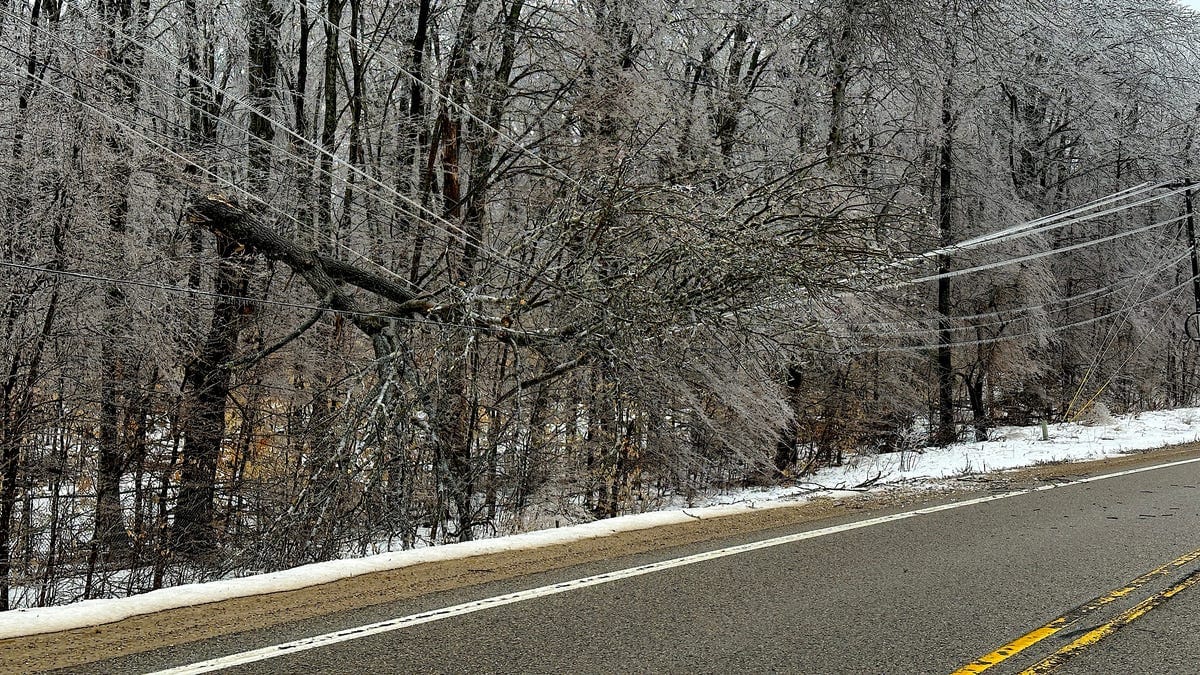
Here we go again, folks. And because the calendar somehow flipped to winter, a few snowflakes and a stiff breeze are enough to send tens of thousands of Michiganders into the dark ages. But don’t fall for the ‘unprecedented weather event’ hogwash, because this ain’t Mother Nature’s fault alone. Not by a long shot. This is a systemic, predictable, and frankly, pathetic failure brought to you by utility companies like Consumers Energy and DTE, who seem perfectly content with a third-world power grid while raking in first-world profits. Yet, we’re all just supposed to shrug and accept it, like it’s some act of God instead of decades of corporate nickel-and-diming and regulatory back-scratching.
Because let’s be real, tracking power outages like some grim sporting event is an insult to the intelligence of any sane individual paying through the nose for this ‘service.’ We’re told to ‘know what to do’ when the lights go out, as if preparedness for perpetual inconvenience is the consumer’s primary responsibility, not the utility’s to deliver reliable power in the first place. But what happens is they trot out the same tired lines about ‘crews working tirelessly’ to restore power, which, while true for the boots on the ground, conveniently ignores the fact that these crews are constantly playing catch-up because the infrastructure is utterly, demonstrably inadequate. And we just keep letting them get away with it.
The Illusion of ‘Storm-Related’: A Convenient Distraction
And let’s dissect this ‘storm-related’ excuse for a hot minute, shall we? Because it’s a brilliant piece of misdirection, a semantic sleight of hand designed to absolve the utility giants of accountability. A winter storm with damaging winds, rain, and snow moving across Michigan causing power outages? Shocking! Absolutely mind-blowing stuff, considering Michigan is literally built for such weather. Yet, every single year, sometimes multiple times a year, the same song and dance plays out: ‘Oh, the wind was just too strong!’ or ‘The snow was just too heavy!’ But if your infrastructure can’t handle a typical Michigan winter, then your infrastructure is the problem, not the winter. Period. Because other regions, hell, even other countries, manage to keep the lights on during far worse. And so, the implication that Michigan is somehow uniquely susceptible to meteorological phenomena that magically disable its grid is a flimsy excuse, a smokescreen for deep-seated issues that nobody with power seems willing to confront head-on.
Because when 30,000 customers are plunged into darkness *before* the worst of a storm even hits, that ain’t a storm problem, that’s a grid problem. That’s a ‘we waited too long to trim trees,’ a ‘we didn’t upgrade the lines when we should have,’ a ‘we prioritized shareholder dividends over actual grid resilience’ problem. And for the media to parrot these excuses without critically analyzing the context is just, well, it’s just another Tuesday in the grand pantomime of public relations. And so, consumers are left holding the bag, literally, sometimes for days, while corporate executives undoubtedly enjoy uninterrupted electricity in their lavish homes, probably sipping fine wine and wondering why these plebians can’t seem to cope without power. It truly is a kick in the teeth, year after year, yet we continue to allow it, hoping against hope that *this* time will be different. Spoiler alert: it won’t be.
A History of Neglect: The Rot Beneath the Surface
But this isn’t some fresh wound, folks. No, this is a chronic illness, a festering sore on Michigan’s collective consciousness that flares up with every gust of wind. Because the history of Michigan’s power grid is a cautionary tale of deferred maintenance and shortsighted investment. For decades, these utility companies have operated with a clear priority: profit over public service. And while they’ve consistently argued for, and usually received, rate hikes to ‘improve infrastructure,’ those improvements have often felt like putting a fresh coat of paint on a rotting deck. Because the underlying structure, the very bones of the system, are aged, brittle, and frankly, pathetic. And so, we continue to see infrastructure that dates back to the mid-20th century, lines that are exposed to every single whim of nature, and substations that haven’t seen a significant upgrade in eons. Yet, every single time, we’re told it’s just ‘bad luck’ or ‘unusual weather.’ It’s a load of malarkey, and we all know it.
And because the regulatory bodies tasked with overseeing these utilities often seem more like lapdogs than watchdogs, there’s been little real incentive for Consumers Energy or DTE to truly overhaul their systems. Why spend billions on undergrounding lines or implementing cutting-edge smart grid technology when you can just patch things up, blame the weather, and get another rate hike approved? But it’s a vicious cycle, a race to the bottom where the consumer always loses. Because every outage isn’t just an inconvenience; it’s lost wages for hourly workers, spoiled food for families, safety risks for the elderly and infirm, and a crushing blow to small businesses. And so, the real cost of this neglect isn’t just measured in restoration hours, but in the erosion of trust, the economic drain on communities, and the simple, undeniable fact that we are being fleeced for an unreliable, antique service. And for anyone to suggest otherwise is just plain delusional.
The Profit Motive vs. Public Good: A Zero-Sum Game
And let’s get down to brass tacks: this isn’t about altruism; it’s about avarice. Because the fundamental business model of a publicly traded utility company, even a regulated one, is designed to maximize shareholder value, not necessarily to provide the most robust, reliable service at the lowest possible cost. And so, when executives are paid exorbitant salaries and bonuses—think millions of dollars—while the average Michigander is left shivering in the dark, one has to question where the priorities truly lie. Because they’ll argue that these high salaries attract top talent, but what exactly is the ‘top talent’ delivering when the lights go out with such alarming regularity? It’s a cynical game, a shell game where the profits flow upwards, and the problems trickle down to the long-suffering consumer. And let’s not pretend otherwise. It’s an unsustainable model that puts corporate coffers ahead of public welfare, and it’s a rotten foundation for any essential service.
But the regulatory framework, designed ostensibly to protect consumers, often ends up enabling this dynamic. Because utility companies present their cases for rate increases, citing necessary investments, and the Michigan Public Service Commission (MPSC) often approves them, sometimes with minor adjustments. But is there true accountability for how that money is spent? Are there punitive measures when the promised improvements don’t materialize, or when outages become a predictable seasonal event? Rarely, if ever, with any real teeth. And so, it becomes a tacit agreement: ‘We’ll let you raise rates, you promise to do better, and then when you don’t, we’ll just go through the motions again.’ It’s a racket, pure and simple, and the ordinary folks of Michigan are paying the membership fees without getting the benefits. And so, the logical deconstruction reveals a system rigged against the very people it’s supposed to serve, a system where the public good is perpetually sacrificed at the altar of corporate profit.
Regulatory Lapses: Watchdogs or Lapdogs?
And speaking of regulation, or the lack thereof, it’s high time we called out the MPSC for what it often appears to be: a rubber stamp for utility demands. Because their stated mission is to ensure reliable service at reasonable rates, but if that’s the case, then they are failing spectacularly on the reliability front. For years, consumer advocates and ordinary citizens have voiced frustration, submitting countless complaints, detailing the chronic outages, the escalating rates, and the glacial pace of repairs. But what has been the tangible outcome? More promises, more rate hikes, and more lights out during the next storm. And so, one has to wonder if these bodies truly possess the teeth, or the will, to hold these powerful corporations to account. And what exactly is their leverage when companies like Consumers Energy and DTE are practically monopolies in their service areas? But it’s a setup designed for failure, where the entity meant to protect the public is routinely outmaneuvered or simply rolls over for the industry it’s supposed to police.
Because when you analyze the incentives, it’s clear. A utility company has massive lobbying power, deep pockets, and a revolving door with regulatory agencies. The average citizen, on the other hand, has a cold house and a spoiled fridge. And so, the balance of power is entirely skewed. When was the last time a utility executive faced serious consequences for a prolonged, widespread outage? When did a utility company suffer a significant financial penalty that truly made them rethink their approach to infrastructure investment? These are rhetorical questions, of course, because the answer is almost never. And so, without real accountability, without actual penalties that sting, these companies have no compelling reason to fundamentally change their ways. And the cycle of neglect, blame, and eventual (and temporary) restoration will continue, like a bad rerun we’re all forced to watch. It truly makes you wonder if anyone in authority is truly looking out for the common person, or if it’s all just a performance for the cameras. And because we don’t demand better, they don’t deliver better. Simple as that.
Impact on the Common Folk: Beyond the Flicker
And let’s not sugarcoat the real impact this constant state of unreliability has on everyday Michiganders. Because it’s far more than just flickering lights and resetting clocks. For the elderly, it’s a health and safety nightmare, especially in the bitter cold. Losing heat means a risk of hypothermia. Losing power means critical medical equipment might fail. For families, it’s spoiled groceries, which, in these economic times, is a devastating blow. It’s children missing school because there’s no internet for remote learning or no heat to get dressed. It’s parents missing work, losing income, because they can’t leave their kids in a freezing, dark house. And for small businesses, it’s a catastrophic loss of revenue, perishable inventory ruined, and customers driven away. But these aren’t just statistics; these are lives disrupted, livelihoods threatened, and a constant, underlying stress that permeates communities every time the wind picks up. And yet, the utilities issue a polite apology, perhaps a small credit, and then it’s business as usual. And so, the price of corporate negligence is borne by the most vulnerable, by the very people who have the least power to change the system. It’s a disgrace, plain and simple.
Because the societal trust erodes with every sustained outage. When people can’t rely on basic services that they pay handsomely for, it fosters cynicism and resentment towards institutions. And it’s not just about turning on a light switch; it’s about the underlying promise of a functioning society, a promise that feels increasingly broken in Michigan. But this isn’t just a Michigan problem; it’s a microcosm of a larger national issue where critical infrastructure, once the envy of the world, is crumbling due to underinvestment and a lack of foresight. And so, while we focus on the immediate crisis of a winter storm, the deeper rot of complacency and greed continues to eat away at the foundations of our communities. And the longer we ignore the structural flaws, the more severe the consequences will become, not just for power, but for everything that relies on a stable, modern infrastructure. And it begs the question, if we can’t get basic electricity right, what hope do we have for bigger, more complex challenges? Yet, the corporate spin machine keeps churning, and the cycle continues unabated.
The ‘Solutions’ Offered: Band-Aids on a Gaping Wound
And let’s talk about the ‘solutions’ Consumers Energy and DTE perpetually trot out, shall we? Because they often feel like band-aids on a gaping wound. ‘We’re trimming more trees!’ they exclaim, as if this hadn’t been an issue for fifty years. Yes, tree trimming is important, but it’s a maintenance task, not a transformative solution for an ancient grid. It’s like saying you’re fixing a leaky roof by putting a bucket under it; it addresses a symptom, not the root cause. And then there’s the ‘smart grid’ initiative, which sounds flashy and futuristic, but often amounts to digital meters and some automated switching, which while helpful, doesn’t fundamentally address the fragility of above-ground power lines in a state prone to heavy snow and high winds. But these are the talking points, the placating phrases designed to give the illusion of progress without the painful, expensive commitment of true overhaul. And so, we’re fed crumbs while they dine on steak, expected to be grateful for marginal improvements in a system that needs a complete cardiac bypass. And it’s insulting to anyone who actually pays attention. Because these aren’t solutions; they’re diversions.
Because the real solutions, the ones that would truly make a difference, are often deemed ‘too expensive’ or ‘too disruptive.’ Undergrounding power lines, for instance, a common practice in many other developed nations and even in certain areas of the U.S. that experience similar weather, is consistently pushed aside as economically unfeasible. But what’s the economic cost of repeated, widespread outages? What’s the cost of lost productivity, damaged goods, and shattered trust? But those costs are externalized, borne by the consumer, while the utility avoids the upfront investment. And so, the balance sheet looks better for the company in the short term, but the long-term societal cost is astronomical. And because this shortsighted view dominates, we remain stuck in a perpetual cycle of preventable failures. And for anyone to suggest that these are adequate solutions is just, frankly, missing the point entirely. These are stop-gap measures, designed to keep the status quo limping along, not to usher in a truly resilient, modern power grid. And until that changes, nothing truly changes. It’s a bitter pill to swallow, but it’s the unvarnished truth.
The Path Not Taken: A Vision of Real Resilience
And so, let’s ponder the path not taken, the vision of what a truly resilient power grid in Michigan *could* look like if corporate profits weren’t the sole driving force. Because it would involve massive, sustained investment in undergrounding critical lines, particularly in high-density areas and along vulnerable routes. It would embrace decentralized energy solutions, microgrids, and local renewable generation, creating a more robust, less centralized system that isn’t crippled by a single point of failure. It would demand cutting-edge predictive analytics and proactive maintenance, not reactive damage control. And it would require a regulatory framework with actual teeth, one that imposes severe penalties for sustained outages and holds executives personally accountable for systemic failures. But this isn’t some utopian fantasy; this is what other modern, developed regions strive for, and often achieve. And so, the fact that Michigan lags so far behind is not a matter of technical impossibility, but a stark illustration of a lack of political will and corporate accountability. But it’s a choice, a deliberate choice, to maintain the status quo, and the consequences are felt by every single resident with a power bill. And it’s a choice that needs to be fundamentally challenged, with righteous anger and a demand for genuine change. Because anything less is simply enabling the same old song and dance.
Because imagine a Michigan where a winter storm rolls through, and while inconveniences might arise, widespread, multi-day blackouts are a relic of the past. Imagine a grid that’s designed to withstand predictable weather events, not just crumble under them. And imagine utility companies that are genuinely incentivized to deliver top-tier service, not just to appease shareholders. But this isn’t rocket science; it’s basic engineering and sound public policy. And so, the current state of affairs isn’t an accident; it’s the direct result of a calculated decision to prioritize short-term financial gains over long-term societal benefit. And until that calculation fundamentally shifts, until the people of Michigan demand and receive a grid worthy of a 21st-century state, we will continue to endure the same predictable failures, the same corporate excuses, and the same chilling darkness. And the logical deconstructor in me sees this not as a problem to be solved with another press release, but as a crisis of governance and corporate ethics that demands a complete overhaul. And so, the future, unless radically re-engineered, promises more of the same. And that, my friends, is a truly depressing prospect.