The Reggie White Trap: Why Green Bay Just Set Micah Parsons Up For Failure
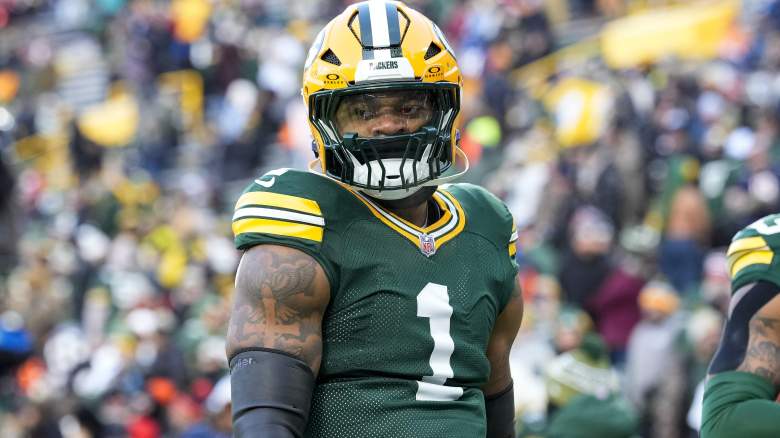
The moment Micah Parsons landed in Green Bay, the collective breath of the entire NFL media landscape, along with the perpetually high-anxiety Packers fanbase, started holding itself in anticipation of the inevitable. The comparison. The impossible, soul-crushing comparison to Reggie White. It began immediately, a nervous twitch in every analyst’s voice, a hesitant tap on every keyboard, and it’s absolutely terrifying because it’s a comparison that cannot be won. It’s not a celebration of Parsons’ talent; it’s a high-stakes, high-pressure, potentially catastrophic setup that ignores the historical context of what Reggie White actually represented, reducing him to a mere stat line to be surpassed.
Parsons, in all his brilliance, in all his explosive, game-wrecking glory, is walking into a situation where the standard isn’t just excellence; it’s divinity. Green Bay, for better or worse, views its legends through a different lens. They are not simply great players; they are cornerstones of a fragile, small-market dynasty, symbols of resilience against a league designed to swallow them whole. Reggie White isn’t just a former player for Green Bay; he’s the spiritual high priest of the defensive side of the ball, the ‘Minister of Defense’ who fundamentally changed the trajectory of the franchise during a critical era of transition and renewed success. To compare Parsons to him is to demand that Parsons not only replicate White’s production—a near-impossible feat in itself—but also fill his cultural shoes, which is, frankly, delusional.
The Impossibility of Matching History
Let’s talk about Reggie White for a minute. When he arrived in Green Bay, he wasn’t just another superstar acquisition; he was the first major free agent in NFL history. He single-handedly legitimized Green Bay as a viable destination for top talent. The financial implications, the psychological impact, the shift in power dynamics—it was monumental. White’s move wasn’t just about sacks; it was about changing the culture, making a statement that a small town in Wisconsin could compete with the major markets. Parsons’ trade, while significant, is simply a transaction in a league where stars move constantly. It doesn’t carry the same seismic weight. The narrative of Parsons being a ‘savior’ for the defensive line is dangerous because it ignores the unique historical circumstances surrounding White’s legacy. The pressure on Parsons is already immense; this comparison just turns the dial up to eleven, ensuring that anything less than perfection will be viewed as failure, not just a successful season.
The fans and media are already asking, ‘How many sacks will Micah Parsons finish with?’ The numbers game is what always gets us. It’s a simplistic way to evaluate complicated greatness. White’s time in Green Bay yielded ridiculous numbers, yes, but those numbers were part of a larger, systemic change he implemented. He set the tone for an entire defense. Parsons will be expected to do the same, but the comparisons will be based on raw numbers alone, ignoring the differing contexts of their respective teams. This isn’t just about individual performance; it’s about the psychological burden of trying to measure up to a ghost whose legend only grows larger with time. Parsons is great, but he isn’t White. He never will be. The fanbase needs to realize this immediately, or they’re going to eat themselves alive.
Parsons’ Dilemma: Dallas vs. Green Bay Pressure
Parsons’ time in Dallas was high-profile, but the pressure there is different. In Dallas, the pressure is about media scrutiny and a perpetual state of ‘is this finally the year?’ for the franchise. In Green Bay, the pressure is spiritual, almost religious. You’re expected to live up to the standard set by Lombardi, Starr, Favre, and Rodgers. Reggie White is in that pantheon. When Parsons makes a big play, the crowd will roar, but when he has a quiet game, the whisper will begin: ‘White wouldn’t have let that happen.’ It’s an unfair crosshairs to place him in, especially when considering the differing defensive philosophies and supporting casts. White played alongside other legends and had a defense built around his unique abilities. Parsons joins a team still finding its identity on defense, and the expectation that he alone will be the antidote to every problem is utterly unrealistic.
The fear isn’t that Parsons won’t be good; he will be. The fear is that he won’t be *good enough*. And in Green Bay, where ‘good enough’ is often measured against the impossible standard of previous eras, that’s a recipe for disaster. The alarm bells should be ringing for every Packers fan. The comparison to White immediately diminishes Parsons’ own identity. He’s no longer just Micah Parsons, the best pass rusher of his generation. He’s now ‘Micah Parsons, the guy who needs to be Reggie White.’ This identity crisis, coupled with the relentless media scrutiny and the high expectations from a fanbase desperate for a defensive savior, creates an environment ripe for disappointment. We need to be realistic. This isn’t a fairy tale; it’s a high-stakes gamble with a legend’s legacy hanging over it. The question isn’t whether Parsons can deliver; it’s whether Green Bay can handle the fact that he’s his own player, not a clone of the Minister of Defense.
The danger is real. The comparison is already taking root, fueled by a media desperate for a narrative and a fanbase desperate for a hero. Parsons will be judged not on his own merits but on how closely he resembles a mythic figure. This isn’t a position of honor; it’s a trap. And the trap just sprung. The next few months will be critical in determining if Parsons can survive the pressure cooker, or if he’ll become a glorified scapegoat when the inevitable comparisons prove too much to bear. The hype train is leaving the station, and it’s headed straight for a cliff. We are witnessing a potential high-profile breakdown of expectations right before our eyes, all because we couldn’t just let a player be great without comparing him to a ghost.