The Ultimate Irony: A Spaceballs Sequel Without Its Creator’s Presence
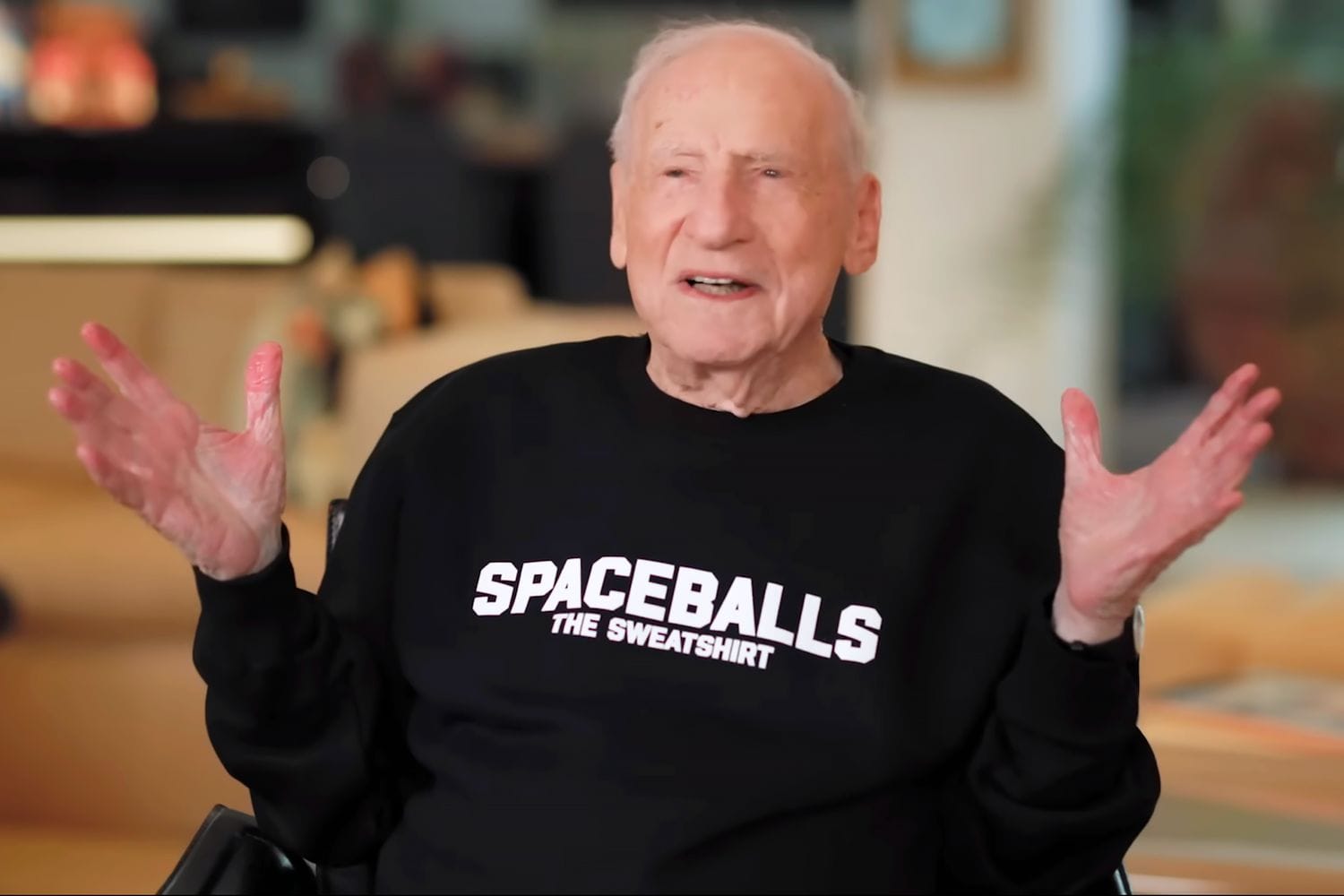
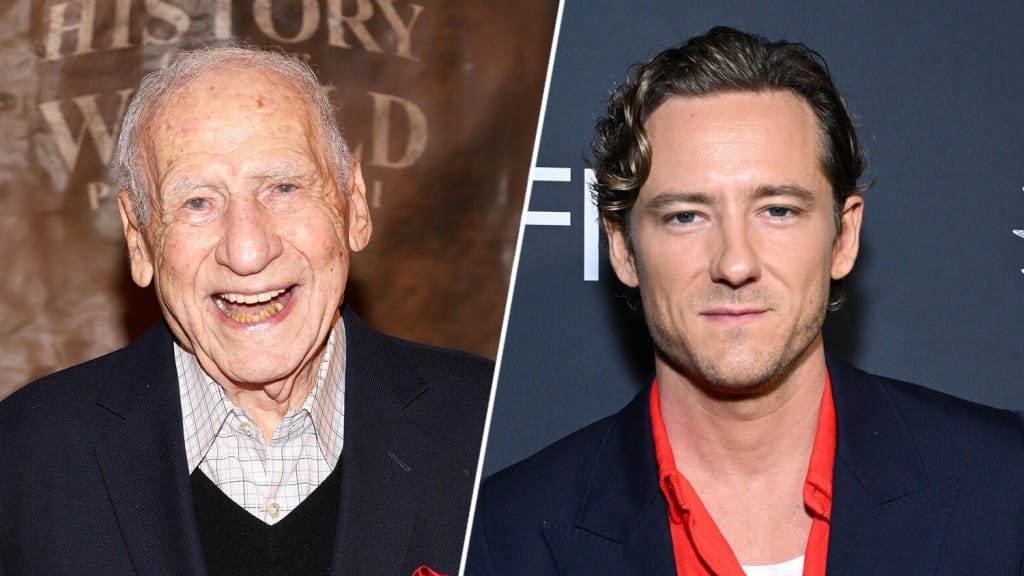
It’s the kind of high-concept, meta-satire that Mel Brooks himself would write, except this time, the joke is on his legacy. Lewis Pullman, the son of Bill Pullman and a star in the newly-wrapped *Spaceballs 2*, revealed to the world that not only has he never met Mel Brooks, but the legendary director didn’t bother to show up for the production wrap party for the sequel to his most beloved sci-fi parody. In a world saturated with reboots, legacy sequels, and cynical cash grabs, this single detail speaks volumes about the state of modern Hollywood. It’s not just a scheduling conflict; it’s a punchline.
Think about the implications for a second: The new generation of actors, tasked with resurrecting a beloved franchise based entirely on the specific comedic sensibilities of a nearly-100-year-old maestro, finally finishes the arduous process of filming and gathers for the celebratory conclusion of the project. The director, the co-writer, the creative genius behind the entire intellectual property that everyone is banking on, is a no-show. The man who invented this specific, highly idiosyncratic form of humor is apparently too busy counting his residuals or simply doesn’t care enough to acknowledge the physical manifestation of his legacy continuing in the hands of others. It’s less a sequel and more a high-stakes séance where the spirit of Mel Brooks is supposedly present, but the physical form is nowhere to be found.
The Cynical Calculus of Legacy Casting
Lewis Pullman, like many others in recent legacy sequels, is tasked with carrying the torch passed down from his father. This phenomenon, which we first saw with the likes of Jason Reitman taking on *Ghostbusters* and countless other examples of cinematic inheritance, is designed to generate nostalgia for the original audience while providing an easy, ready-made narrative structure for the sequel. By casting the offspring of the original stars, Hollywood attempts to manufacture emotional weight and continuity where none truly exists. It’s a calculated risk, betting that the audience’s pre-existing affection for the original actor and character will transfer automatically to their biological successor.
But here’s the rub: When the original creative force, the very fountainhead of the humor, isn’t present to guide the ship, the legacy casting feels less like a heartfelt homage and more like a desperate, almost ghoulish, attempt to recreate lightning in a bottle. Pullman’s quote about Mel Brooks’ spirit being there—but not the man himself—is a perfect encapsulation of this issue. Hollywood wants the *idea* of Mel Brooks, the brand recognition, and the residual affection for *Spaceballs*, but they don’t necessarily want the messy, potentially difficult, and high-risk creative collaboration required to actually make a new film in his distinctive style. They want the finished product, not the process. This specific type of corporate-driven art, which prioritizes marketability over originality, often results in a final product that is sterile, safe, and ultimately, humorless. The irony here is that Mel Brooks made a career out of lampooning this exact kind of filmmaking.
The Star Wars Shade: The Sequel’s Meta-Joke On Itself
Further compounding the delicious irony, Lewis Pullman recently “shaded” *Star Wars* during an interview on *The View*, using a direct quote from the original *Spaceballs* to do so. Pullman claimed he watched *Star Wars* for the first time *after* filming *Spaceballs*, and, channeling Lone Starr, asked, “Why did they remake *Spaceballs* without the jokes?” The quote, of course, is a direct call-out of the humorless nature of *Star Wars* in the context of the sequel’s (the original *Spaceballs*) humor. The joke, however, runs deeper. Pullman, by applying a quote about *Star Wars* taking itself too seriously, is inadvertently raising a critical question about *Spaceballs 2* itself. Is the new sequel in danger of becoming exactly what the original *Spaceballs* made fun of? By taking itself seriously as a legitimate continuation of a franchise, rather than a one-off parody, *Spaceballs 2* risks losing its fundamental identity as a satire. Brooks’ absence suggests exactly that.
The original *Spaceballs* worked because it was a product of its time—a direct, no-holds-barred commentary on the self-important blockbuster culture of the 1980s, primarily *Star Wars*, but also *Alien* and *Planet of the Apes*. It was subversive, low-budget, and felt genuinely rebellious. A new *Spaceballs* made in 2024, without the direct involvement of its creator, risks becoming exactly the kind of corporate, safe, and focus-grouped product that Brooks would have eviscerated in 1987. The sequel itself, by existing, is a parody of a parody, and the lack of Mel Brooks on set for the wrap party suggests that even the old master himself understands that this new film is a calculated, corporate maneuver rather than a passion project. The joke is truly on us, the audience, for even entertaining the idea that a sequel made almost forty years later could recapture the original’s anarchic spirit.
A Legacy Reduced to IP Maintenance
Mel Brooks has, throughout his career, demonstrated a deep understanding of the inner workings of Hollywood’s studio machine. From *Blazing Saddles* to *The Producers*, his work has consistently poked fun at the industry’s greed, incompetence, and creative cowardice. The fact that he’s allowing *Spaceballs 2* to happen, yet remains physically detached, is a powerful statement in itself. He knows that the game has changed. Hollywood is no longer in the business of creating new, original content; it’s in the business of IP maintenance. The goal isn’t necessarily to make a great movie, but to ensure that the intellectual property remains relevant enough to generate revenue in future iterations, theme park rides, or streaming spin-offs. The sequel’s very existence is a testament to this new economic model where nostalgia is a commodity, not an emotional state.
The production of *Spaceballs 2*, therefore, becomes less about honoring Brooks’ comedic vision and more about feeding the content beast. Brooks’ absence from the set is a quiet acknowledgment that this new version is not *his* creation; it’s a new studio product using his name and characters as a template. It’s a sad state of affairs when a sequel to a film that parodied the commercialization of cinema becomes part of the very phenomenon it mocked. The new film’s cast and crew may genuinely love the original and intend to honor its legacy, but without the original architect present, it’s difficult to avoid the sinking feeling that this sequel is destined to be a hollow imitation, a rehash of old jokes without the genuine edge of the original. The irony of Lewis Pullman, the son of the original star, essentially replacing his father, only highlights the cyclical nature of Hollywood’s desperation for familiar faces and narratives.
This entire situation serves as a stark reminder that we are living through a new era where everything old must be new again, regardless of creative necessity. The very fact that Mel Brooks, who has lived and breathed satire for nearly a century, chose to stay home rather than attend the celebration of his franchise’s continuation, speaks volumes about the level of creative control he truly possesses over the project. He sold the rights, and now he’s watching from the sidelines as others try to replicate his genius. The entire event is a meta-commentary on the state of Hollywood, a parody of a parody, where the new film’s star is essentially mocking *Star Wars* for being humorless while potentially starring in a sequel that will suffer from the exact same affliction. It’s a tragedy wrapped in a comedy, and the only genuine laugh is the one Mel Brooks is having all the way to the bank.
The very concept of a *Spaceballs* sequel in 2024 is inherently contradictory. The original film was a sharp, timely response to the cultural moment of the mid-1980s. The humor relied heavily on lampooning specific trends, technologies, and film-making techniques of that era. Trying to replicate that formula today, in a radically different cultural landscape where blockbusters are a dime a dozen and the very concept of a “parody” has shifted in response to internet culture and memes, is fraught with peril. A new *Spaceballs* must either satirize the current state of film—which is difficult when the sequel itself is an example of that state—or it must simply rehash old jokes. Brooks’ physical absence from the set suggests he’s washing his hands of the latter option, knowing that true satire requires a level of distance from the subject matter that a studio-backed sequel cannot afford. The entire situation is less a celebration of comedy and more a funeral for originality, where the new generation gathers to mourn the absence of the master while attempting to profit from his corpse. It’s an almost perfect piece of dark humor.